Disclosure: We may earn a commission when you purchase through links on our site. This does not influence our reviews or recommendations.
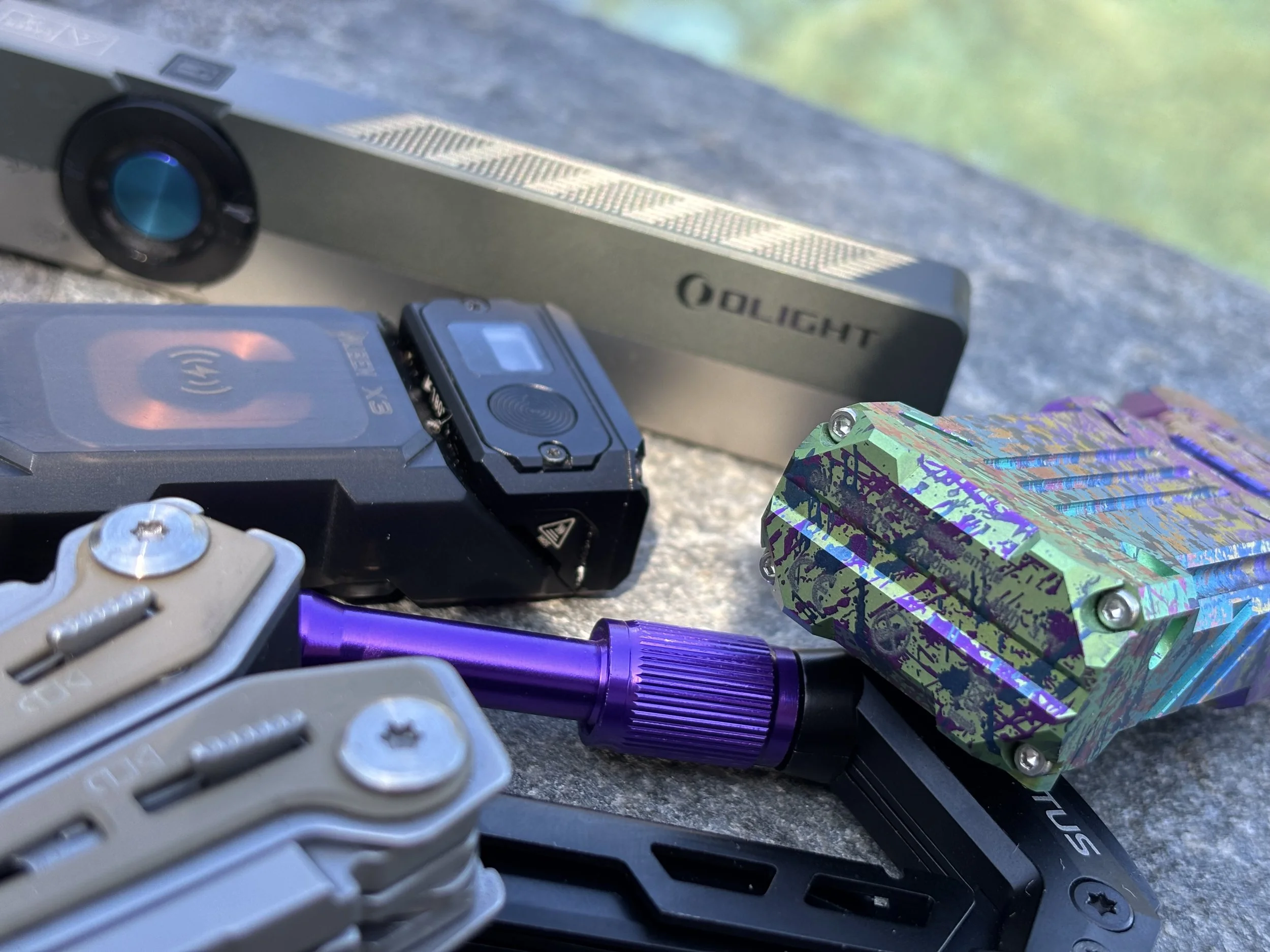
EDC is getting a little out of hand.
Somewhere along the way "everyday carry" stopped meaning "useful stuff I keep on me" and turned into a competition over who's carrying the most expensive knife, flashlight, pen, and titanium pry bar. I review EDC gear constantly — cheap stuff, mid-range stuff, full enthusiast-tier gear — and after handling all of it, here's where I've landed: your EDC shouldn't be junk, but it probably shouldn't be precious either.
It's Not Always the Expensive Gear That Impresses Me
This is the part people don't expect from a reviewer. I test a lot of gear, and price has never reliably predicted what impresses me. Sometimes a $250 knife feels incredible in hand. Sometimes a $6 knockoff from Amazon does the exact same job for opening boxes and cutting tape, and I genuinely can't tell the difference in daily use.
And here's the thing — my actual EDC, the stuff that's really in my pocket day to day, changes constantly. It's not tied to price point. A knife I raved about in a review might get swapped out two weeks later because something else just fits my routine better. Usefulness wins over spec sheets every time.
The Sweet Spot: Not Cheap Enough to Fail, Not Expensive Enough to Fear
I don't want gear so cheap that I can't depend on it. A flashlight that won't turn on when I need it isn't a bargain just because it was $8. A knife with a sloppy lock isn't worth carrying just because losing it wouldn't hurt.
But I also don't want gear expensive enough that I'm scared to use it. If you're babying your knife because you don't want to scratch the finish, or leaving your good flashlight at home because you don't want to drop it, that gear has stopped being EDC. It's a display piece.
The real answer isn't a dollar amount — it's your own financial comfort zone. Spend enough to trust it. Stop before losing it becomes an emotional event. For one guy that's $25. For another guy that's $250. Both are fine, as long as the price isn't changing how you actually use the thing.
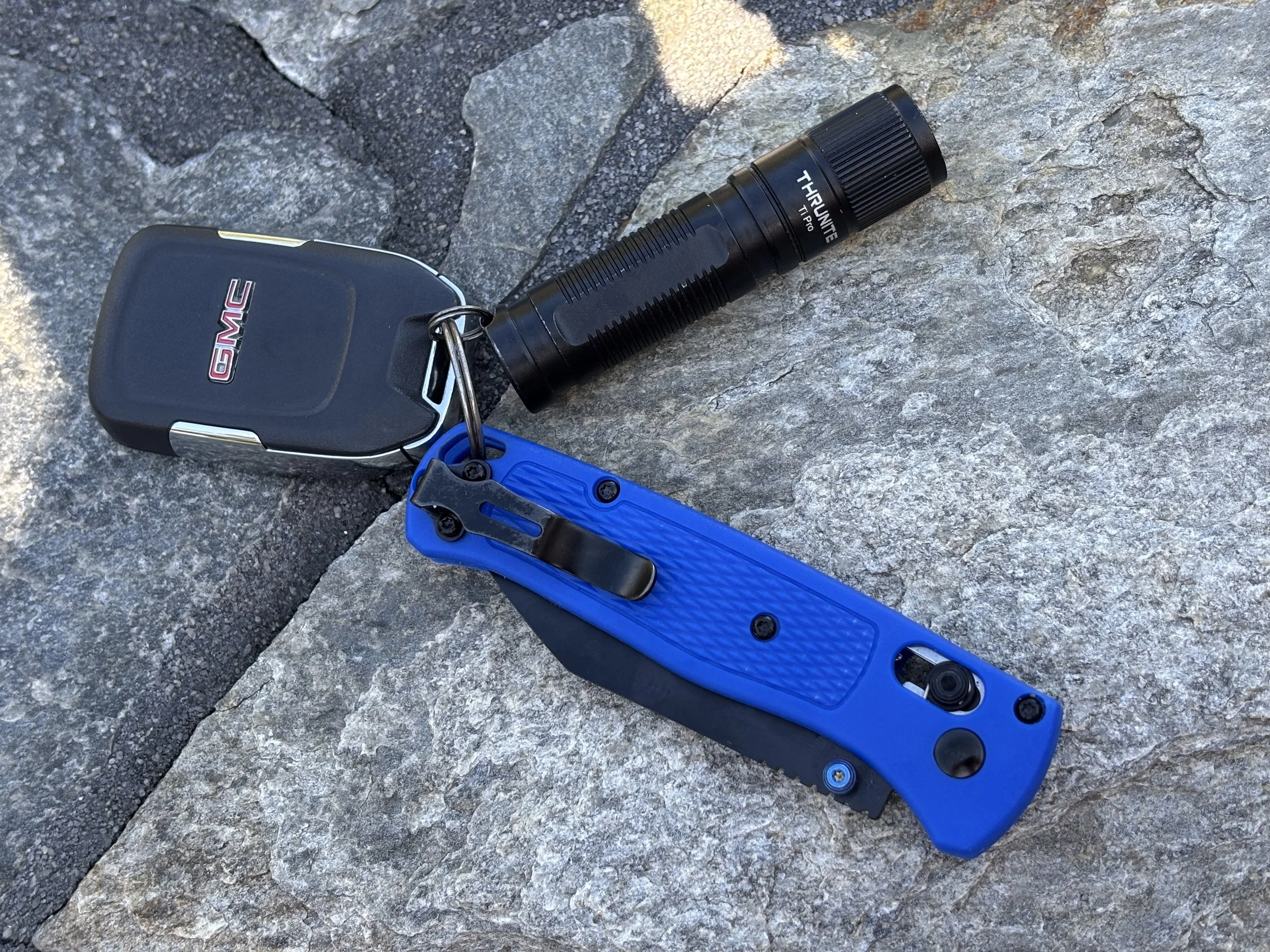
My current keychain setup, with the ThurNite Ti Pro
My Knife: A $6 Bugout Knockoff, and I'm Not Sorry
On the keychain for my GMC 2500, I carry a Benchmade Bugout-style knife I picked up on Amazon for about $6. Six dollars. It works great.
Let's be clear about what that actually means, because I know real Bugout owners are cringing right now. The real Benchmade Bugout runs about $180–200 MSRP, uses premium steel like CPM-S30V (Benchmade's been rolling out MagnaCut and ELMAX variants too), and has that AXIS lock people love for one-handed, ambidextrous opening. It's genuinely a great knife. If you want a step down that keeps a similar feel, the Kershaw Celestion is a legit "Bugout-alternative" — similar shape, D2 steel, comes in at less than half the Benchmade's price. CIVIVI's Elementum is another common recommendation in that under-$60 range, and guys on knife forums regularly say their Vosteed Mini Psyop or Kizer Drop Bear replaced a much pricier folder in their actual rotation.
My $6 knockoff isn't in that conversation on steel quality, fit, or long-term durability, and I'm not pretending it is. What it is: a knife that opens packages, cuts tape, and handles basic daily tasks exactly as well as I need it to. If I lose it, I buy another one for less than a fast food combo. If it gets dull, six bucks. If it gets stolen off my keychain, I genuinely will not think about it again.
I've never been big on expensive knives. I get the appeal — steel science is genuinely interesting, machining can be beautiful, and a premium folder is a nice piece of engineering. If that's your hobby, go for it. But I replace knives faster than I sharpen them, so dropping several hundred dollars on something I'm going to scratch up and eventually lose just doesn't make sense for how I actually use one.
Buy that cheap knife here on Amazon!
My Flashlight: The Opposite End of the Value Equation
The other thing that's always on me is a ThruNite Ti Pro, and I genuinely love this thing. It's a small twist-head keychain light that runs on either a disposable AA or the included rechargeable 14500 battery — and that rechargeable cell has USB-C charging built directly into it. Unscrew the head, plug in a cable, done. No separate charger to keep track of.
That's roughly 1,000 lumens out of something the size of a AA battery, IPX8 waterproof, and it retails around $20–26. For comparison, if you want to shop around the same category:
Olight i3T EOS — a common budget pick, twist-switch, AAA-based rather than AA, good if you want something even smaller and don't need the extra runtime.
Nitecore Tube / TINI 2 — some of these have an OLED display showing mode and remaining runtime, which is a nice touch, but they run smaller and dimmer than the Ti Pro.
Wurkkos and Sofirn lights (like the WK03 or SC31 Pro) — bigger bodies, 18650 batteries, more raw output, but bulkier for a keychain and priced closer to $19–40 depending on the model.
Fenix E12 V2.0 — single AA, no built-in recharging, but dead simple and AA batteries are everywhere.
None of these are wrong choices. It comes down to what you're optimizing for. I picked the Ti Pro specifically because the built-in USB-C charging removed a piece of friction I didn't want to deal with — I'm not hunting down a separate battery charger or carrying spare cells. That's the kind of feature that actually matters to me in EDC. It's not interesting because it's expensive. It's interesting because someone designed out an annoyance.
Reliability Still Comes First
To be clear, "affordable" doesn't mean "disposable." There's a lower limit. A flashlight that randomly won't turn on isn't useful just because it was cheap. A multitool that bends under real pressure isn't a bargain. A knife with a garbage lock isn't something I want in my pocket regardless of price.
My ideal EDC sits in the sweet spot: inexpensive enough that I don't worry about it, good enough that I actually trust it. That's the target for every piece of gear I carry. I won’t carry some no name light, I need to trust it no matter what.
Don't Build an EDC Collection You're Afraid to Use
This is the strangest thing about high-end EDC culture. People buy beautiful gear and then get scared to use it. The knife can't get scratched. The flashlight can't get dropped. The pry bar can't actually pry anything because it might mess up the finish. At that point you're not carrying tools, you're carrying jewelry.
Collecting knives and lights as a hobby is completely fine — that's a different thing from practical everyday carry. If something is in my actual EDC, I use it without thinking twice. That's the test I apply to everything in my pocket.
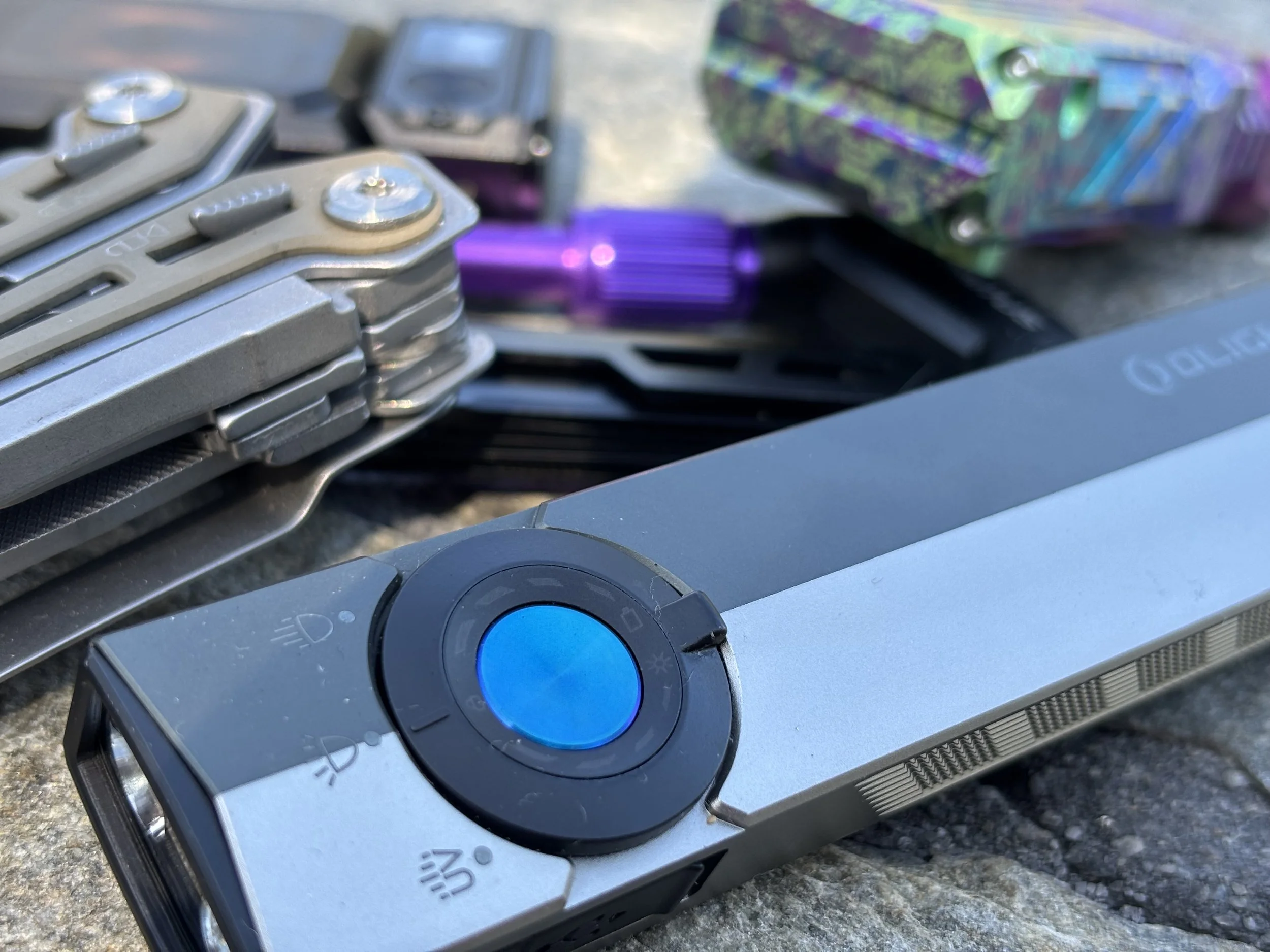
Truck EDC vs. Pocket EDC Are Different Games
My GMC 2500's setup is a totally different story, because my work varies a lot day to day. The truck carries the gear instead of me, so weight and bulk stop mattering. I can throw in bigger flashlights, backup tools, straps, gloves, charging gear, emergency supplies — all the stuff that would turn my pockets into a tactical backpack if I tried to carry it on my body.
My actual on-body EDC stays intentionally simple, and the whole thing rarely tops $100 total.
How Much Should You Actually Spend?
Instead of naming one dollar figure for everyone, here's the rule I use:
Spend enough that you trust it. Spend little enough that you'll actually use it.
Maybe your number is $20. Maybe it's $75. Maybe you can carry a $300 knife, beat on it daily, and genuinely not care if you lose it — cool, that's your number too. The mistake isn't buying expensive gear. The mistake is buying gear expensive enough that the price starts dictating how you use it. Best EDC Gear deals on Amazon!
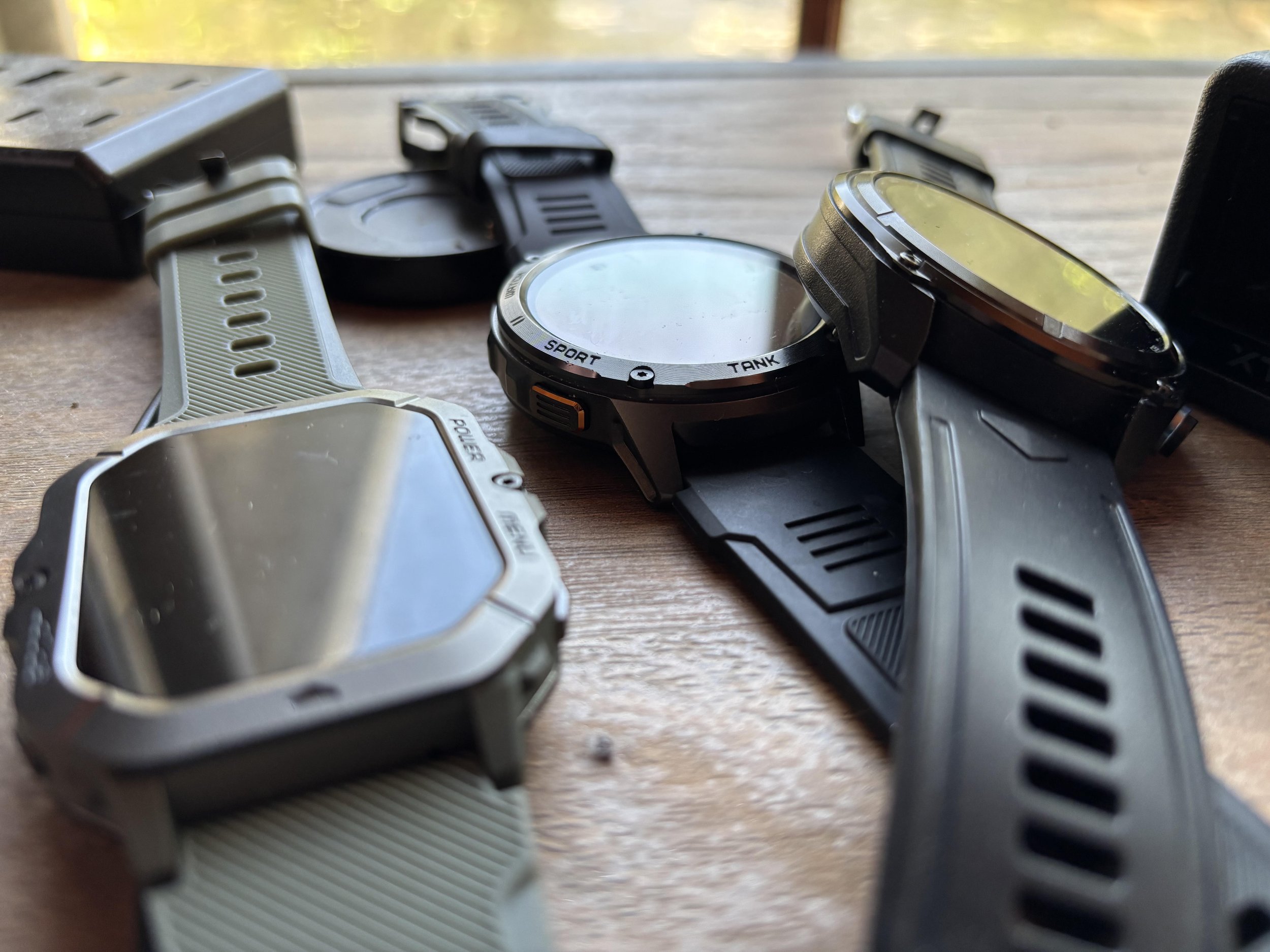
I love smart watches, yet my top picks are often sub $100 watches.
Final Thoughts
I review knives, flashlights, and all kinds of gear constantly, and that's probably exactly why my own everyday carry has gotten simpler instead of more complicated. Price doesn't reliably predict what stays in my pocket. Sometimes the expensive stuff impresses me. Sometimes the cheap stuff does. And sometimes something I loved during a review gets replaced two weeks later because something else just fits better.
My whole philosophy comes down to three words: dependable, affordable, replaceable. Best EDC Gear deals on Amazon!
Don't buy junk. But you also don't need a $200 knife, a $150 flashlight, and a $100 titanium pocket tool just because someone online called that "proper EDC." Find the price point where you trust your gear without being afraid of it. For me, that means my whole on-body EDC stays under $100 — and if I lose something, that sucks for a minute, then I replace it and move on.
Your EDC is supposed to work for you. You're not supposed to work for it. Read more about PC building here!