Gotrax FLEX 2-Year Review: Battery Life, Durability and What Broke
Disclosure: We may earn a commission when you purchase through links on our site. This does not influence our reviews or recommendations.
Editor’s note: I originally reviewed the Gotrax FLEX on YouTube when it was new. This article is my written two-year ownership follow-up and accompanies a new long-term review video covering how the FLEX has held up after real-world use and abuse.
Two years ago I reviewed the Gotrax FLEX on YouTube. I never wrote it up at the time, but after two years of hauling trailers with it, crashing it, and generally using it like a piece of property equipment instead of a commuter scooter, it earned a proper written follow-up to go with the video.
Short version: it still works, with 2 known issues.
I don't have an exact odometer figure — I never had a reliable way to track every mile — but I'd estimate somewhere around 60 to 80 miles over two years, possibly more. That's not a lot of mileage for an e-bike or scooter, and if you're after a 2,000-mile commuter durability test, this isn't it. My test has been about abuse and time, not distance. I've pulled trailers with it, crashed it, hauled loads it was never designed for, and left it stored between hard-use sessions for two years straight.
Most of the visible damage on mine is damage I caused myself. The motor still runs, the tires are still in excellent shape, the charger still works, and the frame has held together through all of it.
It's Still Running Two Years Later
The real finding here is durability, not performance.
Plenty of budget scooters feel great for the first few weeks and then start falling apart once you get past the honeymoon period — frames loosen up, electronics get flaky, tires wear out fast, chargers die. That hasn't happened with my FLEX. I've done more damage to it than it's done to itself, and after two years of crashes and abuse, the core machine is still functional.
For context, the FLEX competes in the sub-$500 seated-scooter category against bikes like the Segway Ninebot ES2, the Okai Neon, and the Turboantt Pro. In independent testing, the FLEX's top speed actually came in a bit ahead of all three — edging out the Ninebot ES2's 16.0 mph, the Okai Neon's 16.0 mph, and the Turboantt Pro's 15.8 mph, all while undercutting them on price. Two years of abuse later, that value-for-money case only looks stronger — most of those competitors haven't been asked to survive what mine has.
The Battery Has Definitely Degraded
The biggest sign of age is battery life. I'm not going to pretend I ran a lab test with a controlled discharge curve — I didn't. But going by how often I need to charge it now versus when it was new, and how fast it drains during a ride, I'd estimate I'm down to roughly half of the original usable runtime.
That's a real, noticeable difference. For short trips around a property or neighborhood it's still completely usable, but if you're planning to lean on the full advertised range a couple of years in, budget for degradation. Gotrax sells the Flex-series battery as a standalone replacement part for around $150, which is worth knowing if you want to restore full range instead of just living with it. Compare that to a full replacement bike in the same price bracket, and a $150 battery swap starts looking like the smarter move once a FLEX is out of warranty.
Battery aside, it's the only component on this thing that feels genuinely worn out.
A Brake Sensor That's Starting to Act Up
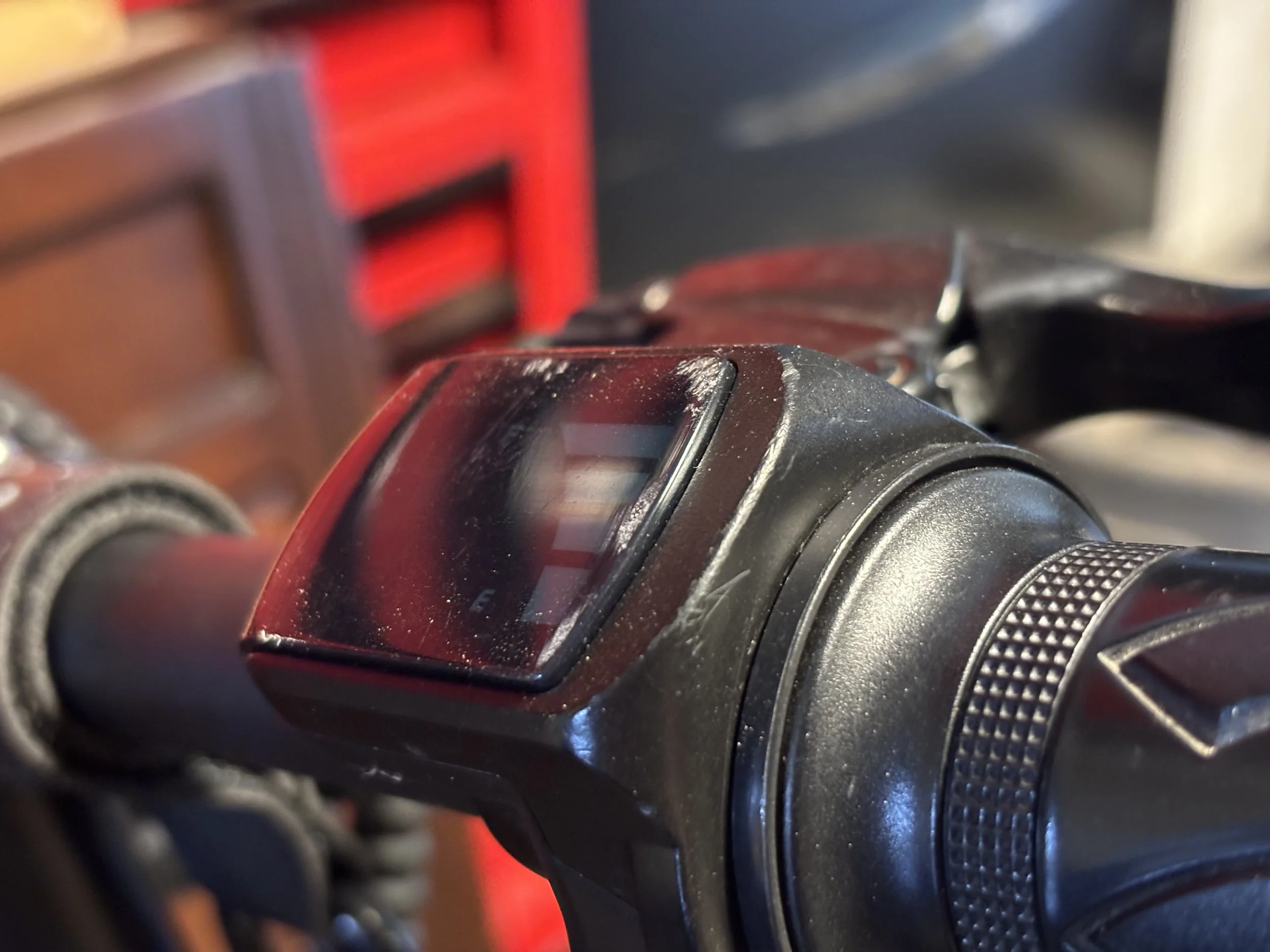
The other issue is the brake sensor. Occasionally, after I pull the brake and try to accelerate again, the throttle just doesn't respond — like the FLEX still thinks I'm braking. Turning it off and back on clears it every time.
I haven't torn into the electronics to confirm it's the cutoff sensor specifically, but that's my best guess based on the symptom. It's annoying, but a power cycle takes a few seconds and gets me moving again. Given everything I've put this scooter through, one flaky sensor isn't much of a complaint.
Tires: The Biggest Surprise
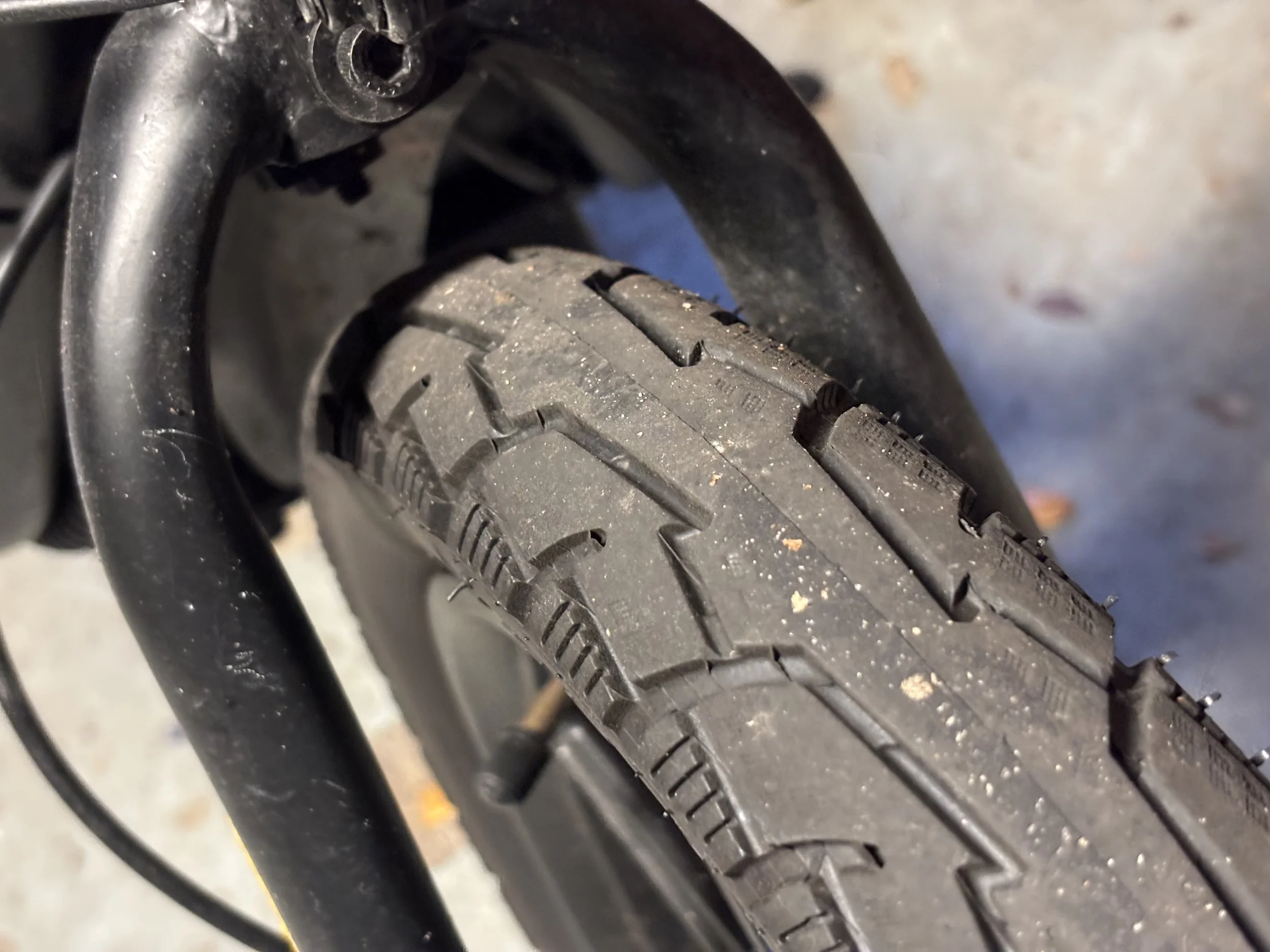
I expected the tires to be trashed by now. They're not. There's still plenty of usable tread, no bulges, no flat-spotting, nothing pushing me toward replacement.
This isn't a high-mileage tire test — 60 to 80 miles won't tell you how tires hold up over 1,000 — but these haven't been gentle miles either. Between the crashes, the trailer loads, and general abuse, I expected to be shopping for replacements by now. Compared to cheaper pneumatic tires on similarly priced scooters, which tend to show cracking or dry rot within a year or two of outdoor storage, mine have held up well.
The Charger Still Works
Small thing, but it matters. On a lot of cheap electric products, the charger or some proprietary accessory is the first thing to die. Two years in, my original Gotrax charger still works exactly as it should — plug it in, charge it, unplug it, done.
Most of the Damage Is Mine, Not the Product's
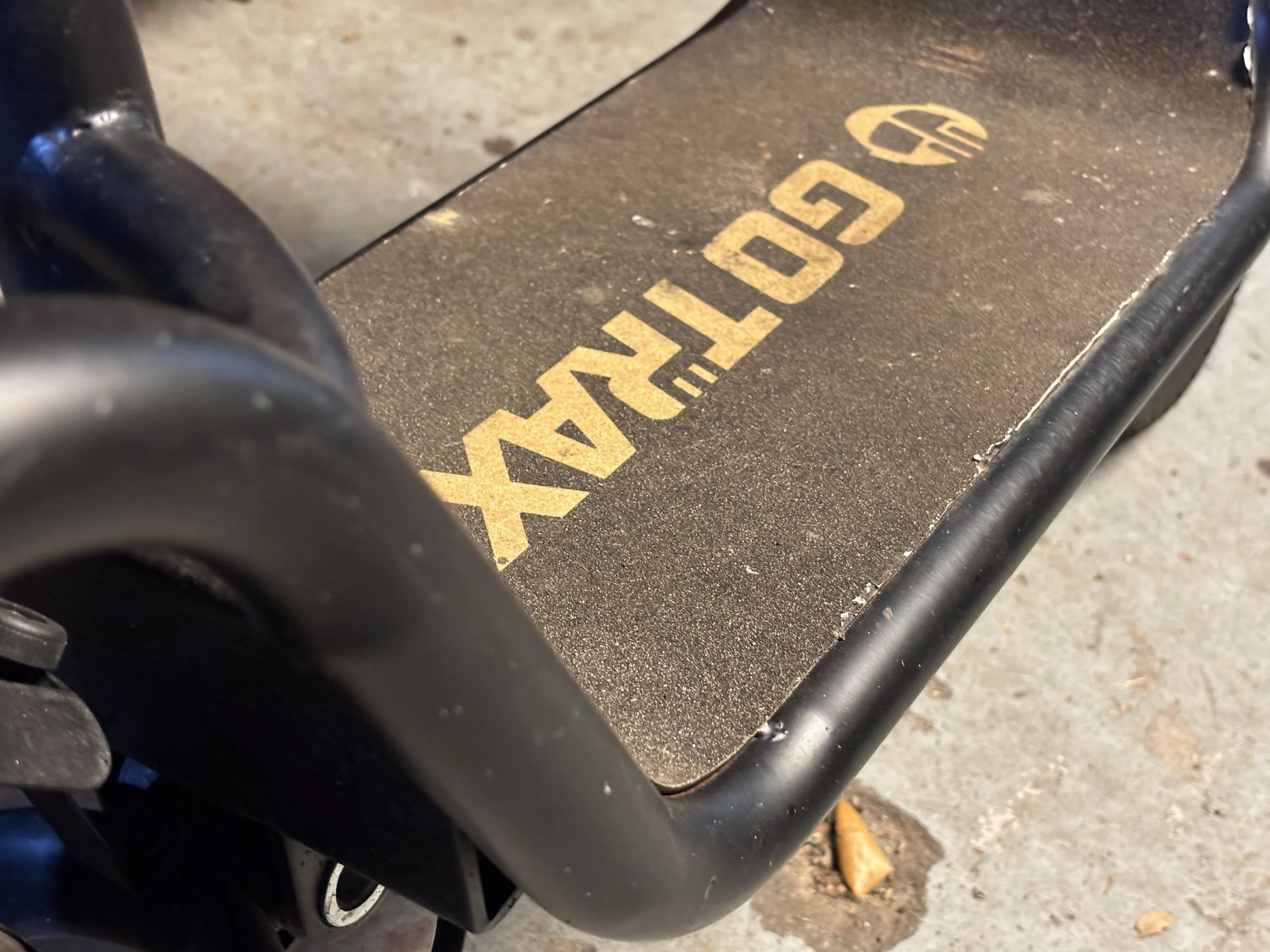
If you look at my FLEX today, it's not pristine. But almost none of that is the scooter failing on its own — it's scratches and scars from crashes, trailer hauling, and loads it was never designed to carry. I've treated it more like utility equipment than a commuter scooter.
So the cosmetic damage isn't evidence of poor build quality. It's evidence of what the thing has survived: the frame is intact, the wheels are straight, the motor still moves me, and the tires are still good.
What's Actually Failed After Two Years?
Short list:
Battery down to roughly half its original usable runtime
An intermittent brake-sensor issue that needs a power cycle to clear
That's it. Motor, charger, tires, frame, and every other control all still work as they should. For what this scooter has been through, I expected a much longer list.
How the FLEX Stacks Up
Gotrax's own lineup has grown since I bought mine — the Flex Voyager and Flex Campus trims add a padded seat and rear suspension for comfort-focused riders, while the step-up FLEX ULTRA pushes more range and a stronger motor for a higher price. Mine is the base FLEX, and after two years I don't feel like I'm missing much: the ULTRA's extra range would be nice given my battery's degraded, but it also costs more up front.
Against outside competitors in the same price band — Segway's Ninebot ES2, the Okai Neon, Turboantt's Pro — the FLEX's original selling point was beating their top speed at a lower price. Two years later, its real edge is that it's still running at all, and outside of a battery, everything on it still functions the way it did on day one.
Would I Buy It Again?
Yes — and honestly my opinion of the FLEX is better now than when it was new. When you first review a budget scooter, you can't answer the long-term questions: will the motor hold up, will the frame loosen, will the tires survive, will some cheap proprietary part brick the whole thing. Two years later, I have answers.
Mine is battered, scratched, running on a tired battery, and has a brake sensor that's starting to get temperamental. And it still runs.
Final Thoughts
The Gotrax FLEX has survived two years of real abuse better than I expected. This wasn't a gentle commuter test — I've pulled trailers with it, crashed it, hauled loads, and generally used it like equipment rather than something I was trying to keep pristine for resale.
After an estimated 60-plus miles and two years of ownership, the only real issues are a battery down to about half its original runtime and an intermittent brake sensor that needs an occasional restart. Everything else — tires, charger, motor, frame — keeps going. Most of the visible damage is mine, not the product's.
That's the best compliment I can give it.