I Replaced My Hisense Dehumidifier With the AEOCKY RHEA-001 — Here's What Changed
Disclosure: We may earn a commission when you purchase through links on our site. This does not influence our reviews or recommendations.
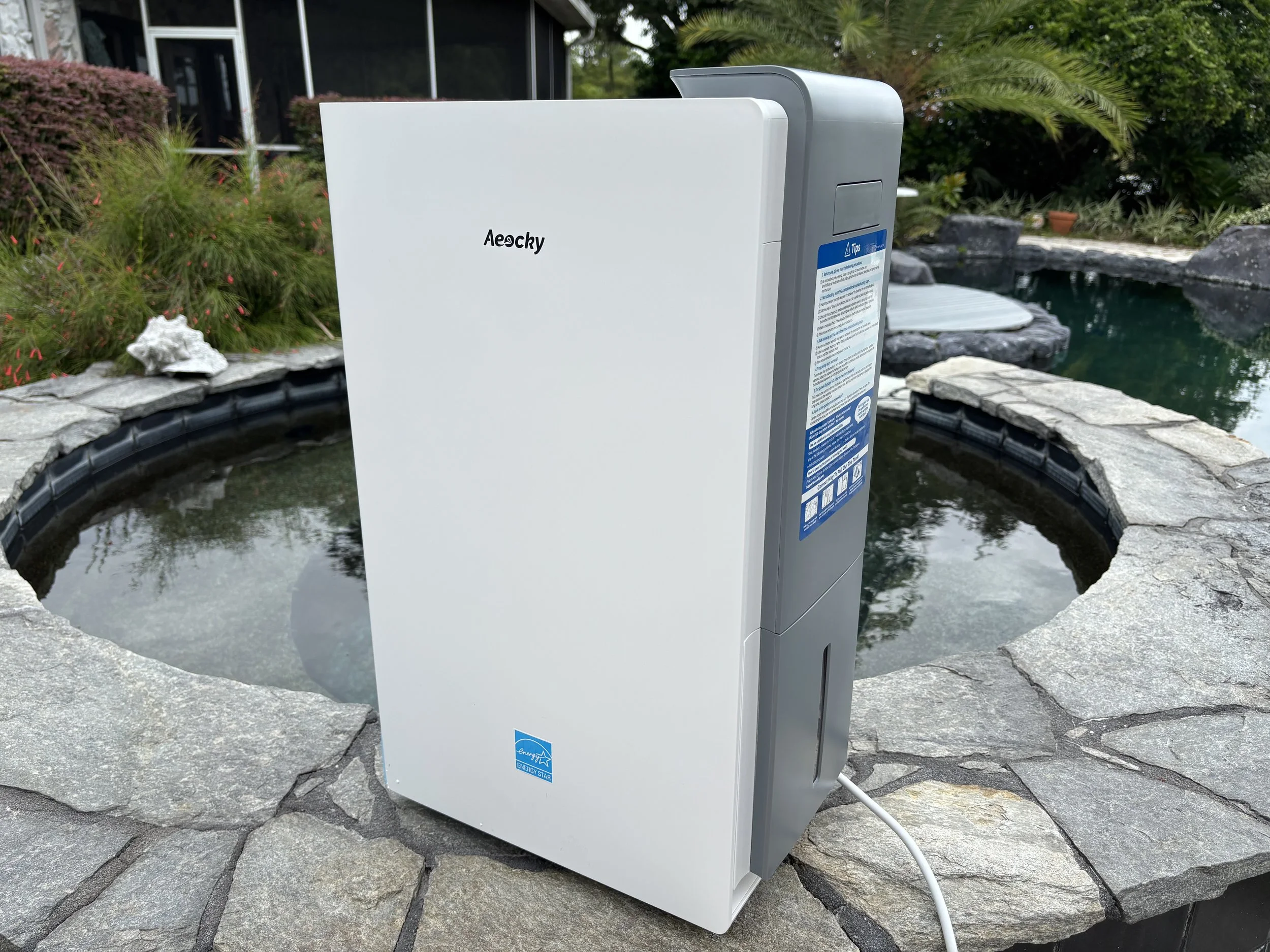
I lived with a Hisense DH-7019W1WG for 2 years. It's a 70-pint unit — or at least it says 70 pints on the box, because Hisense never bothered updating the label after the DOE changed how capacity gets measured. Under current standards it's really a 50-pint machine, and it feels every bit as clunky as that history suggests. It's a 43-pound box that groans, rattles, and generally reminds you it's running every few minutes.
The AEOCKY RHEA-001 replaced it in my apartment, and the difference wasn't subtle. This review is really a head-to-head: what changed, what didn't, and whether the switch actually made sense.
Size and Weight: No Contest
The Hisense measures 15.2 x 11.8 x 24.7 inches and weighs 43 pounds. Dragging it between rooms was a two-handed affair, and the footprint made it hard to tuck out of the way. I hated it.
The RHEA-001 is 14.45 x 8.66 x 24.09 inches and weighs about 31 pounds (depending on which spec sheet you believe). That's roughly a third lighter, and the narrower depth makes it noticeably easier to slide behind furniture or move room to room. If you're the one hauling this thing up from the basement, that weight difference stops being a spec and starts being a daily quality-of-life issue.
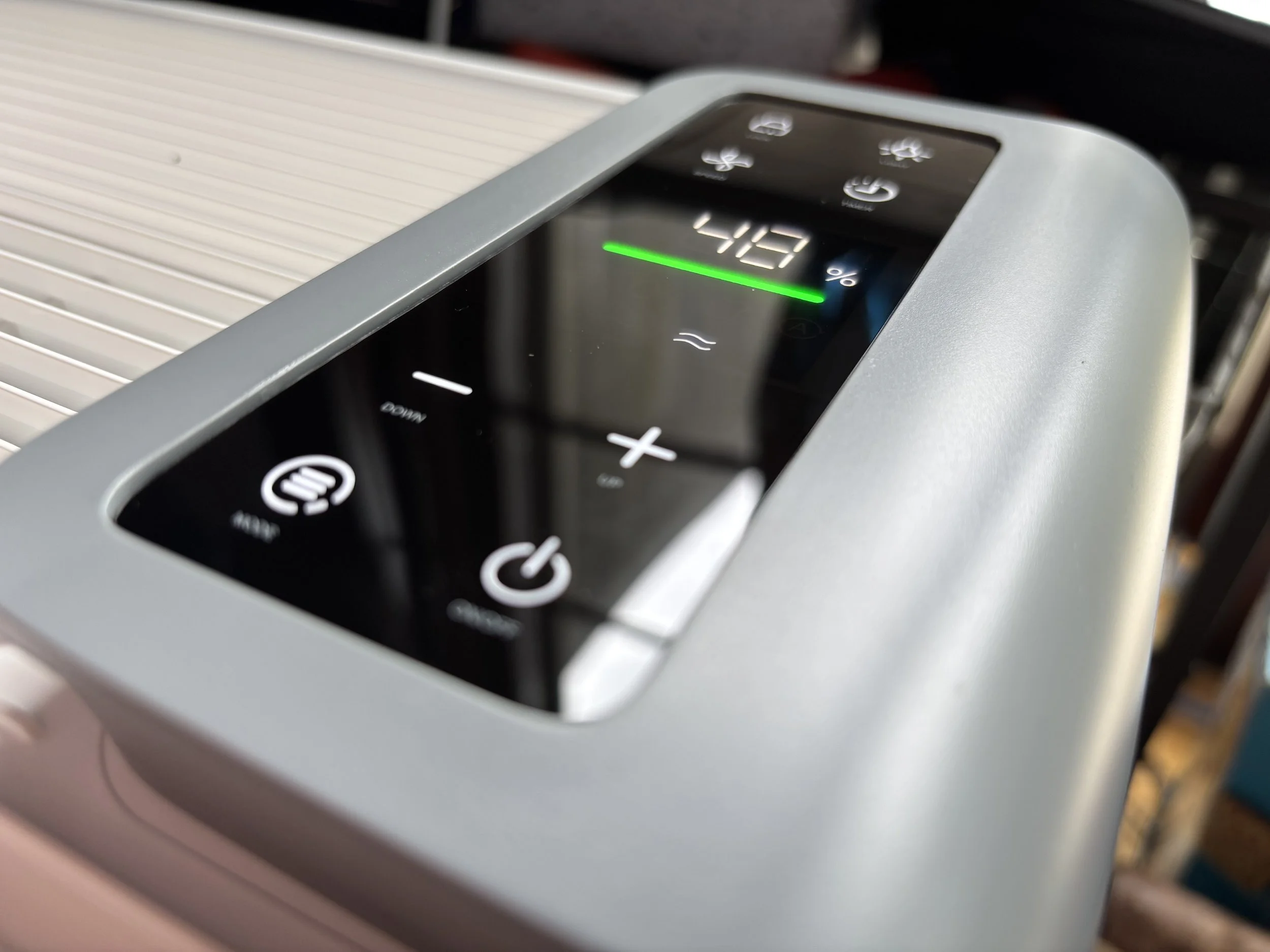
Noise: The Biggest Upgrade
This is where the Hisense really lost me. Older 70-pint-class Hisense units in this family have been independently measured around 74 dB up close — that's loud enough to talk over the TV, and the compressor cycling on was impossible to ignore. I don’t even need to measure it, it’s way to loud, case closed! But yeah anyway, we hated using it, it was just annoying.
AEOCKY advertises 44 dB on low fan speed for the RHEA-001, and independent testing backs up that it's a genuinely quiet machine on low, though it climbs to around 61.5 dB on high fan speed — still noticeably quieter than my old Hisense at its worst. Practically speaking: I can run the RHEA-001 on low in the living room during a movie and not think about it. I never could say that about the Hisense.
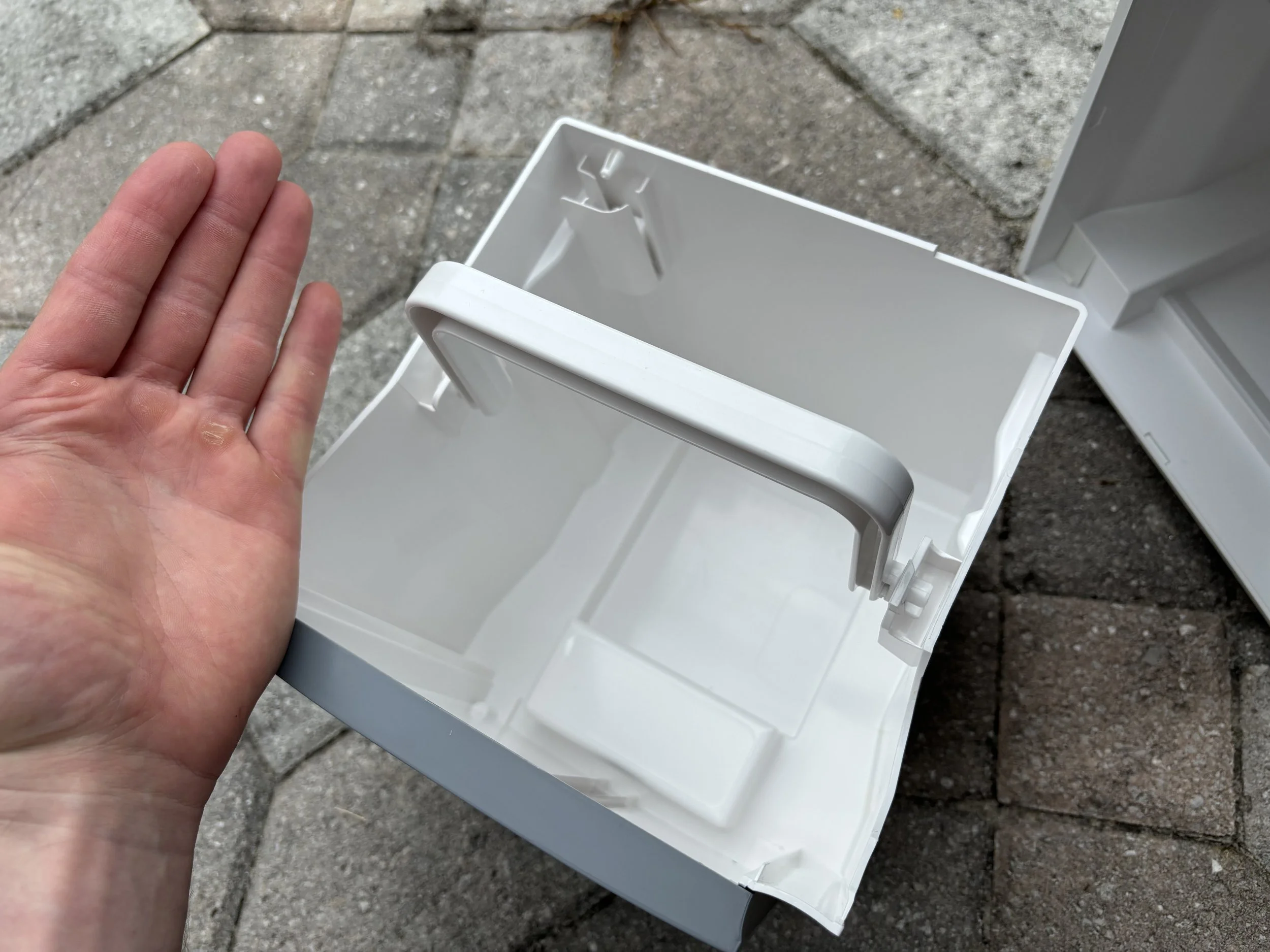
Capacity: Where It Gets Complicated
Here's the comparison that actually matters, and where I'll be straight with you instead of just repeating the marketing.
AEOCKY markets the RHEA-001 as an 80-pint dehumidifier, rated at 95°F and 95% relative humidity — conditions most manufacturers don't test under. Independent lab testing that instead measures at the DOE's standard 65°F/60% RH puts its real-world capacity closer to 25 pints per day. That reclassifies it as a small-capacity unit, not the large-capacity machine the marketing implies.
My old Hisense's "70 pints" is the same story in reverse: under current DOE standards, that rating maps to about 50 pints — still a genuinely larger-capacity machine on paper than the AEOCKY.
So if you're chasing raw moisture removal per day, the Hisense name on the box was never lying by as much as the AEOCKY's is. But — and this is the part that surprised me — in my actual 1,000-square-foot apartment, none of that mattered. Florida humidity is brutal, and the AEOCKY handled it without breaking a sweat. Unless you're running one in a genuinely oversized basement, the numbers game between these two units barely shows up in daily life. Does a warranty even matter anymore? Find out more here!
Coverage Claims
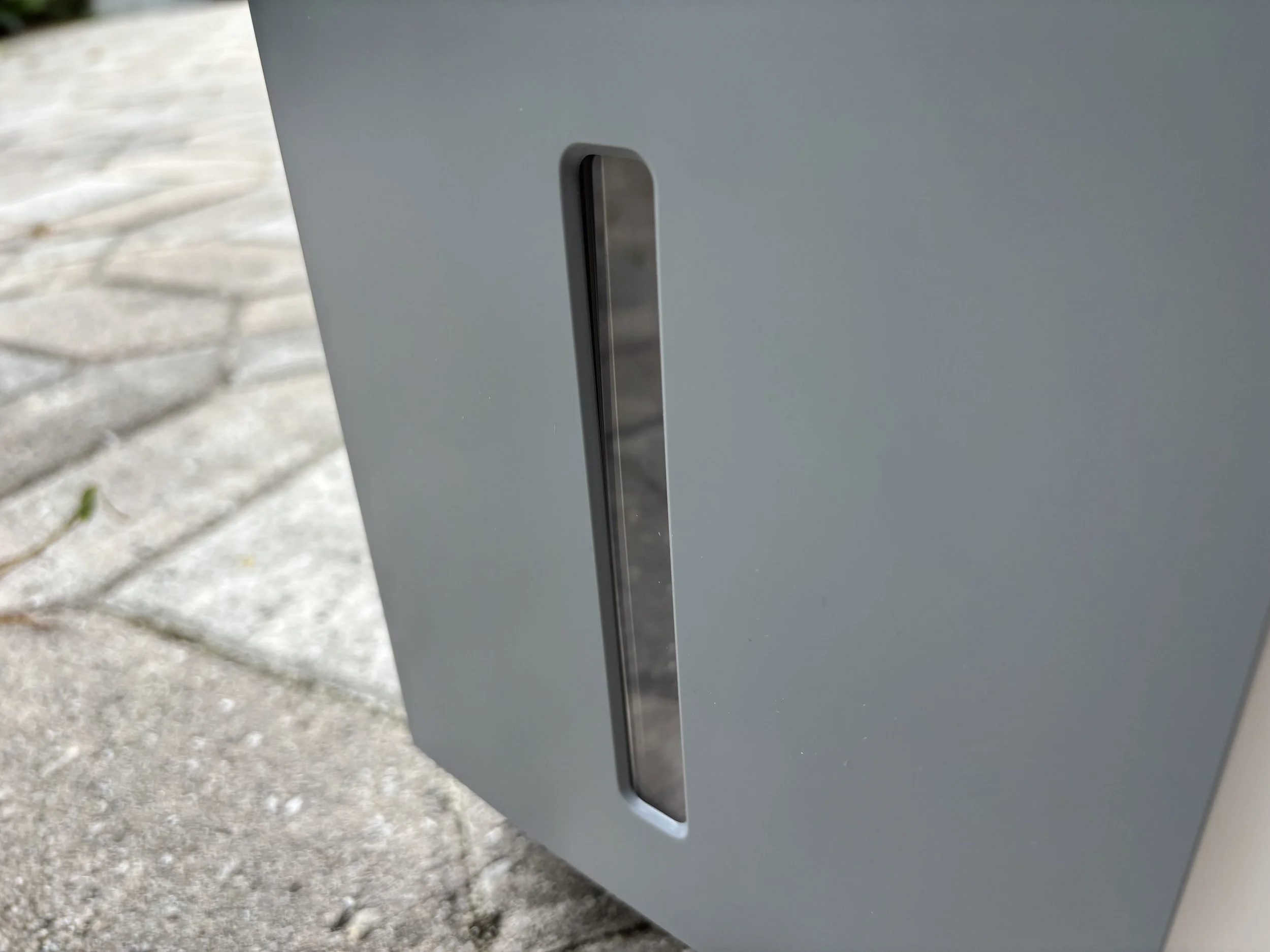
AEOCKY lists the RHEA-001 for spaces up to 4,500 square feet. Yeah sure, maybe in a wide open warehouse with excellent airflow. Given the capacity numbers above, treat that figure as aspirational rather than a promise. My Hisense was rated for 1,000 square feet, which is a far more honest number for what either machine can actually do in a real room. Want to move some air the smart way? Check out this review!
Everyday Features
Both units have the basics covered: adjustable humidity settings, continuous drain support, auto shutoff, and a digital control panel. The RHEA-001 adds built-in wheels, just like my old unit. Both include a drain hose and garden hose adapter for continuous drainage if you don't want to babysit the tank. Looking for more smart tech? Check out this 2 zone water timer review!
Final Verdict
If you're comparing spec sheets side by side, the Hisense DH-7019W1WG technically pulls more water out of the air per day. But specs on a page and life in an apartment are two different things. The RHEA-001 is lighter, quieter by a wide margin, easier to move, and handled my humidity problem just as well — without the noise and bulk I'd put up with for years.
Would I go back to the Hisense? No. The AEOCKY isn't the bigger machine on paper, but it's the better one to actually live with. That's the upgrade that counts.