Does a Long Warranty for your product Really Matter? Maybe Less Than You Think
Disclosure: We may earn a commission when you purchase through links on our site. This does not influence our reviews or recommendations.
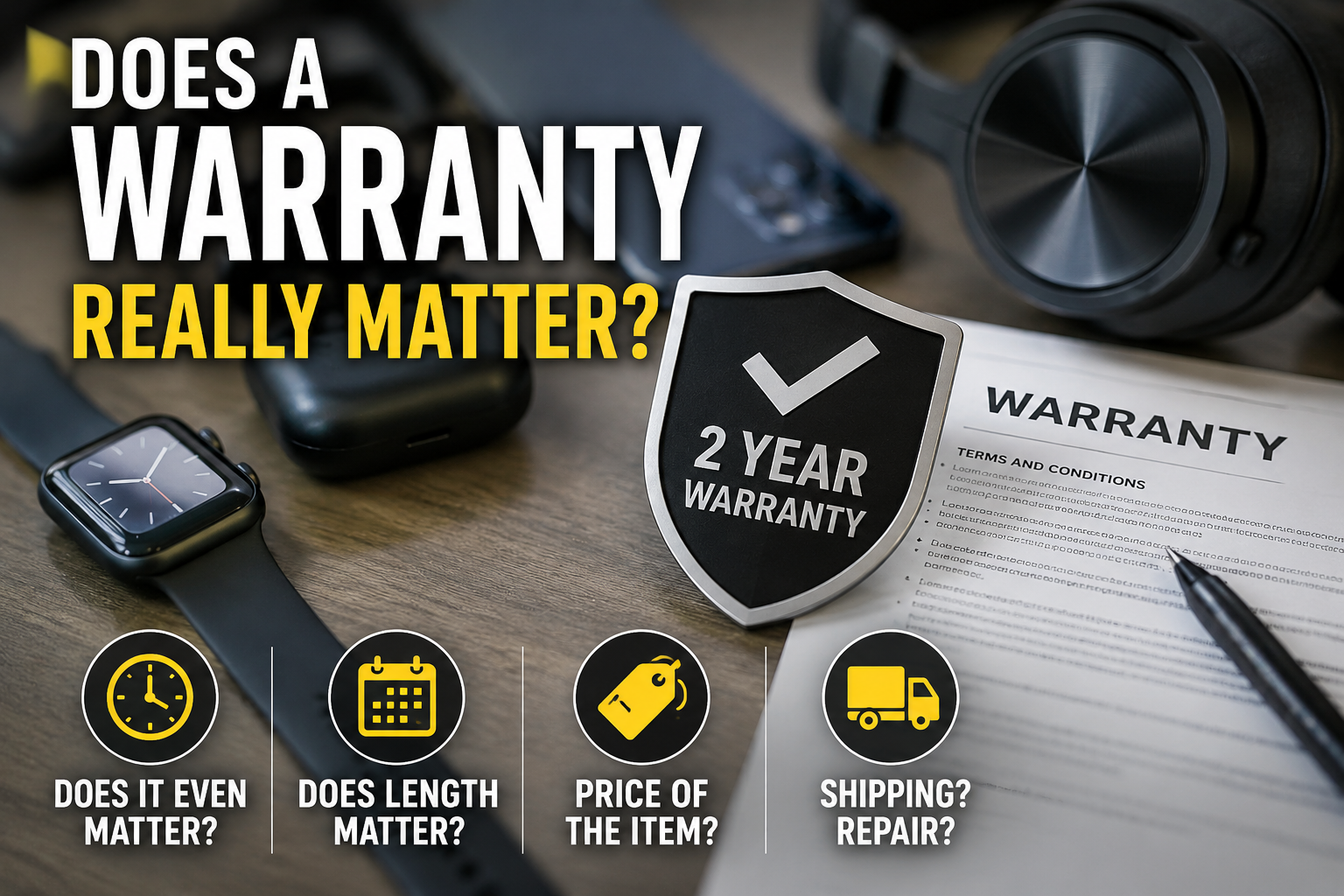
When shopping for new technology, it's easy to get fixated on warranty length. One brand offers a year, another three, a third touts a lifetime guarantee. Longer must be better — right? Not necessarily.
What Is a Warranty Actually Worth?
A warranty only has value if you're willing to use it. If your $40 Bluetooth speaker dies after 18 months, are you really going to box it up, pay for shipping, and wait weeks for a repair? Some people will. Most won't. For cheaper products, the warranty is often more reassuring on the box than useful in practice.
Think about the last time you actually filed a claim. Did you keep the receipt? Register the product within 30 days like the fine print required? Still have the original box? Warranty terms are often written in a way that's technically honest but practically unusable — and manufacturers know most people won't clear every hoop.
Does Length Even Matter?
It depends on the product. Smartphones, earbuds, and portable speakers get replaced every two or three years regardless of coverage — a five-year warranty sounds impressive, but few owners are still using the same unit that long. You'll upgrade your phone for a better camera long before the warranty runs out; the coverage was never the reason you kept it that long anyway.
Refrigerators, TVs, and premium audio systems are a different story. Since they're expected to last a decade or more, real warranty coverage matters far more — assuming you can actually use it.
Price Changes Everything
A $15 USB charger that fails after three years just gets replaced — nobody is mailing back a phone charger. A $3,000 OLED TV is a different calculation entirely; repairs can run into the hundreds or thousands, so coverage becomes genuinely meaningful. More often than not, it's not the warranty's length that matters, but the value of what it's protecting.

Appliances Are Where Warranties Get Complicated
This is where theory meets reality. Appliances are notoriously painful to warranty. A washing machine or dishwasher breaks, and now you're scheduling a technician who may not show up for a week or two, paying a diagnostic fee even though it's "covered," and discovering the part needed is on backorder. The warranty exists on paper, but the process of collecting on it can be its own part-time job.
This is why plenty of people — myself included — gravitate toward cheaper, more replaceable appliances instead of premium models with longer coverage. It's not that the expensive model isn't better built. It's that when a $250 microwave dies, you drive to the store and buy a new one that afternoon. When a $1,200 built-in microwave dies, you're on hold with a warranty line, waiting on a technician, and living without a microwave for two weeks in the meantime. The warranty might genuinely save you money — but it doesn't save you the hassle, and for a lot of people, the hassle is the actual cost.
Downtime Is the Hidden Cost Nobody Advertises
This is the part warranty brochures never mention: how long can you actually live without the thing that broke?
A refrigerator is the clearest example. When it fails, you're not just waiting on a repair — you're actively losing groceries every day it's down. A tech visit gets scheduled a week out. The part gets ordered. Another few days pass. Now you've gone through two weeks without a working fridge, running a cooler with ice from the gas station, and the "free" warranty repair has cost you more in spoiled food, takeout, and hassle than a same-day replacement would have.
Compare that to simply buying a new $600 fridge outright when the old one dies. Yes, it costs more upfront than a warranty claim technically "should." But you have a working fridge again in hours, not weeks. That gap — the time you spend without the product entirely — is a real cost that almost never shows up in anyone's warranty comparison, and for anything that touches daily life like a fridge, washer, or HVAC system, it deserves as much weight as the repair bill itself.
The Process Matters More Than the Fine Print
What manufacturers rarely advertise is what happens when something actually breaks. Do you pay shipping? Wait weeks for a replacement? Get a real repair or just a refurbished swap? Some brands make this seamless — a chat window, a prepaid label, a replacement in two days. Others bury it in paperwork, hold music, and technicians who reschedule twice before showing up.
A two-year warranty backed by responsive service is often worth more than a five-year warranty nobody wants to deal with. Length on paper means nothing if the process makes you regret ever filing the claim.
Should Warranty Drive Your Decision?
Somewhat — just less than most people assume. For inexpensive gadgets, build quality and value matter more than whether coverage runs one year or five. For expensive, long-life purchases, warranty coverage earns its keep — but only if the company behind it is actually easy to deal with.
The better question isn't "how long is the warranty?" It's "if this breaks, how long am I without it, and how much work will it take to get it fixed?"
Check out the best deals on Appliances on Amazon!
Final Thoughts
A long warranty looks great in a brochure, but it doesn't make a product better on its own. Weigh the price, how long you'll realistically keep it, what the claims process actually involves, and — critically — how long you can afford to be without it if it fails. A one-year warranty with fast, painless service can easily beat a lifetime warranty that leaves you without a fridge for two weeks.