Fosi Audio V3 Mono Review: Can These $400 Monoblocks Beat Topping and Aiyima?
Disclosure: We may earn a commission when you purchase through links on our site. This does not influence our reviews or recommendations.
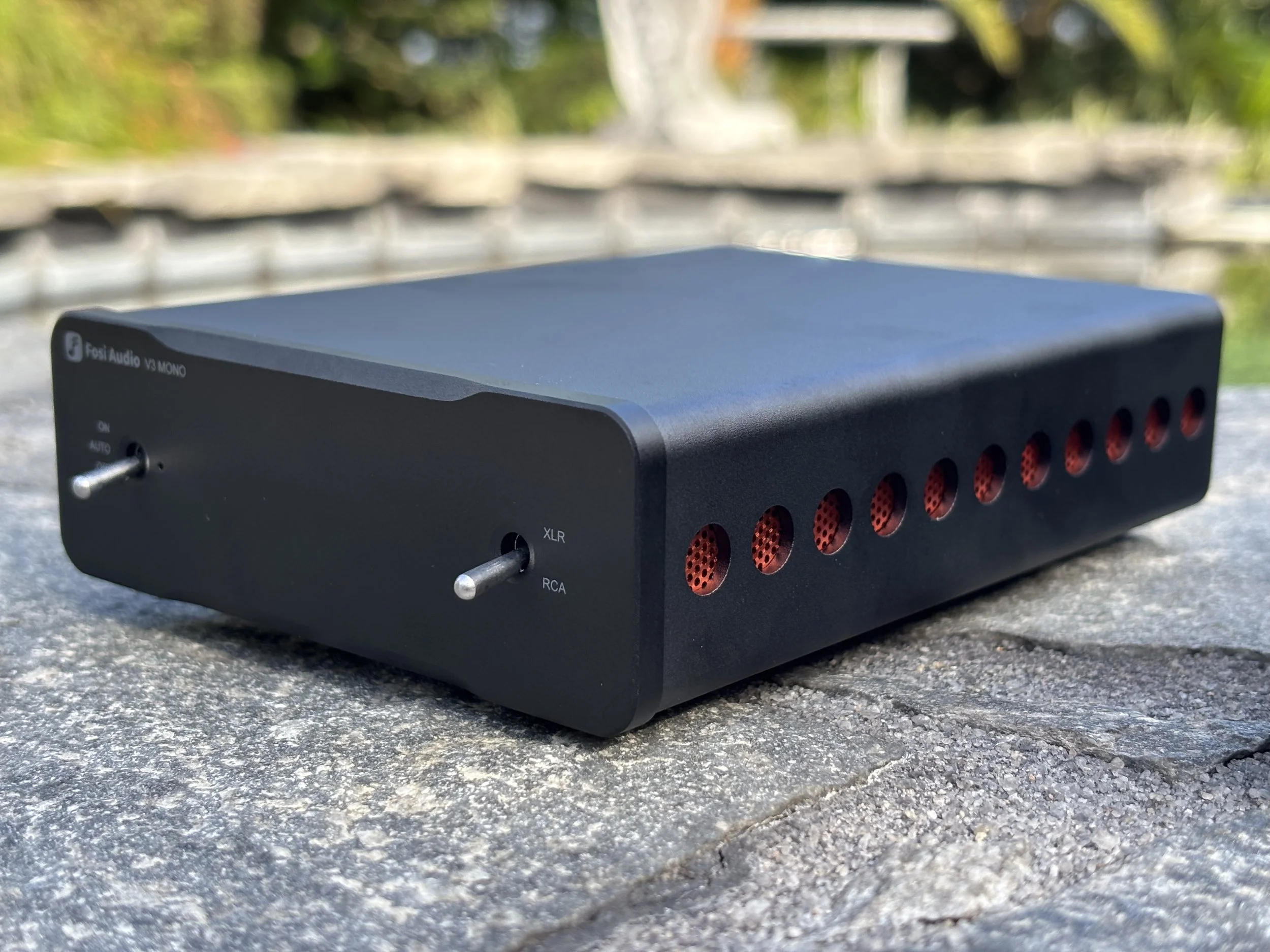
Audiophiles used to build systems around massive separates: dedicated preamps, hulking power amplifiers, monoblocks the size of microwaves sitting next to floorstanding speakers. Class-D amplification shrank all of that down into small stereo boxes over the last decade. Now Fosi Audio has taken the next logical step and brought the monoblock concept itself back — just at desktop scale.
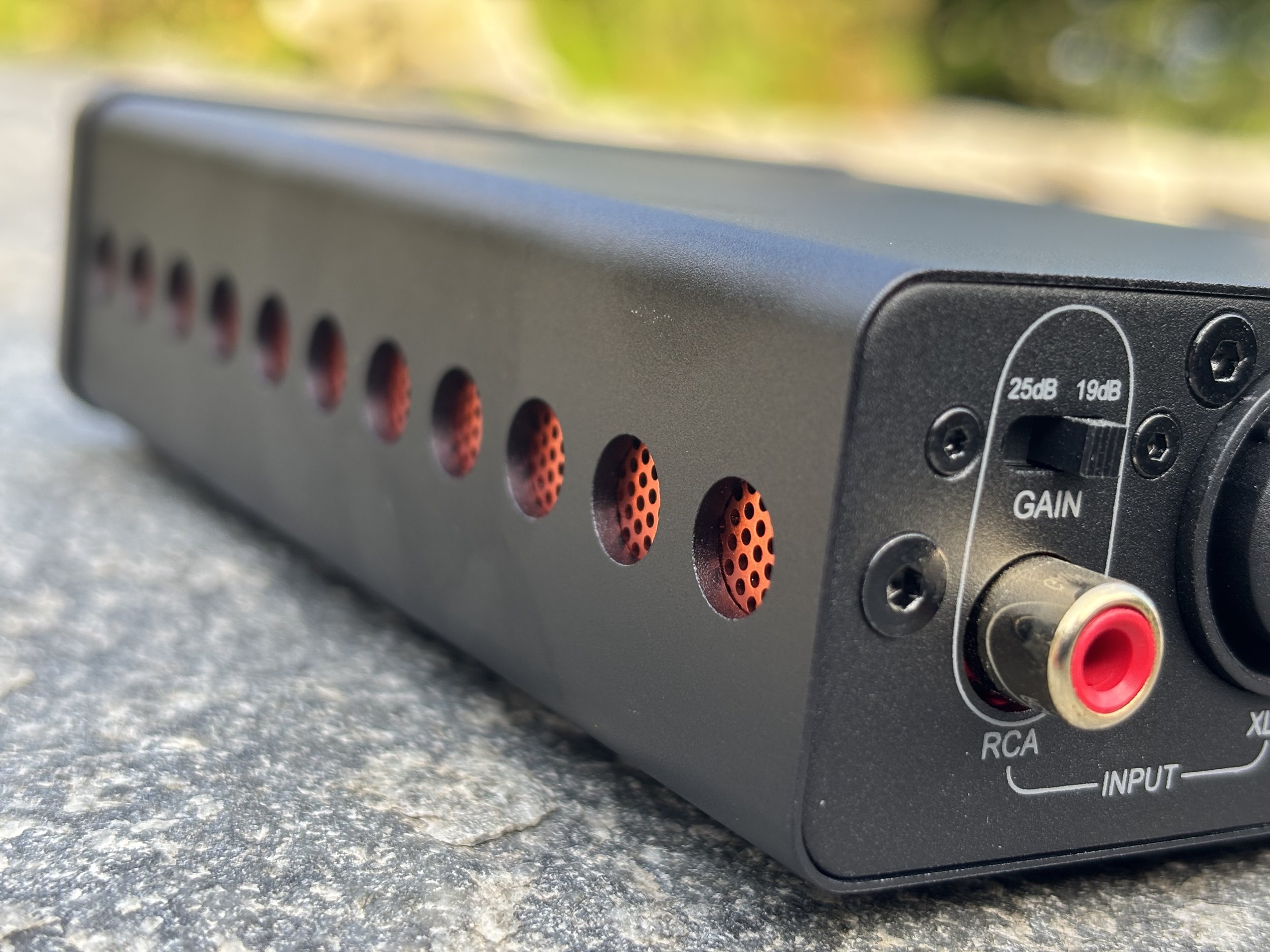
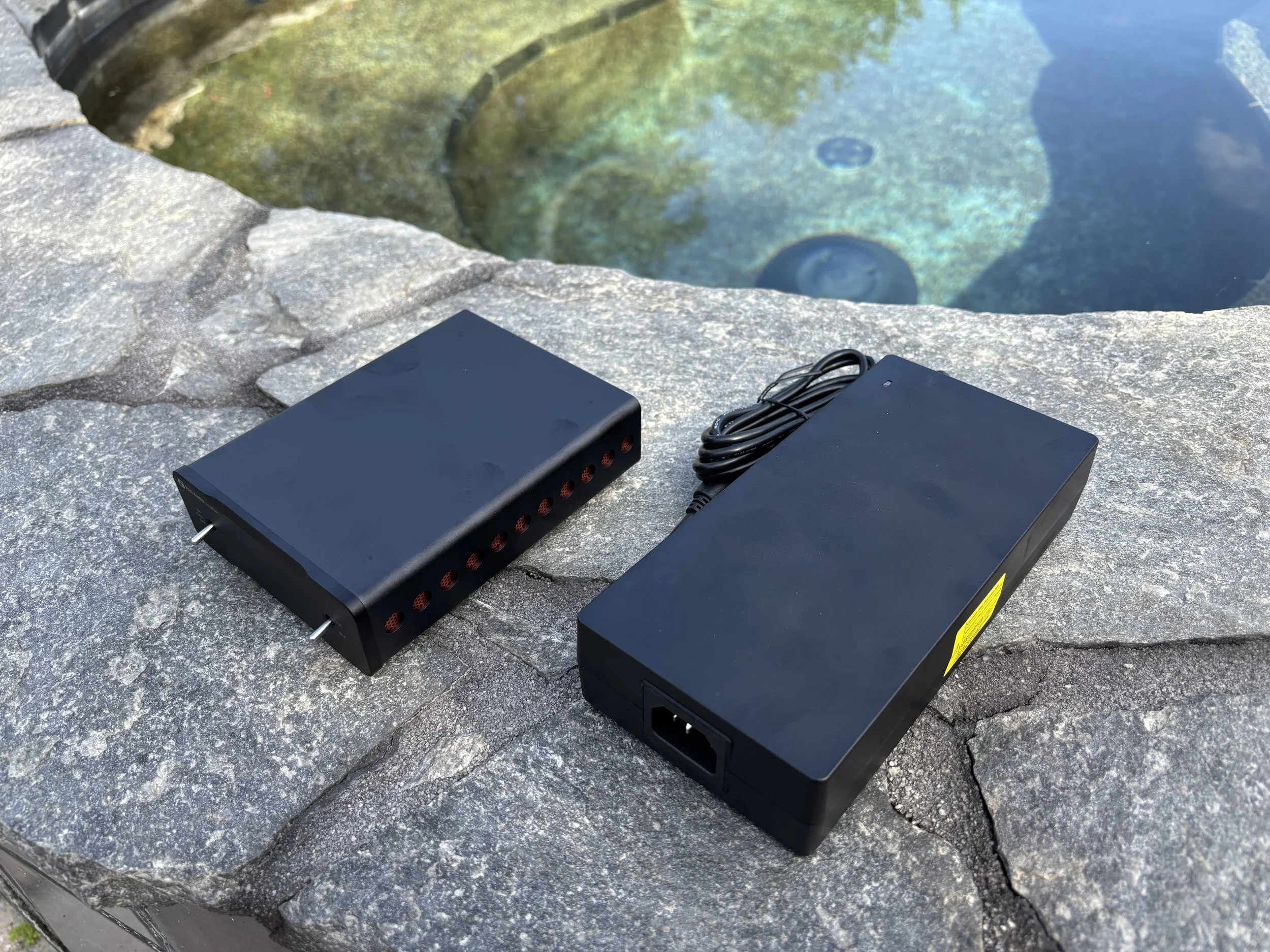
This thing is sick. I'm reviewing the Fosi Audio V3 Mono as a pair, running off the optional 48V/10A power supply, and the first thing that made me laugh out loud was the power brick — it's physically bigger and heavier than either amplifier it's feeding. That one detail says a lot about where affordable Class-D audio has landed: the amplifiers have gotten so small that the power supply is now the biggest thing on the desk and its ridiculous.
We've officially come full circle, and it's a decent excuse to run a pair of tower speakers on either side of your monitor.
Build Quality
The V3 Mono uses the same design language as Fosi's other recent amps: a compact black aluminum chassis with orange accents, dense enough that it doesn't feel hollow. But it's genuinely tiny once you register what it actually is — there's no stereo channel hiding inside. One V3 Mono drives one speaker, full stop. A normal two-channel system needs two of them.
That's the whole appeal. Instead of cramming both channels into a single chassis, you get fully separate amplification per side. You can place each amp right next to its speaker, keep the speaker-wire runs short, and build the rest of the chain — preamp, DAC, streamer — around whatever you want. It's a full separates system without needing an equipment rack.
The 48V/10A Power Supply Is Genuinely Funny
The optional 48V/10A supply deserves its own section because it wrecks the scale of the whole system. The amp is tiny; the power supply is not, and it's larger and heavier than one of the monoblocks it powers. There's a real reason for this: Fosi built the 48V/10A supply so a single brick can feed a pair of V3 Monos through a splitter, rather than needing two separate wall warts cluttering the desk. Fosi has sold the two-amp/48V-10A bundle together for exactly this reason.
Worth clarifying: the 10A supply doesn't unlock more rated wattage per amp than the 48V/5A version. Fosi has said the TPA3255 chip is already near its practical ceiling at 48V, so the bigger supply is about current headroom and running two amps off one brick, not a hidden power bump. That's a more useful design goal anyway — one oversized power supply beats two smaller ones taking up floor space, even if the irony is that the smallest part of the system is now the actual amplifier.
A Real Monoblock, Not a Stereo Amp Bridged to Mono
This distinction matters more than it sounds like it should. Fosi already sells the ZA3, which is a stereo amp that can be switched into mono. The V3 Mono is not that — it's purpose-built as a single-channel power amp, so there's no bridging, no shared chassis, no dual-purpose circuit design compromise.
Under the hood it's a Texas Instruments TPA3255 Class-D chip, the same one that's become the default choice for this entire category of affordable Class-D amps, paired with Fosi's Post-Filter Feedback (PFFB) implementation. PFFB is aimed at one of the TPA3255's known weak points: load-dependent frequency response, where the amp's treble response changes depending on your speakers' impedance curve. Done well, PFFB flattens that out so the amp behaves consistently across different speaker loads instead of only measuring well into a purely resistive test load.
Fosi rates a single V3 Mono at 240W into 4 ohms, 160W into 6 ohms, and 120W into 8 ohms with the 48V/5A supply — a lot of power for something this small. Independent measurements from Audio Science Review put the V3 Mono over 100dB SINAD through its balanced input, which is excellent-measuring territory for the price.
How It Actually Stacks Up
This is the category where it gets interesting, because the V3 Mono isn't the only cheap, high-power, PFFB-adjacent TPA3255 amp on the market, and it's worth being honest about where it wins and where it doesn't.
Vs. the Fosi ZA3 / Aiyima A07 Max (switchable mono-stereo amps): These are the more flexible, cheaper entry point — one box that runs stereo now and can be flipped to mono later if you decide you want to go that route. The trade-off is that a switchable amp is a compromise by design; it's built to do two jobs instead of one. If you already know you want dedicated monoblocks, there's no reason to pay for stereo capability you'll never use. The ZA3 also includes a volume knob, which the V3 Mono deliberately omits.
Vs. the Aiyima A70: Roughly similarly priced to a V3 Mono pair, and ASR measurements have the A70 landing close to the V3 Mono at 1kHz but pulling ahead at higher frequencies and in multitone testing — some listeners genuinely prefer the A70's frequency response for that reason. It's the closest direct rival in this price bracket, and the honest answer is it's a coin flip depending on which measurement you weight more.
Vs. the Topping PA5 II Plus: This is the one that should actually worry Fosi. The PA5 II Plus measures ahead of the V3 Mono across THD+N and SNR, ships with a built-in volume knob and a 12V trigger, and comes in a single all-in-one chassis rather than needing two boxes and a splitter. The V3 Mono's one real advantage is raw output — a pair of V3 Monos can play roughly 20% louder at 4 ohms before clipping. If your speakers actually need that headroom, it matters. If they don't, the PA5 II Plus is the more complete, better-measuring product for similar money.
Vs. the Topping PA7 Plus: The PA7 Plus sits well above this price class and measures better still, but it costs roughly double a V3 Mono pair. It's the ceiling of this category, not really a fair fight — more a reminder that "audiophile-grade" scales with price even in Class-D.
The upshot: the V3 Mono isn't automatically the best-measuring or best-featured option at its price. What it offers that the others don't is the actual monoblock format — physically separate amps you can place next to each speaker — plus more raw power than most rivals. If format and power headroom matter to you, it's the pick. If you just want the single best-measuring box for the money, the PA5 II Plus is a legitimate alternative worth cross-shopping.
Balanced XLR Makes This Feel Like Real Separates
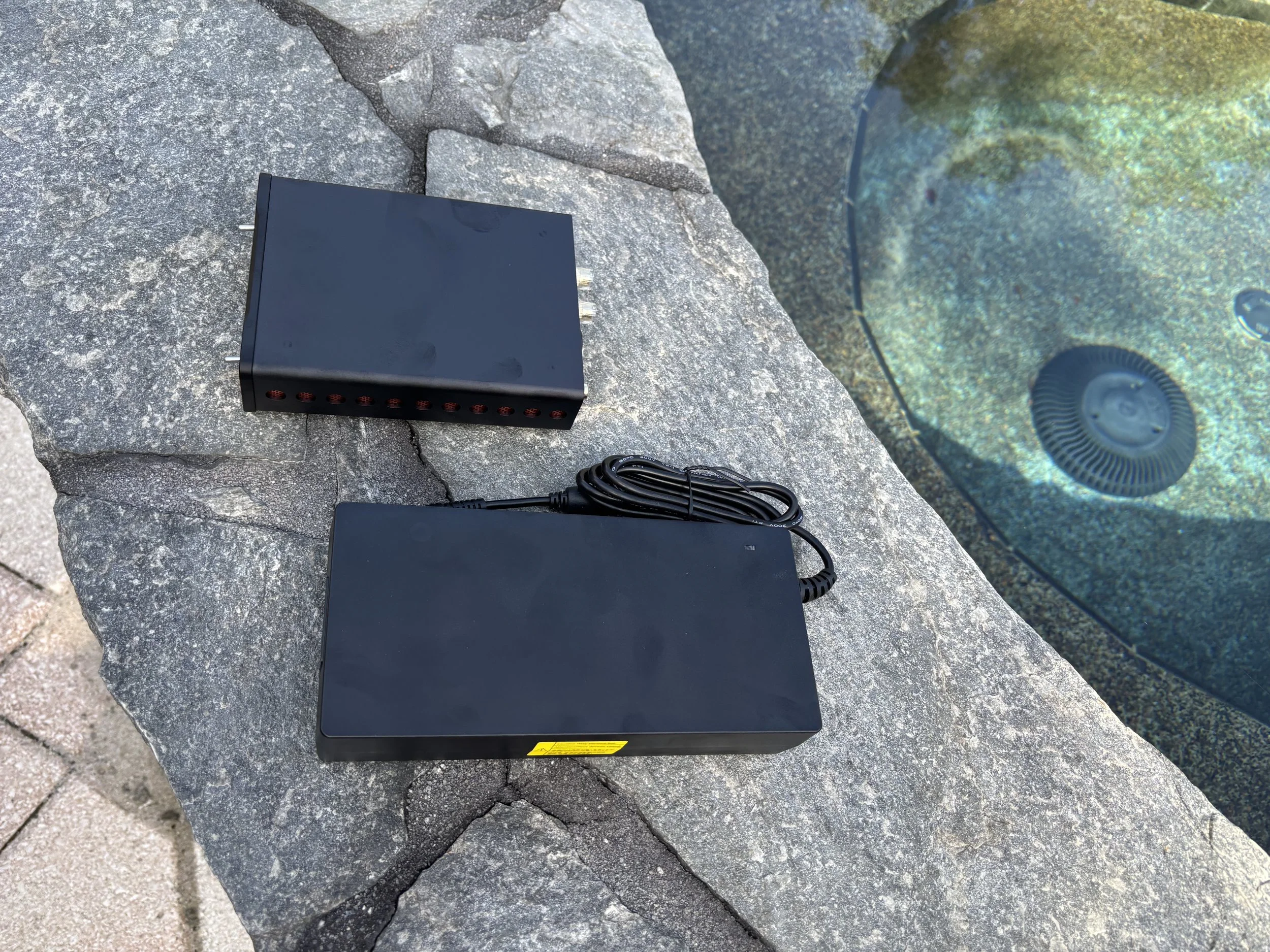
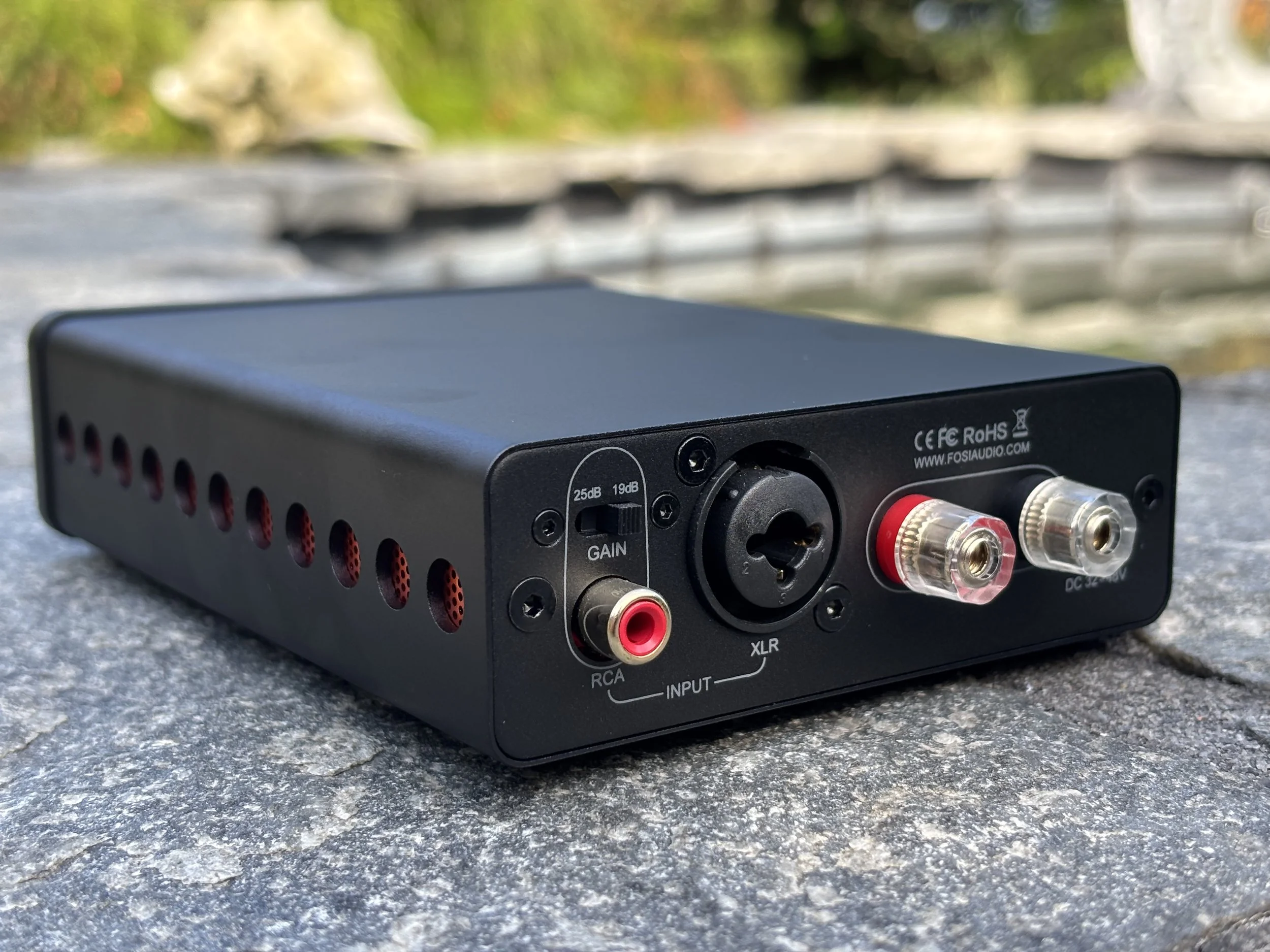
Each V3 Mono has balanced XLR/¼-inch TRS input alongside RCA, which changes what you can reasonably build around it. Pair a pair of these with a balanced preamp, DAC/preamp, or streamer, and you've got a proper balanced separates chain on a desk — something that used to imply a dedicated listening room and a much bigger budget.
You Will Need a Preamp
Worth being upfront about this before anyone orders a pair: the V3 Mono is a power amplifier only. There's no front volume knob and no built-in DAC or streamer, so you need something upstream handling volume — a traditional analog preamp, a DAC with variable output, or a streamer with preamp functionality built in. Fosi's own documentation is explicit that the V3 Mono is meant to be paired with a preamp rather than used as a standalone integrated amp.
That's the trade-off you're signing up for with any true separates system: pick your streamer, pick your DAC, pick your preamp, pick your power amps, and upgrade any one piece later without touching the rest. It's the classic audiophile approach, just shrunk down to something you can hold in one hand. Read our best DACs under $100 guide here!
Sound Quality
The V3 Mono sounds like a modern power amp should: clean, controlled, quiet, and mostly transparent. And tons and tons of power, so much power!!! Bass is tight, the midrange is uncolored, and the top end is detailed without drawing attention to itself. That neutrality is actually the point in a separates system — it lets the rest of your chain, not the power amp, set the tonal character. Want warmth? Run a tube preamp in front of it. Want total neutrality? Feed it from a clean DAC/preamp. Either way, the V3 Mono just does its job and gets out of the way.
Who This Actually Makes Sense For
Nobody strictly needs a pair of monoblocks for desktop speakers — a normal stereo amp does the job fine for most setups. But if you're running a serious desktop rig with large bookshelf speakers or compact towers, the V3 Mono lets you build a scaled-down version of a traditional separates rig without giving up a whole room to it.
It also works well below "serious desktop rig" scale. An apartment or bedroom system with a pair of passive speakers doesn't need much: a streamer or DAC/preamp on a shelf, the 48V/10A brick tucked out of sight, and one V3 Mono next to each speaker. That's a real separates system taking up barely any space, and it can drive speakers considerably larger than the size of the electronics would suggest.
Value
Pricing on gear like this moves around with promotions and bundles, so treat any specific number as a snapshot rather than gospel — but at the time of this review, Fosi's direct-sale bundle of two V3 Mono amps plus one shared 48V/10A supply lands meaningfully under the roughly $400 mark that's typically the ceiling for this class of setup. For that, you're getting two separate power amps, balanced inputs, PFFB, and enough rated output to drive genuinely demanding speakers. Traditional monoblocks can run thousands of dollars per channel; this pair costs about what a decent set of headphones does.
Final Thoughts
The V3 Mono is unnecessary for the vast majority of desktop systems, and that's kind of the point of the whole category — Class-D amplification has gotten cheap and good enough that "necessary" isn't really the bar anymore. It's not the best-measuring amp at its price (the PA5 II Plus has it beat there), and it's not the most flexible (the ZA3 wins on that front), but it is a genuine pair of monoblocks — separate boxes, separate power stages, real output headroom — at a price that would have been unthinkable for this format a few years ago.
If the format itself is the draw — dedicated amplification per speaker, placed right where the speaker lives — the V3 Mono delivers on that in a way none of its switchable or single-chassis rivals can.