Disclosure: We may earn a commission when you purchase through links on our site. This does not influence our reviews or recommendations.
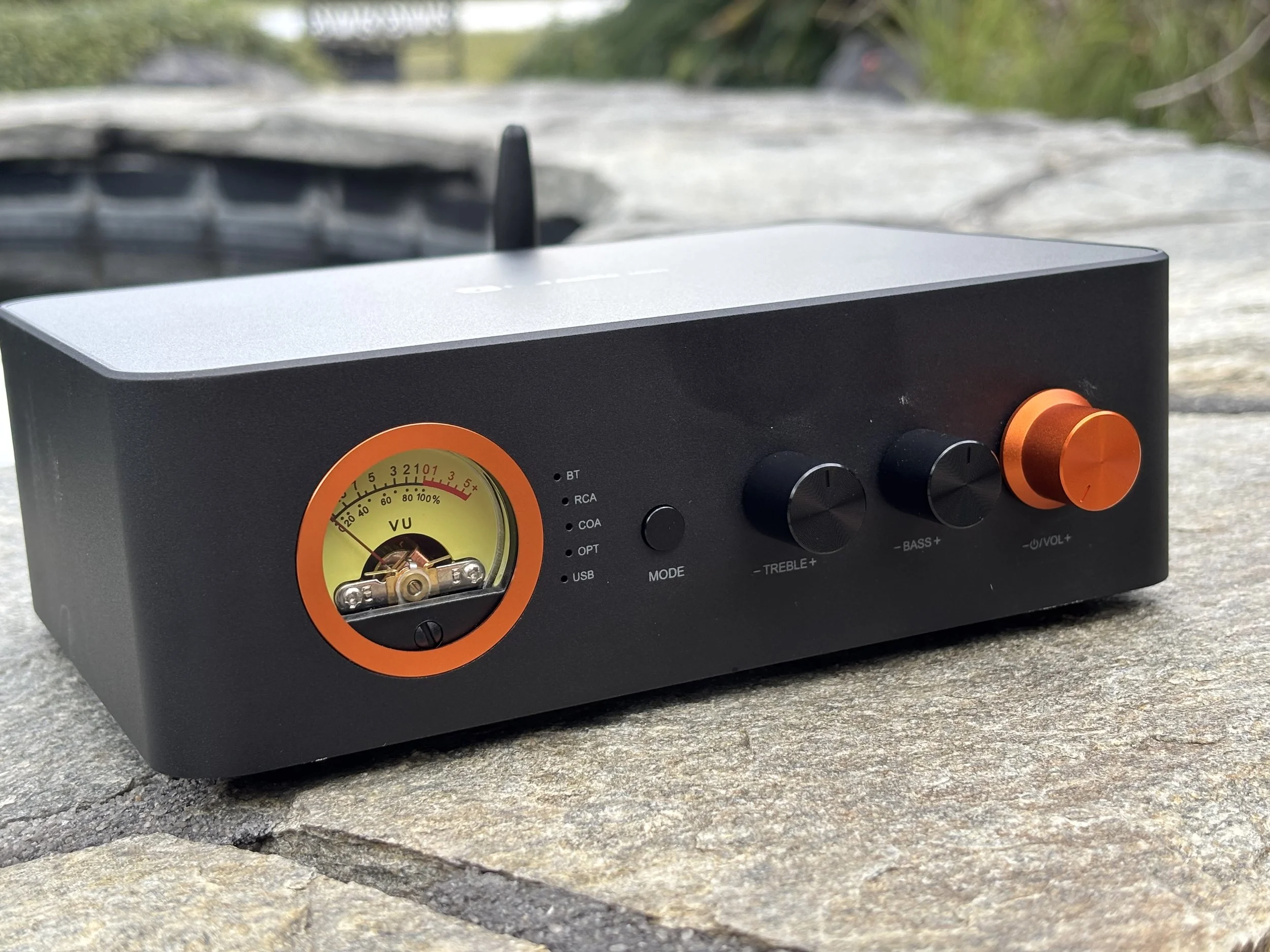
The chi-fi world has no shortage of small amps that do one thing well. The Fosi Audio MC351 is more interesting because it tries to do everything well in a single box — DAC, speaker amplification, Bluetooth, multiple digital inputs, a subwoofer output, and tone controls — and mostly pulls it off.
I've spent enough time with it now to say plainly: this is a fantastic little all-in-one DAC and amp, and getting this much functionality under $200 still feels wild, even by chi-fi standards where "wild for the price" is basically the whole genre. It's solid, well-built, and easy to recommend — with a few caveats worth knowing before you buy.
Build Quality
Fosi has been on a good run lately, and the MC351 continues that streak. Pick it up and the first thing you notice is the weight — it's denser than you'd expect from a sub-$200 all-in-one, which usually means one of two things in chi-fi gear: either they splurged on a proper toroidal or EI transformer, or the chassis itself is doing some of that work. With the MC351, it feels like both. The case is mostly metal — a wraparound steel or aluminum shell rather than a plastic shroud over a bare board — and it's rigid enough that there's no flex or hollow rattle when you set it down or move it around on a desk.
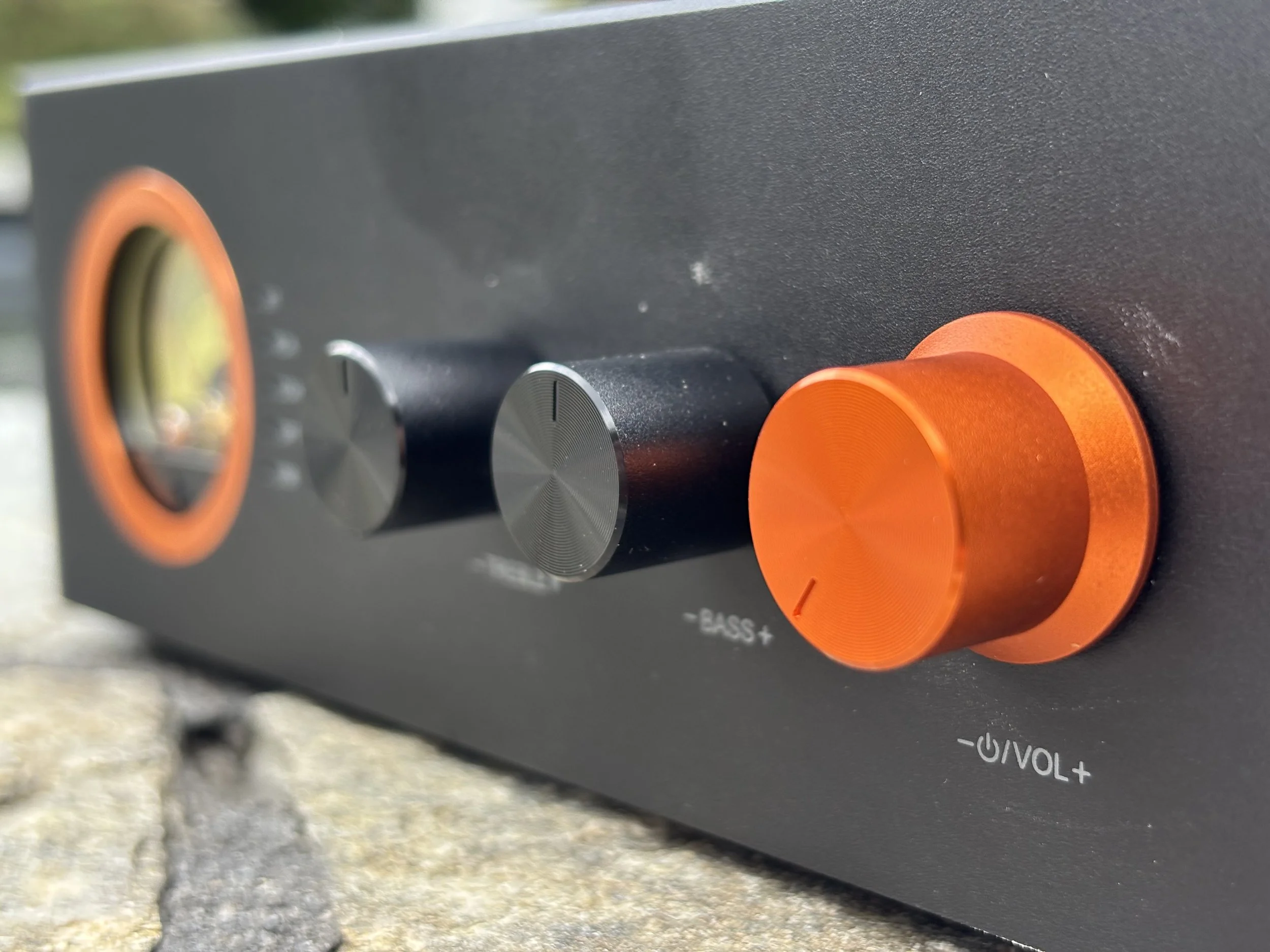
The front panel controls have a reassuring feel to them too. The volume knob turns with a smooth, damped resistance rather than the loose, scratchy wobble you sometimes get on budget units, and the input selector and tone controls click into position with a bit of tactile feedback instead of feeling like an afterthought. Little things like that matter more than people expect — they're the difference between a product that feels engineered and one that feels assembled.
Where the MC351 really stands out is in how it compares to the rest of the chi-fi field. A lot of amps in this price bracket — think Aiyima's A07 or entry-level Douk Audio units — lean into a "bare PCB in a box" aesthetic: functional, but clearly cost-optimized down to the last screw, with visible seams, lightweight panels, and knobs that feel like an afterthought. The MC351 doesn't feel like that. It sits closer to the more "finished" end of the chi-fi spectrum, alongside gear like SMSL's mid-tier lineup, where the fit and finish start to feel like a genuine hi-fi component rather than a hobbyist project box.
Fosi also gives it enough visual personality that it doesn't disappear into the generic-black-box category so much of this market lives in — brushed metal finishes, a clean front panel layout, and proportions that read as "small stereo component" rather than "computer speaker amp." It's compact enough to live on a desk without dominating the space, but it doesn't feel miniaturized or toy-like in the process. For a category where build quality is so often the first casualty of hitting an aggressive price point, the MC351 manages to keep it mostly intact — which is arguably the single biggest reason it feels like such a strong value.
The Input Indicators Are Too Small
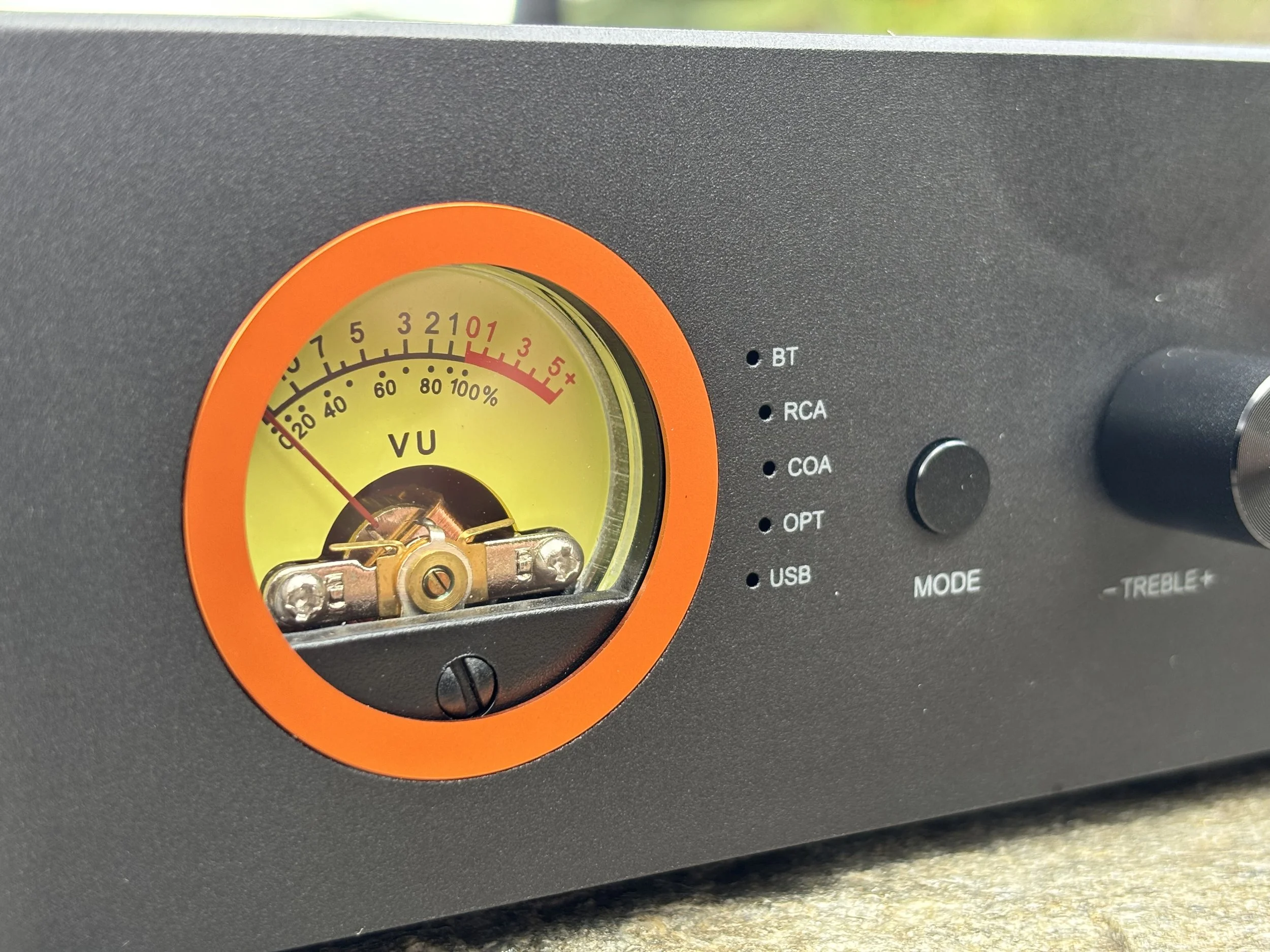
My biggest gripe, and it matches what a lot of owners say once they actually live with this thing: the input indicator LEDs are tiny. Like, you need a microscope to read them from any distance.
If the MC351 is sitting right next to you on a desk, it's a non-issue — glance down, see which input is lit, done. Move it a few feet away, onto a shelf or a rack in a bedroom setup, and you're squinting across the room trying to figure out if you're on Bluetooth or optical. At that point you don't need better eyes, you need a telescope.
This is a small thing, but on a multi-input amp it matters more than it should. A brighter LED or a proper input label visible from a normal seated distance would go a long way. Compare this to something like an SMSL SA300, which at least gives you a small display — the MC351 could use a version of that.
The Pre-Out Should Be RCA, Not 3.5mm
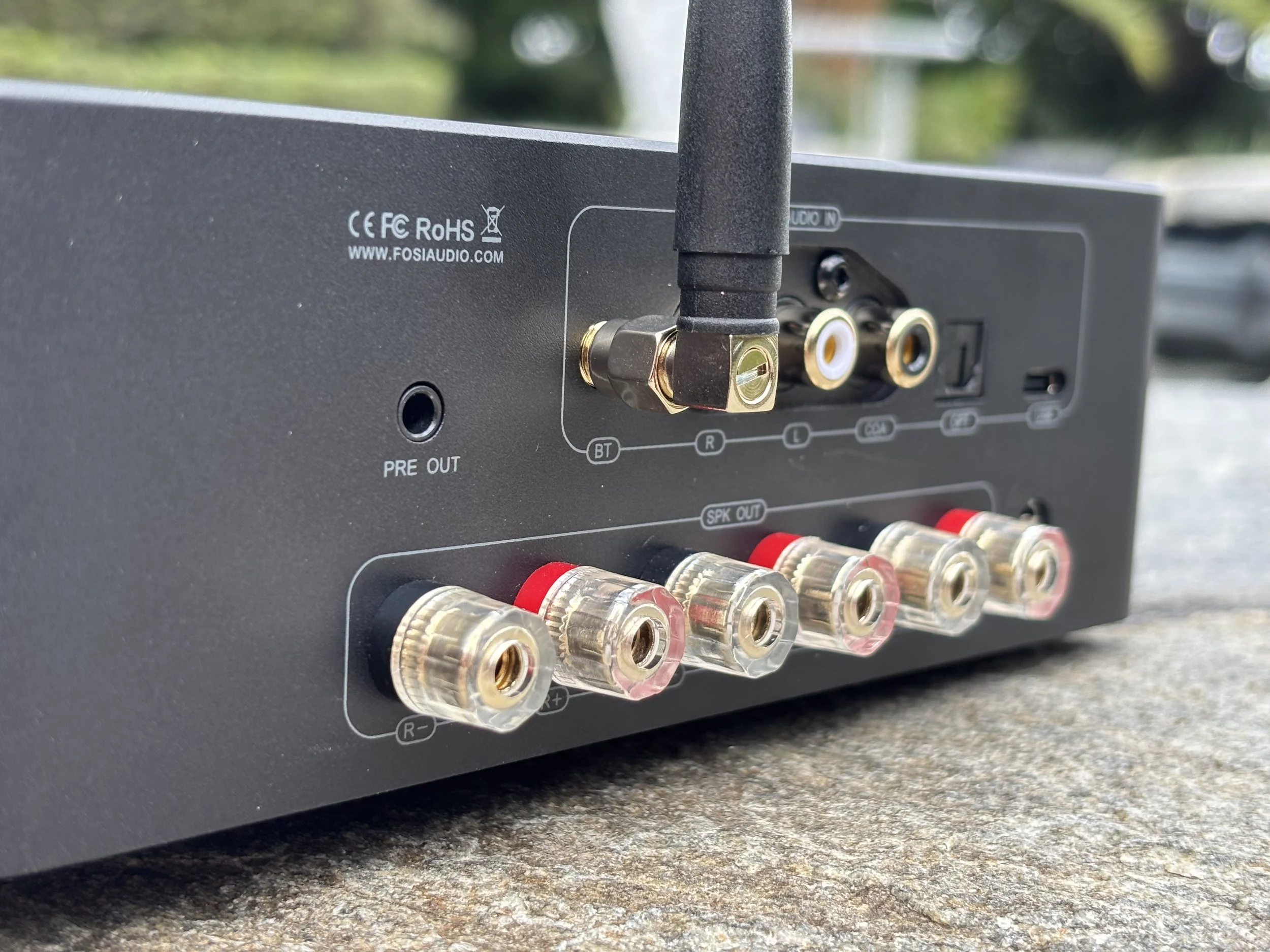
Fosi deserves credit for including a preamp output at all — plenty of amps in this price range skip it entirely. But it's a 3.5mm jack, not a proper set of RCA outputs, and that's a real miss.
If you ever want to run the MC351 into a subwoofer, a separate power amp, or another piece of hi-fi gear, RCA is the standard for a reason: better shielding, sturdier connection, and it doesn't feel like an afterthought bolted onto an otherwise capable unit. A 3.5mm pre-out works, technically, but it undersells how flexible this amp actually is. Give it two RCA jacks and this complaint disappears entirely.
Speaker Terminals Are Cramped
The speaker terminals are packed closer together than I'd like. This is the direct tradeoff of fitting this much hardware into such a compact chassis — something you see across a lot of chi-fi gear, where board space is at a premium.
If you're using banana plugs, it's barely worth mentioning. If you're wiring up bare speaker wire, especially with thicker gauge cable, you'll notice how little clearance Fosi had to work with back there. Not a dealbreaker, just something to plan around.
Why the All-in-One Format Works
This is really where the MC351 separates itself from Fosi's own lineup — things like the ZA3 or the V3 Mono, which are excellent but assume you're building a system out of separates: a DAC here, an amp there, a preamp somewhere in between.
Not everyone wants that project. Sometimes you just want speakers to make sound, without a rack of components and a drawer full of interconnects. The MC351 collapses that whole chain into one box: plug in a digital source or pair over Bluetooth, connect a set of passive speakers, add a powered subwoofer if you want low end, and you're done.
For a desk, dorm, bedroom, apartment, or secondary system, that convenience is the entire pitch — and it's a good one.
Sound Quality
The MC351 sounds like a chi-fi amp that knows exactly what job it's supposed to do: clean, controlled, and confident enough that you stop thinking about the amplifier itself, which is the highest compliment you can give something in this category.
Tonally, it leans neutral-to-slightly-warm rather than bright or clinical. Treble is present and detailed without ever tipping into harshness, even on recordings that can get a little sharp through less forgiving gear. That matters more than it sounds — a lot of budget amps compensate for a lack of "excitement" by pushing the top end forward, which can make cheap gear sound impressive for the first five minutes and fatiguing after twenty. The MC351 doesn't do that. It settles into a sound that's easy to listen to for hours, which is really the point of an amp meant to sit at the center of a casual desk or bedroom system.
Bass control is a particular strength and man I love these controls, they give so much more flexibality. On bookshelf speakers, low end stays tight and doesn't bloom or wander the way it can on underpowered or poorly damped amps — bass notes start and stop cleanly instead of smearing into the next note. Add a powered subwoofer through the crossover, and the low end integrates well rather than fighting with what the amp is already doing upstream. Vocals sit clearly in the mix, neither pushed forward artificially nor buried, and instrument separation holds up reasonably well even with denser mixes — you can follow individual elements without everything collapsing into a wall of sound.
Where the MC351 sits in the broader chi-fi landscape is worth calling out specifically. Amps like the Aiyima A07 or entry-level SMSL units can sound genuinely good on paper — often built around similarly competent Class D chip amps — but they sometimes betray their price with a slightly grainy top end or a bit of looseness in the bass under load. The MC351 doesn't really have that problem. It sounds more finished, closer to what you'd expect from something a tier or two up in price, which is probably the biggest surprise of the whole package.
None of this makes the MC351 a "reference" amp, and it's not trying to be. It's not the box you buy because you want to experiment with different DAC chips, roll op-amps, or chase diminishing returns in resolution — Fosi's separates exist for that kind of tinkering. What the MC351 does is deliver a sound that's clean, controlled, and free of obvious budget-gear tells, at a price where that combination genuinely shouldn't be this easy to find.
How It Compares
Against dedicated chi-fi desktop amps like the Aiyima A07 or Douk Audio's all-in-ones, the MC351 generally feels more refined — better build, cleaner sound, more thoughtful feature set. Against Fosi's own separates (ZA3, V3 Mono, GR70), it obviously gives up flexibility and upgrade headroom, but it also skips the need to buy, wire, and place multiple boxes. That's the actual tradeoff: separates get you more ceiling, the MC351 gets you there faster and cheaper.
Who Should Buy the MC351
If you're chasing a dedicated two-channel system with room to upgrade piece by piece, look at separates instead — a DAC, preamp, and something like the ZA3 or a pair of V3 Monos will get you more flexibility, at the cost of more money, more space, and more cables. Less fuss, more music, if that’s you buy it!
But if you want one box that handles a desk, bedroom, apartment, office, or basic gaming setup — real passive speakers, no half-a-room dedicated to gear — the MC351 is exactly that box.
Final Thoughts
The Fosi Audio MC351 is a genuinely great all-in-one DAC and amp, and the amount of functionality packed into it remains impressive given what it costs. It's solid, well-built, sounds good, and can anchor an entire small system on its own — no separates, no interconnect drawer, no dedicated shelf of gear required. For anyone who's tired of chasing diminishing returns across five different boxes, that simplicity is worth more than it sounds.
The complaints are real but minor, and none of them are surprising once you understand where Fosi cut corners to hit this price. The input indicators are so small you'll want a magnifying glass if the unit isn't right in front of you — fine on a desk, annoying anywhere else. The 3.5mm pre-out should be a proper set of RCA jacks, especially given how flexible this amp is otherwise. And the speaker terminals are tighter than ideal, which matters if you're running bare wire rather than banana plugs. None of that changes the fundamental value proposition here — these are the kinds of tradeoffs you'd expect from a box doing this much for this little, not signs of a rushed or poorly thought-out design.
If you want to tinker with separates instead, Fosi has plenty of options depending on what you're building toward. The ZA3 is worth a look if you want a dedicated stereo amp to pair with your own DAC. The V3 Mono makes sense if you're chasing monoblock power and don't mind the extra cost and complexity. And the GR70 is there if you want a taste of tube sound without spending tube-amp money. But if you just want one box that does basically everything well — DAC, amp, Bluetooth, subwoofer output, tone controls — without having to think about how it all connects, the MC351 is the one to get. And if you're building out the rest of your desktop or bedroom rig, it's worth checking out the best IEMs under $300 — the MC351 pairs well beyond just speakers if you ever want a more personal listening setup on the same source.