Fosi Audio ZA3 Review: Better Than Aiyima, SMSL and Topping?
Disclosure: We may earn a commission when you purchase through links on our site. This does not influence our reviews or recommendations.
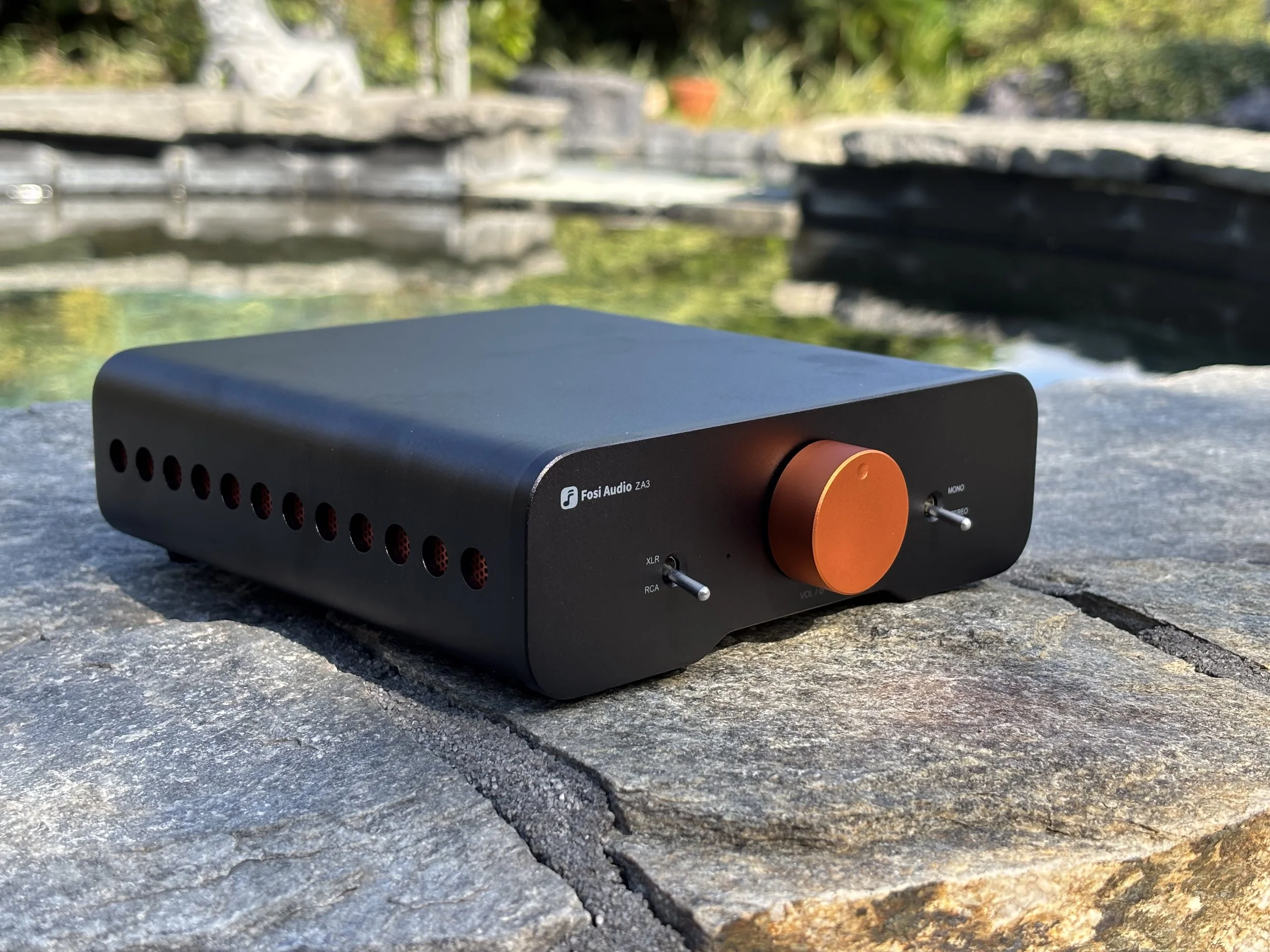
The Fosi Audio ZA3 is exactly the kind of amplifier I like seeing from Fosi.
I've reviewed enough compact Class-D amplifiers at this point that simply being small and powerful isn't particularly exciting anymore. That's almost expected now. What gets my attention is when manufacturers start bringing features normally associated with larger, considerably more expensive equipment into these tiny boxes.
And that's exactly what Fosi has done with the ZA3.
Balanced XLR inputs, RCA inputs, a 12V trigger, and stereo or mono operation are all here. These are the kinds of features that make the ZA3 feel less like a basic mini amp and more like a serious piece of two-channel audio gear.
Then Fosi wraps everything in its familiar black-and-orange industrial design, gives the chassis some surprising weight and solidity, and builds the entire thing around the Texas Instruments TPA3255 Class-D amplifier platform.
This is much more my speed. Love this amp. Buy the ZA3 on Amazon
Build Quality: Small, Heavy and Very Fosi
The first thing that surprised me about the ZA3 wasn't the spec sheet, it was picking the thing up. There's some real heft here, and that's exactly what I like to see.
For such a compact amplifier, the ZA3 feels incredibly solid in the hand. Nothing about it feels hollow or cheap, and the metal chassis gives it the kind of density I want from a piece of audio gear.
The volume knob deserves its own callout too. It has an amazing feel to it, smooth, weighted, no wobble, no cheapness. That's the kind of small detail that tells you a company actually thought about how the thing gets used every day, not just how it looks on a spec sheet.
I also continue to love Fosi's current design language. The predominantly black chassis with that bright orange volume knob has become immediately recognizable as Fosi without becoming obnoxious. It's clean, industrial, and simple. Put the ZA3 on a desk next to a DAC or streamer and it looks like a legitimate piece of enthusiast audio equipment rather than a generic mini amp off Amazon. That's an important distinction as Fosi keeps pushing further into enthusiast hi-fi. Small doesn't have to mean cheap, and this amp proves it. Looking for even more power? Check out our review of the Onkyo Muse Y-40!
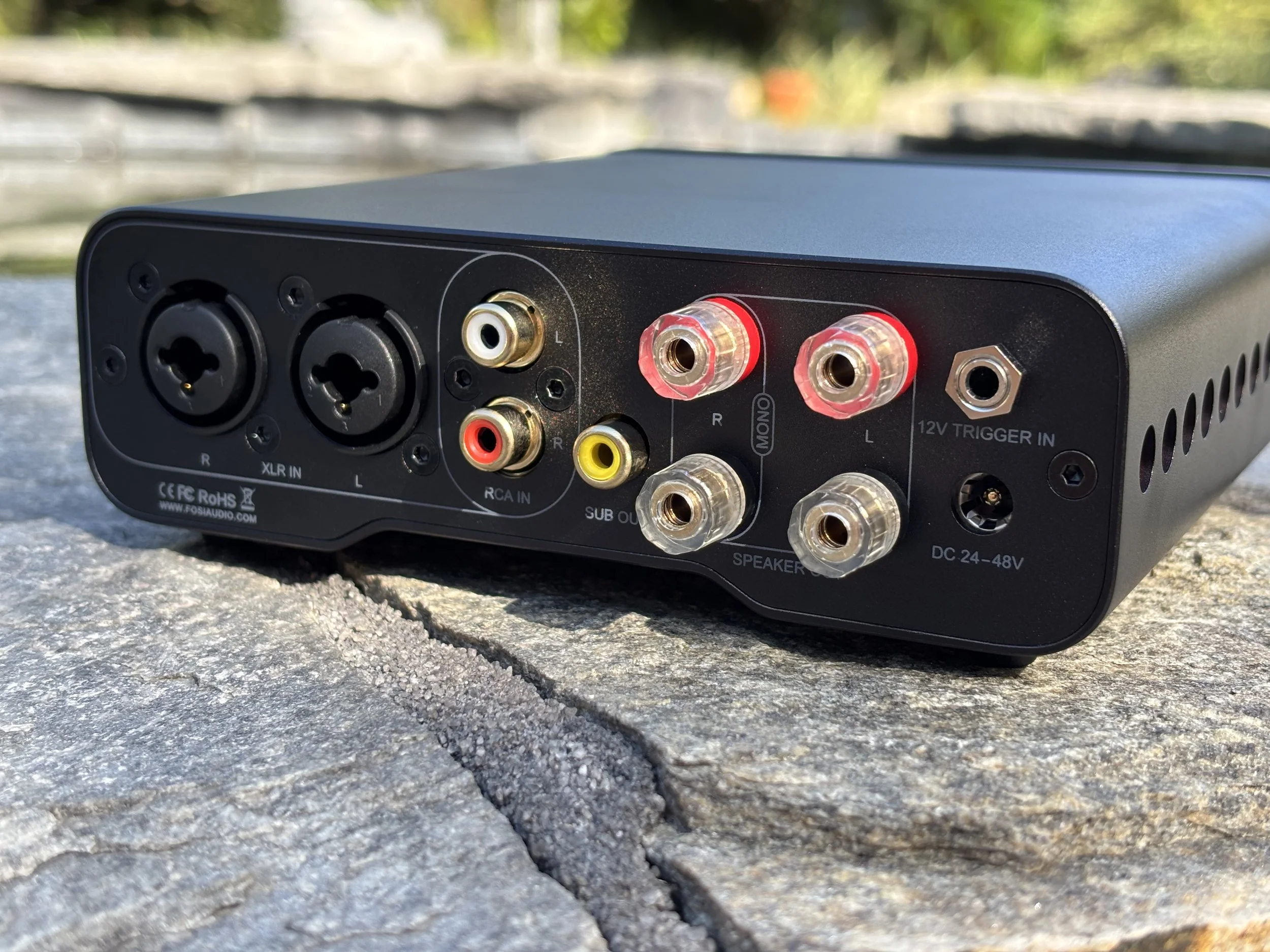
Finally, Balanced XLR Inputs
This is what I really wanted to see. Around back you'll find RCA alongside balanced combo inputs supporting XLR and 1/4-inch TRS connections. This is the feature that sold me.
That immediately makes the ZA3 more interesting for a serious desktop or two-channel system. Balanced connectivity can provide better resistance to interference and noise, particularly with longer cable runs or when you're combining multiple pieces of equipment. More importantly, it makes sense with the direction Fosi's ecosystem has been heading. Want a compact CD player too? Check out our review of the Fosi Audio Merak CD Player here!
Pair the ZA3 with a quality balanced DAC or preamp and you can put together an impressively capable little separates system without needing a giant rack full of traditional hi-fi components. There's also a 12V trigger input, which I love seeing on equipment like this. Connect it to compatible upstream equipment and the ZA3 can power up and down along with the rest of your system. It's a little feature that makes a separates system feel much more polished in everyday use.
Stereo Today, Monoblocks Tomorrow
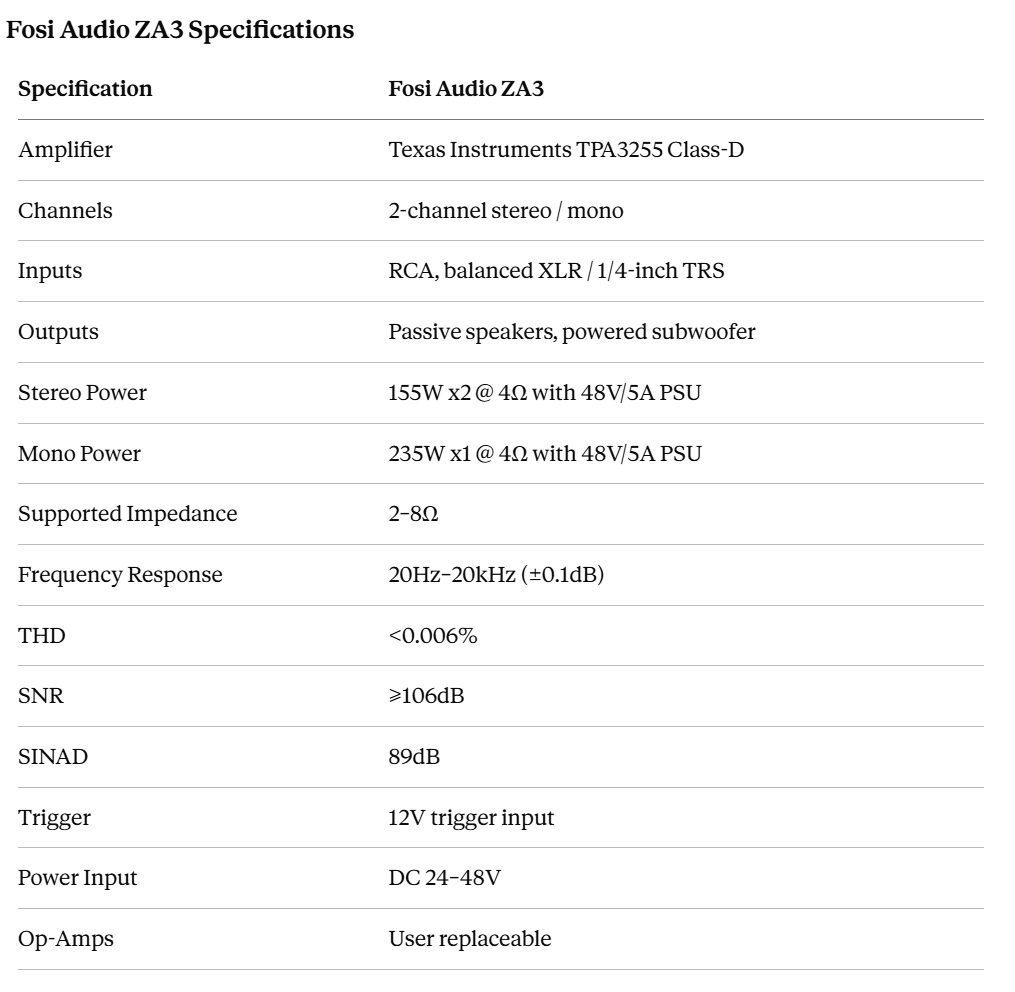
One of the ZA3's coolest tricks is its ability to operate in either stereo or mono. In stereo, a single ZA3 can power a conventional pair of passive speakers. According to Fosi, using its 48V/5A power supply produces a rated 155 watts per channel into 4 ohms. Flip the amplifier into mono operation and Fosi rates output at 235 watts into 4 ohms.
That creates a really nice upgrade path. Start with one ZA3, and if you eventually want more power or simply want to experiment with dedicated monoblocks, buy another ZA3 and run one amplifier per speaker. That's the kind of flexibility I love in affordable audio equipment, because you're not buying yourself into a dead end.
Fosi Audio ZA3 Specifications
There's Even a Subwoofer Output
Another feature that makes the ZA3 considerably easier to build a complete system around is its powered subwoofer output. That's particularly useful for desktop and bookshelf-speaker systems. Run your passive speakers from the ZA3, connect an active subwoofer, and suddenly this tiny amplifier becomes the center of a proper 2.1-channel system.
There isn't a DAC or Bluetooth built into the ZA3, and I actually don't mind that. This is fundamentally a power amplifier. Feed it from the source, DAC, streamer, or preamp of your choice and let it do the amplification. That simplicity is part of the appeal. Have you seen the Fosi Audio ZD3? Read our review here!
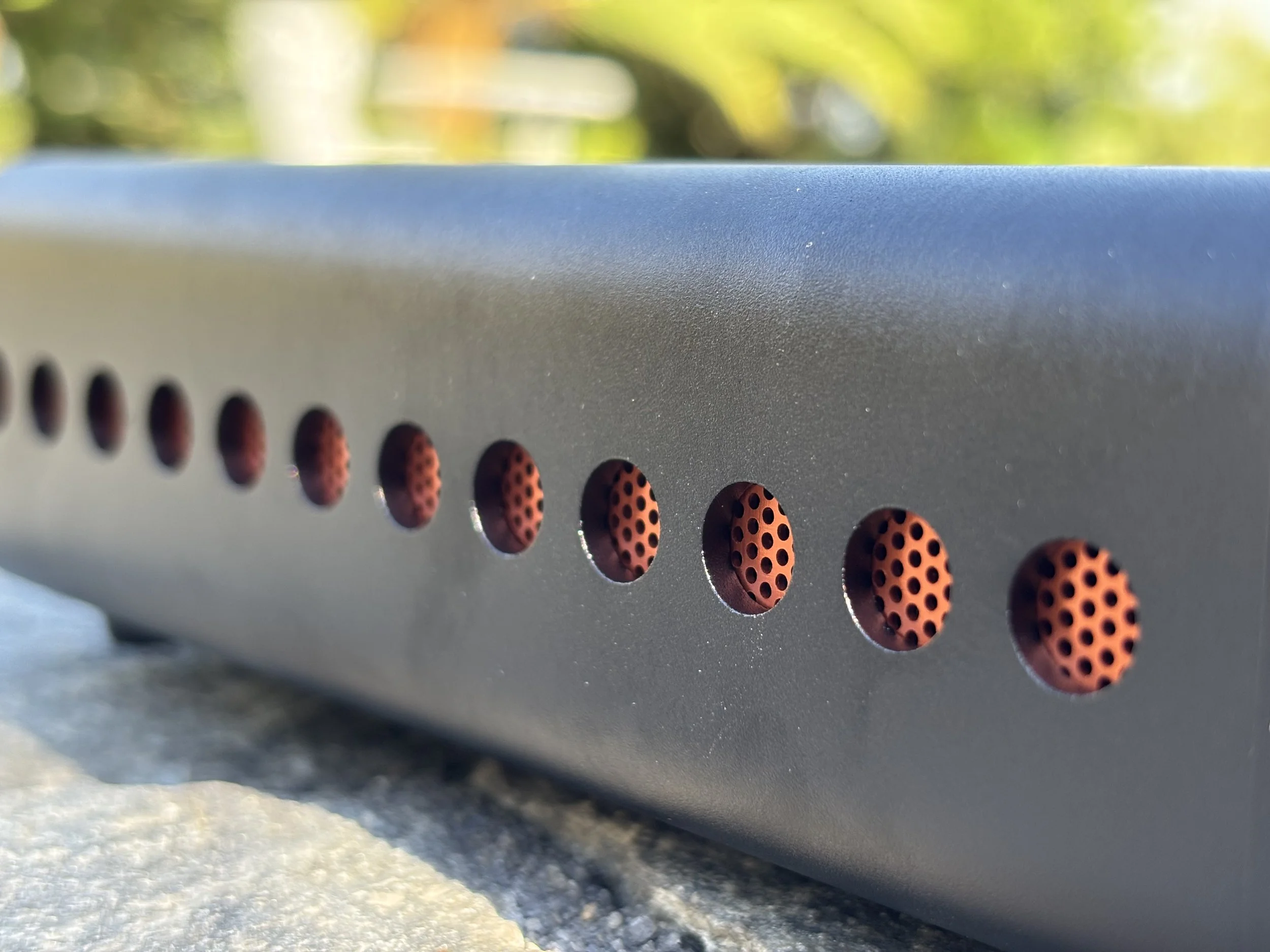
Replaceable Op-Amps Make It Even Nerdier
Fosi hasn't forgotten about the enthusiasts who can't leave anything alone. The ZA3 uses replaceable op-amps, letting owners experiment with compatible alternatives and potentially tweak the amplifier's sound signature. Do you need to do this? Absolutely not. But that's exactly why I like that Fosi gives you the option.
For someone who simply wants an amplifier, leave it alone and enjoy it. For the person who enjoys opening equipment and experimenting with different components, the ZA3 gives you another rabbit hole to disappear into.
Sound Quality
This is ultimately where the ZA3 has to prove itself, and the first thing that stands out is just how much amplifier you're getting from such a small chassis.
The ZA3 has the clean, controlled character I've come to expect from modern Fosi Class-D designs. There's plenty of detail, a low noise floor, and enough power on tap that this doesn't feel limited to tiny desktop speakers.
Bass comes through with good control and authority rather than getting loose or bloated. The midrange stays clean and relatively neutral, while the top end has enough detail to keep recordings sounding open without the amplifier imposing an enormous sonic personality of its own.
That's exactly what I want from a power amp. I don't want an amplifier dramatically changing the character of my speakers. I want clean amplification, enough headroom to handle dynamic material, and as little unwanted noise as possible.
The ZA3 delivers that remarkably well for something this small, and running it off the balanced inputs makes the whole package even more compelling when paired with a proper DAC or preamp.
The 48V Power Supply Is the One I'd Want
Here's the one spec buyers really need to pay attention to: the power supply matters, a lot. Fosi supports both 32V/5A and 48V/5A supplies with the ZA3.
With the 32V supply, Fosi rates the amplifier at 95 watts per channel into 4 ohms in stereo and 110 watts in mono.
Move to the 48V/5A supply and those figures jump to 155 watts per channel in stereo and 235 watts in mono.
That's a substantial difference, and it's not a close call for me. For an easy-to-drive desktop speaker, the smaller supply may be perfectly adequate. But if I'm buying the ZA3 because I want a surprisingly serious amplifier hiding inside a tiny chassis, I'm going with the 48V supply every time. It's a relatively small jump in cost for a lot more headroom, and you get way more bang for your buck by just springing for it up front instead of upgrading later. Give the little thing some room to breathe.
How It Stacks Up Against the Competition
The ZA3 doesn't exist in a vacuum, there's a whole wave of TPA3255-based mini amps right now, so here's how I'd place it.
Vs. Aiyima A07 Max. The A07 Max is the ZA3's closest rival on paper, and it undercuts it on price while claiming higher wattage figures. But that's really the whole story: the A07 Max is RCA-only, no balanced XLR/TRS inputs at all, which immediately takes it out of the running for anyone building a serious balanced desktop chain. The ZA3's chassis and volume control also just feel like a more finished product. If all you need is stereo/mono switching on a budget and you don't care about balanced connectivity, the A07 Max is a solid value play. If you want this to look and feel like real hi-fi gear, the ZA3 is the better buy.
Vs. SMSL AO200 MKII. The SMSL brings a built-in DAC and Bluetooth to the table, which is genuinely useful if you want an all-in-one box and don't already have a source component. But that convenience comes at the cost of the ZA3's biggest strength: no balanced inputs on the SMSL. Sonically the two trade blows, the SMSL can sound a touch more forward and detailed, the ZA3 a bit more spacious and relaxed, but for my money the ZA3's build and balanced connectivity win out if you're already running a dedicated DAC or streamer.
Vs. SMSL A300. Pricier than the ZA3, and more feature-packed with an included remote, but the onboard DAC is nothing special and probably not something you'd actually use. Sound-wise the two are closer than you'd expect, both clean and precise, with the SMSL edging slightly livelier in the top end and the ZA3 sounding a bit more natural and coherent through the mids. If you want a remote, the A300 has an edge. If you want the better all-around desktop amp, I'm still taking the ZA3.
Vs. Topping PA7 Plus. This one's not really a fair fight, the PA7 Plus costs roughly five times as much and it should sound better, and it does: bigger, deeper soundstage, darker background, more resolving overall. But that's the point. The ZA3 gets you a meaningful chunk of that balanced, serious-amplifier experience for a fraction of the cost. Unless you've already got a system that will fully resolve the PA7 Plus's extra clarity, the ZA3 makes a lot more financial sense.
Vs. Fosi Audio V3. The V3 is the ZA3's little sibling, smaller, no balanced inputs, no sub-out, but it does have a pre-out instead. But it’s still one of my favorite desktop amps of all time! If you don't need XLR/TRS and want to save some money and desk space, the V3 is still solid. But once you've used the ZA3's balanced inputs, it's hard to go back. That XLR input is the whole reason to step up.
The short version: there's cheaper (Aiyima A07 Max), there's more feature-packed (SMSL AO200 MKII, A300), and there's more expensive and more resolving (Topping PA7 Plus). The ZA3 carves out its own lane by being the only one in this price range that combines real balanced connectivity with genuinely solid build quality and clean, neutral sound. That's a hard combination to beat at this price.
Who Is the Fosi Audio ZA3 For?
I think the ZA3 makes the most sense for someone building a compact separates system.
If you've already got, or plan to buy, a DAC, streamer, or preamp with balanced outputs, the ZA3 slots into that system beautifully.
It's also a great option for someone who wants to start simple. Run one ZA3 in stereo today, add a powered subwoofer if you want more low-end extension, and potentially add a second ZA3 later to experiment with monoblocks.
That's a lot of flexibility from one little amplifier.
Final Thoughts
The Fosi Audio ZA3 represents exactly what has made compact Class-D amplification so interesting. It's not just small, it's usefully small.
You get balanced XLR/TRS inputs, RCA, a powered subwoofer output, 12V trigger support, stereo and mono operation, replaceable op-amps, and substantial output capability from a chassis that takes up very little space.
And I love the physical execution. The ZA3 feels solid, has some surprising heft to it, and Fosi's black-and-orange design looks fantastic. That volume knob alone tells you they got the details right. It manages to feel like a proper piece of audio equipment despite its tiny footprint.
Most importantly, there's room to grow with it. One ZA3 can anchor a compact stereo system. Add a subwoofer and you've got 2.1. Add a second ZA3 and suddenly you're running dedicated monoblocks. That's a lot of enthusiast-level flexibility packed into one very small black box.
My advice: spring for the 48V power supply, don't cheap out there, it's where the real bang for your buck is. The Fosi Audio ZA3 is exactly what affordable Class-D audio should be: compact, powerful, flexible, and just nerdy enough to make you want to start experimenting. Love this amp. Read more about smart home tech here!