MuseHiFi MUSE 300 Review: A Better-Looking DAC/Amp Than FiiO and Topping?
Disclosure: We may earn a commission when you purchase through links on our site. This does not influence our reviews or recommendations.
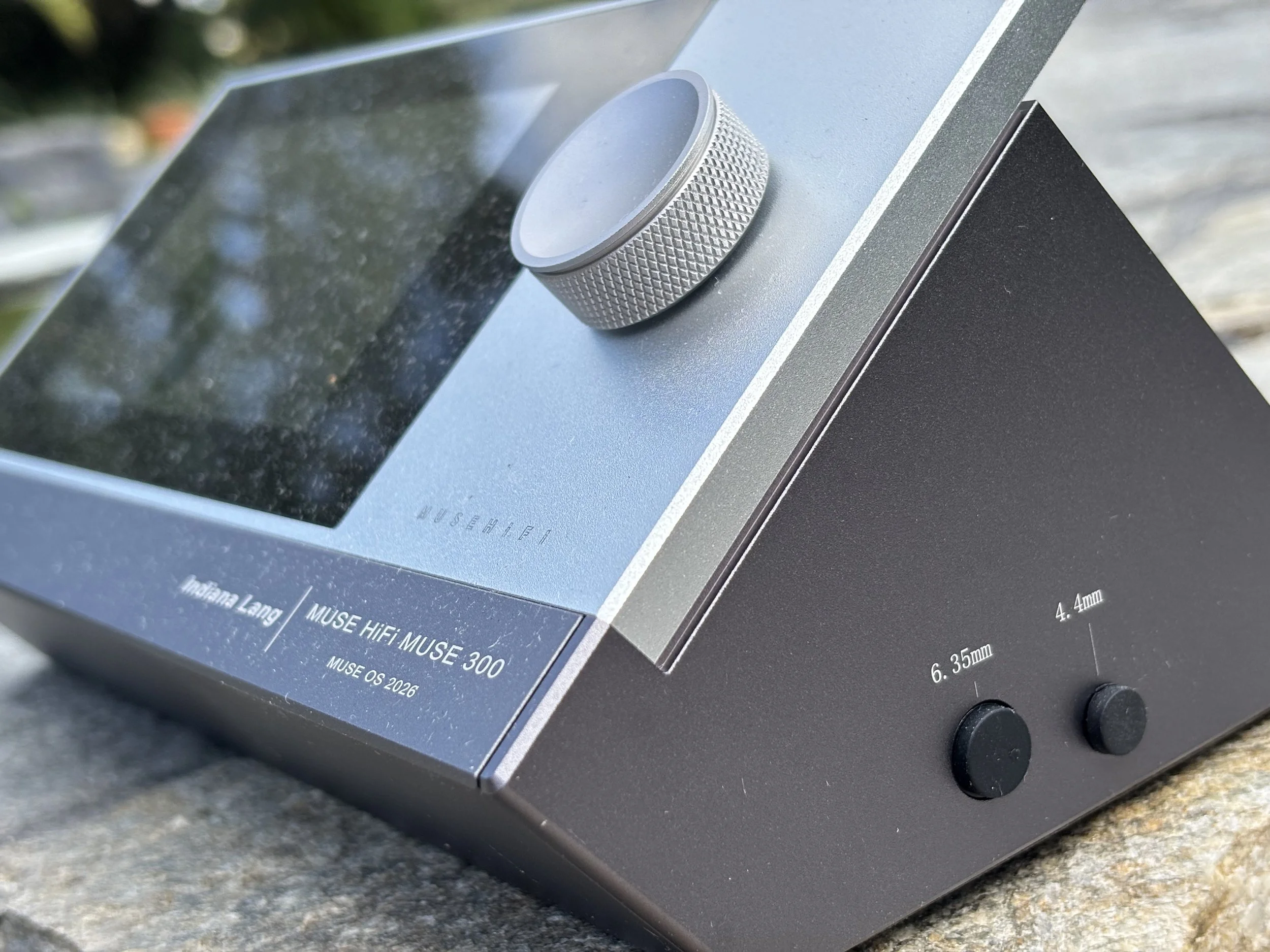
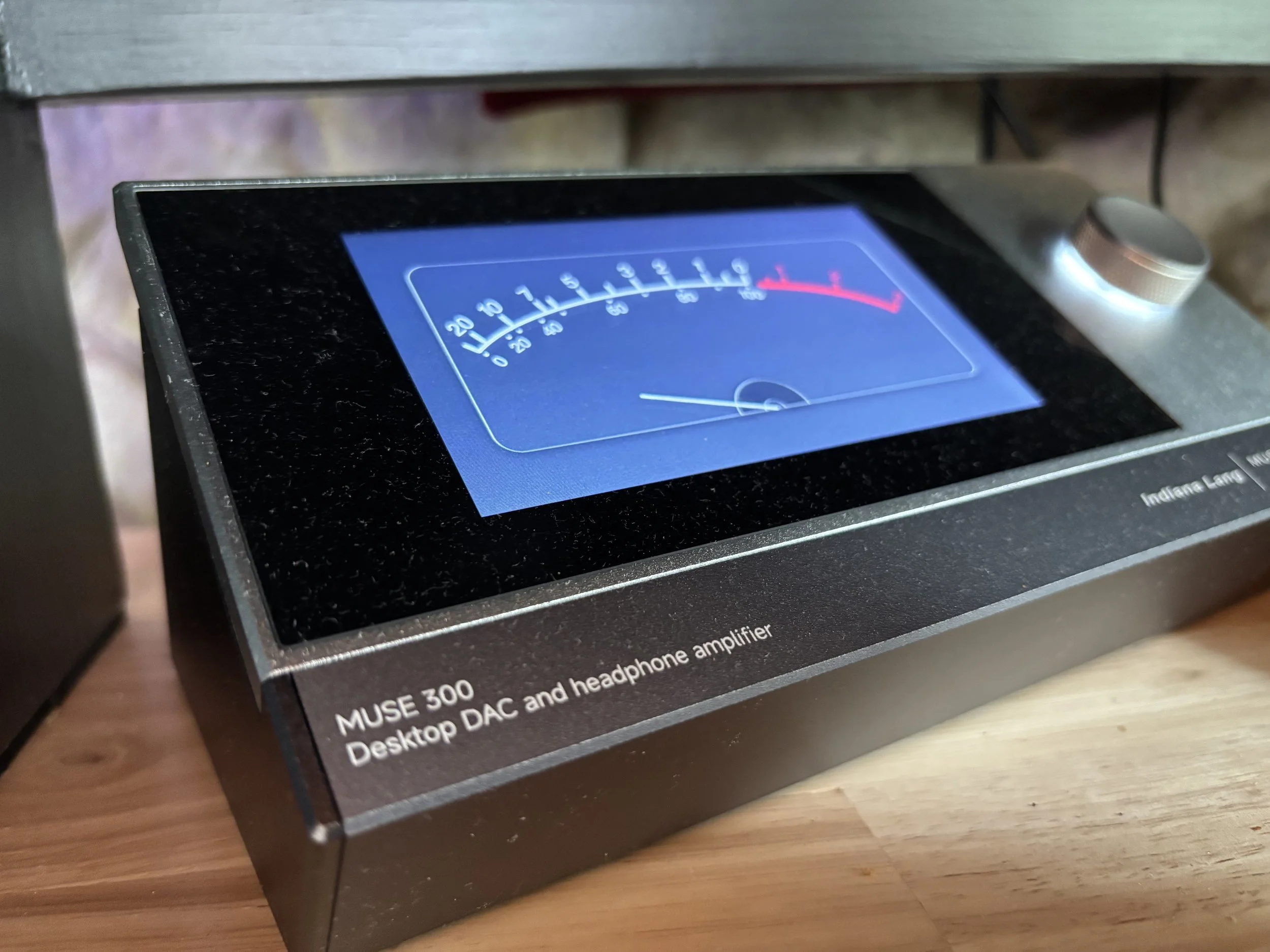
MuseHiFi wants the MUSE 300 to be the DAC/amp with personality, and honestly, it is. Most desktop stacks in this price range are black boxes with a tiny screen and a volume knob. The MUSE 300 shows up with a 5-inch display, swappable UI themes, a backlit control knob, and custom engraving. It's the first DAC/amp in a while that actually looks like something, not just another anonymous box on a desk.
Mine has the custom engraving, and I love it. It's a small thing, but it makes the unit feel like mine instead of a random SKU. Pair that with the display and the glowing knob, and the MUSE 300 just has more character sitting on a desk than almost anything else at this price.
The Screen Should Be Touch
Here's my biggest gripe: that 5-inch display is begging to be touched, and it isn't. You're stuck navigating everything through the multifunction knob instead, and it feels like a mismatch — a big modern screen paired with a control scheme built for a much smaller one.
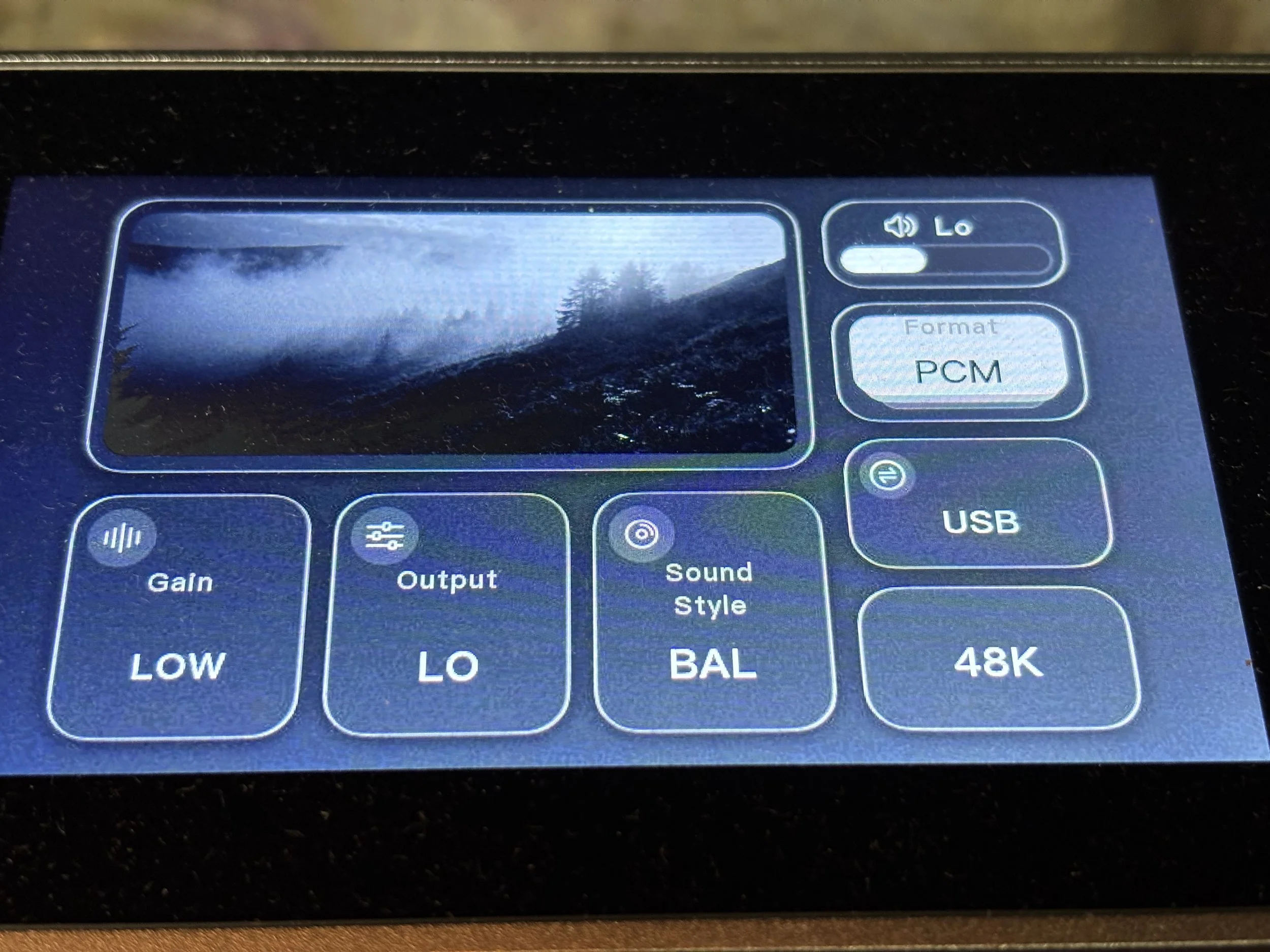
Compare that to the FiiO K17, which leans into a similar big-screen, do-it-all approach but actually ships with a touchscreen. Or the FiiO K15, which uses its color touchscreen to make menu-diving painless. Once you've used either of those, going back to knob-only navigation on a screen this size feels like a step backward. MuseHiFi clearly has the hardware ambition — they just stopped one step short.
Hardware Glitches Out of the Box
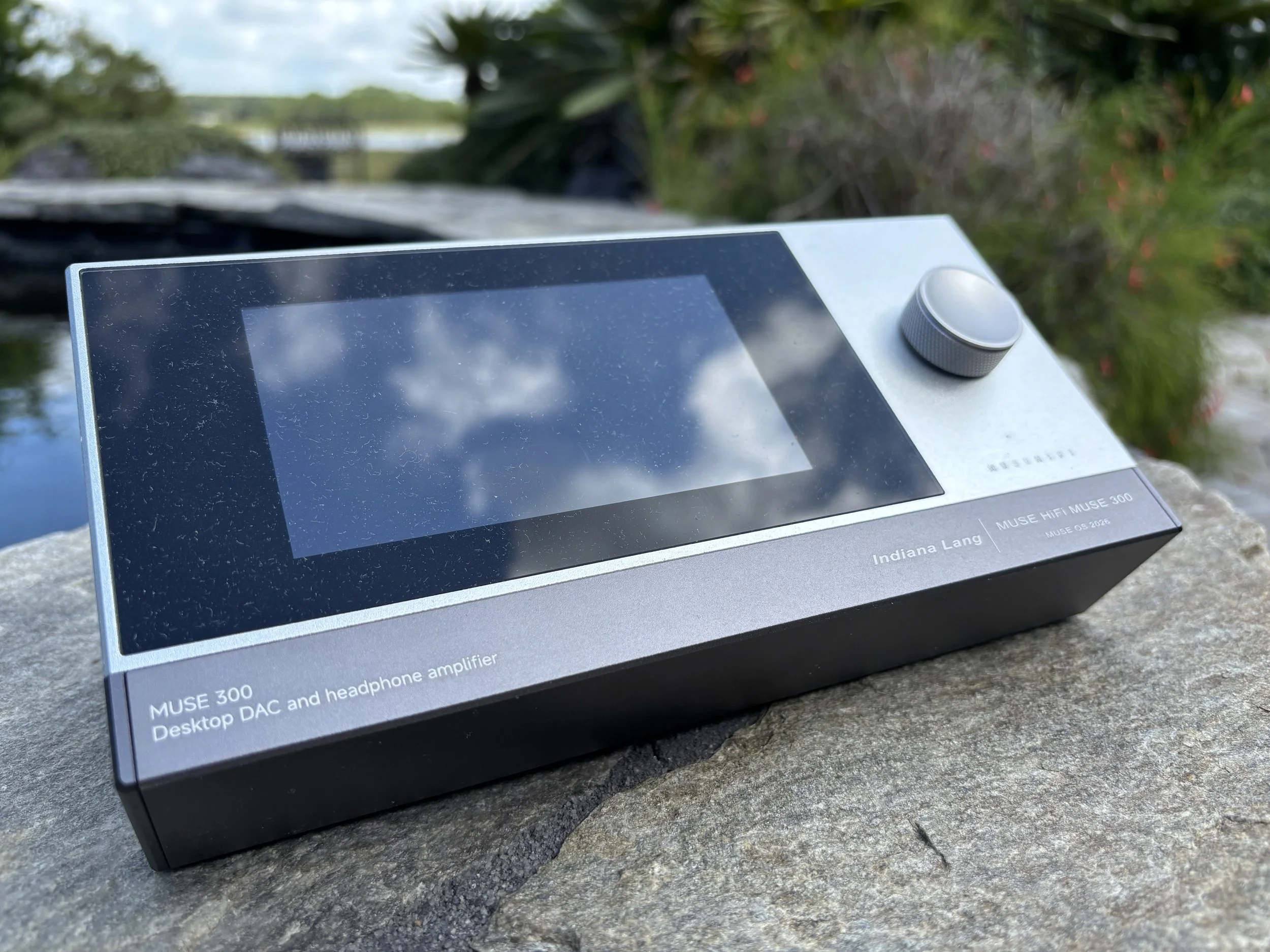
My unit also had a display issue in the first few days — one side of the screen would fade or dim noticeably compared to the other. It cleared up on its own after a bit and hasn't come back, so I can't say it's a dealbreaker. But on a product built around its display, a screen glitch right out of the box isn't a great look. At $439.99, this needs to be solid from day one, not "it fixed itself, mostly."
What's Actually Under the Hood
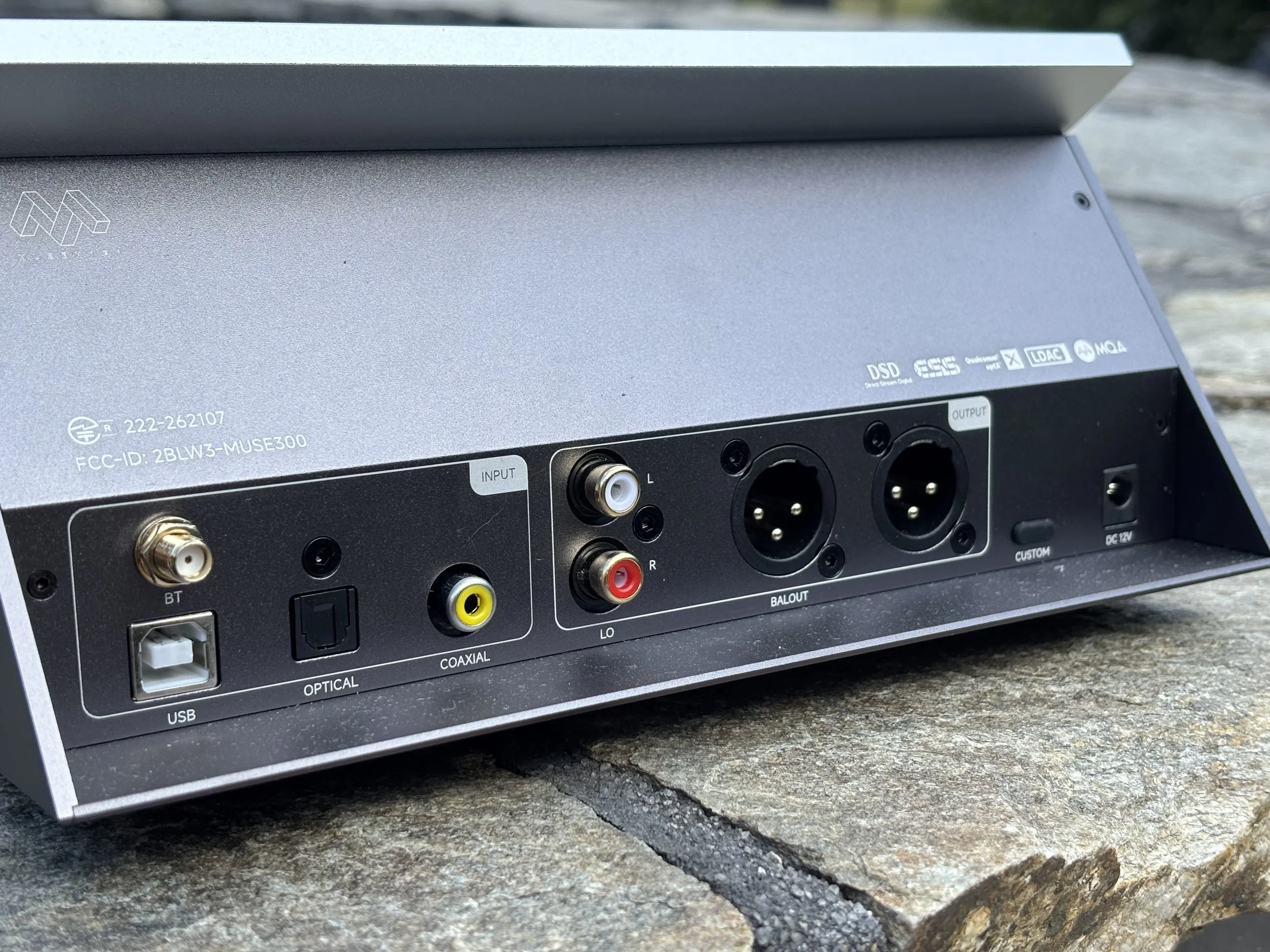
None of this is a knock on the engineering. MuseHiFi built the MUSE 300 around the ESS ES9039 Ultra DAC with a fully balanced design and dual headphone amp modules, rated up to 2,200mW out of the balanced 4.4mm output. That puts it in the same power tier as heavy hitters like the FiiO K17, and well ahead of most sub-$300 competition. Connectivity is stacked too — USB, coax, optical, Bluetooth 5.4 with LDAC and aptX Lossless, plus RCA and XLR outs on the back. This isn't a style-over-substance product.
The three hardware sound modes — Balanced, Tube, and ACG — are a genuinely fun addition. Where something like the Topping DX5 II leans on PEQ software to change your sound, the MUSE 300 does it in analog circuitry with a knob turn. Balanced is where I leave it most of the time, but Tube mode is a nice change of pace when I want something warmer without touching an EQ app.
How It Actually Sounds
This is where the MUSE 300 stops being a gimmick and starts being a legitimate DAC/amp.
Balanced mode is clean and controlled — low noise floor, tight bass that doesn't bloat or bleed into the mids, and a midrange that stays clear even on busier tracks. Treble has good extension without turning harsh, and imaging holds up well; instruments stay separated instead of smearing together on denser mixes. It's not a warm, colored sound — it's closer to neutral-with-detail, which is what you'd expect from an ESS-based implementation like this.
Out of the balanced 4.4mm output, the 2,200mW on tap is more than enough for full-size headphones. I didn't run into any situation where the amp section felt like it was straining or running out of headroom, even with harder-to-drive planars. That puts it ahead of a lot of the sub-$300 crowd, and in the same conversation as something like the FiiO K17's 4000mW output — MUSE 300 doesn't quite match that ceiling, but it's not far off, and it's more power than most people will ever actually need at their desk.
The mode-switching is where it gets fun. Tube mode noticeably thickens up the low-mids and vocals — it's a real, audible shift, not a placebo EQ bump, and it makes vocal-heavy tracks and acoustic stuff sound noticeably smoother. ACG pushes the opposite direction: more energy up top, more forward presentation, which works well for gaming and anime OSTs like MuseHiFi clearly designed it for, but I found it a little fatiguing for long music sessions. Balanced remains my daily driver, but having Tube mode as an actual hardware option — not a DSP toggle — is a nice thing to have that most competitors in this price range don't offer at all.
Bluetooth quality deserves a mention too. With LDAC connected, the difference versus wired USB is small enough that I'd happily leave it on Bluetooth for casual listening. aptX Lossless support is a nice touch if your source supports it. It's not going to replace a wired connection for critical listening, but it's genuinely good enough that I don't feel like I'm compromising much reaching for Bluetooth instead of digging out a cable.
Where it starts to show its price ceiling is against something like the Topping DX5 II or the FiiO K15 — both step up in resolving power and just slightly more refined amp sections, but they also cost more and don't have nearly as much visual personality. For $439.99, the MUSE 300's sound quality holds its own; it's not the outright best-sounding option at this price, but it's close enough that the design and mode-switching genuinely tip the scales.
The Design Is What Sells It
Put the touchscreen complaint aside for a second — the design itself is genuinely great. The way it sits on the desk, the backlit knob, the custom engraving, the different UI themes. It has a personality that most DAC/amps in this price range simply don't bother with. FiiO, Topping, and SMSL all make excellent-sounding units, but they largely look interchangeable. The MUSE 300 doesn't.
Verdict: Wait for Gen 2
I like the MUSE 300 a lot. It sounds clean, it's got real power, the connectivity is excellent, and it's honestly the most fun-looking desktop DAC/amp I've used in a while.
But at over $400, I'd hold off. Wait for a Gen 2 with an actual touchscreen and the early hardware kinks worked out. The bones here are great — MuseHiFi just needs one more pass to make the MUSE 300 match its price tag. Looking for a deal? Read our best DACs under $100 here!