Nobody Knows How to Buy an IEM—Not Even Reviewers
Disclosure: We may earn a commission when you purchase through links on our site. This does not influence our reviews or recommendations.
Buying a TV is easy. Need a brighter picture? Buy a brighter TV. Need more bass? Buy a bigger subwoofer. Need a faster laptop? Check the benchmark.
Good luck.
I’ve been reviewing IEMs for years, even I don’t know what exactly I would buy, there are way to many options and constant new releases. Warm. Neutral. Bright. V-shaped. Harman. Diffuse field. Mid-forward. Relaxed upper mids. Fast bass. Natural timbre. Somehow you're supposed to know what all of that means before you've ever heard a single one of these words translated into sound. And here's the part nobody wants to admit out loud: I've reviewed dozens of IEMs at this point, and I still can't reliably tell you whether I'll love one until I actually put it in my ears. Not from the graph. Not from the spec sheet. Not from the marketing copy. I have to hear it. If that's true for someone who does this constantly, imagine being a newcomer with a $150 budget and forty open browser tabs.
The Problem: Specs Don't Tell You Much
Here's the uncomfortable truth about this hobby. Driver count doesn't matter — a single well-implemented dynamic driver will run circles around a lazily tuned quad-hybrid. Price doesn't guarantee anything — plenty of budget sets outperform stuff twice their cost, and plenty of expensive sets are just expensive. And frequency response graphs, the thing everyone points to as the "objective" answer, only help you if you already know what you like. For everyone else, they're basically hieroglyphics — a squiggly line that supposedly encodes an entire listening experience, if only you knew how to read it.
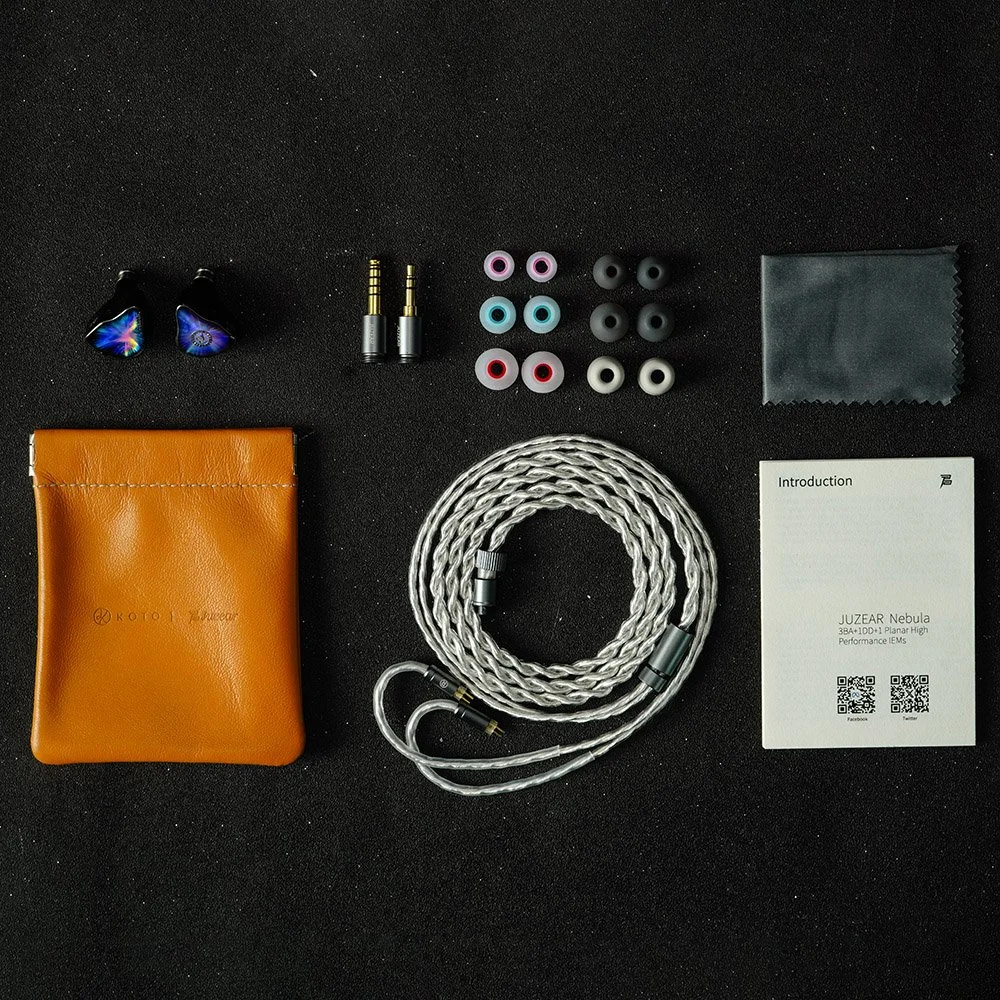
The Biggest Lie in the Hobby
People treat frequency graphs like they tell the whole story. They don't. Two IEMs can measure almost identically on a graph and still sound noticeably different once you factor in driver implementation, fit, insertion depth, distortion behavior, and staging. A graph tells you roughly where the energy sits across the frequency spectrum. It doesn't tell you how bass decays, how congested a mix gets during a busy chorus, whether vocals sound like they're coming from a person or a speaker cabinet, or whether the soundstage has any actual depth to it. Measurements are a useful data point. They are not a crystal ball.
Reviews Don't Help Either
This is the part that really breaks people's brains. One reviewer says the bass is incredible. Another says it's restrained. One calls the tuning warm. Another calls the exact same IEM neutral. A third calls it analytical. Who's right? Probably all of them. Our ears aren't microphones. They don't process sound with clinical consistency — they're shaped by what we're used to listening to, how our ear canals are built, what gear we've owned before, and honestly, what mood we're in that day. A "warm" IEM to someone who lives on bright, treble-forward mixes might sound perfectly neutral to someone coming from a bass-heavy consumer set. Neither person is lying. They're just calibrated differently.
My Actual Buying Advice
So if graphs lie (sort of) and reviewers disagree (constantly), what's left? Stop chasing graphs and start figuring out what you actually listen to. Rock. Metal. Country. EDM. Hip-hop. Gaming. Movies. Whatever it is, be honest about it — not what you think sounds sophisticated to listen to, but what's actually in your rotation. Then find reviewers whose taste lines up with yours. Not the reviewer with the biggest following or the most technical vocabulary — the one who, when you cross-reference their favorites against IEMs you've already heard and liked, keeps landing on the same page as you. That single alignment matters more than any claim that an IEM is "objectively good," because there is no such thing as objectively good when the final measuring instrument is a pair of ears attached to a brain with its own preferences.
Why This Actually Matters
IEMs have never been better — or more confusing. There are now dozens of genuinely excellent options under $200, which sounds like great news, and it is, but it also means the barrier isn't quality anymore. It's clarity. The sheer number of models, tuning philosophies, and conflicting reviewer opinions can make buying your first pair feel like more homework than it should be for what's supposed to be a hobby about enjoying music. Understanding your own preferences — genre, fit, whether you like bass you can feel or vocals that sit right up front — is worth more than memorizing a single spec sheet. It's the difference between shopping with a compass and shopping with a coin flip.
Our Take
The best IEM isn't the one with the most drivers. It isn't the one with the prettiest frequency response graph. And it isn't necessarily the one every reviewer loves. It's the one that makes your music sound the way you want it to sound. That's why buying an IEM is one of the hardest purchases in consumer tech — harder, honestly, than picking a TV or a laptop, where the specs actually mean something concrete. And it's why, even after reviewing plenty of these things for a living, I still can't always predict which one is going to become my favorite until it's already in my ears.
Images courtesy of Juzear.