
Pet Cameras vs. Security Cameras: Do Dog Owners Really Need a Dedicated Pet Camera?
Disclosure: We may earn a commission when you purchase through links on our site. This does not influence our reviews or recommendations.
Leaving your dog home alone is never easy, especially when you can't stop wondering what they're getting up to. An indoor camera and a smartphone make it possible to check in from just about anywhere, and the market has split into two camps. Regular security cameras cover the basics, while dedicated pet cameras add features built for four-legged companions: barking alerts, automatic tracking, remote treat dispensers, and AI-powered activity monitoring. Those extras usually cost more, and some depend on a monthly subscription.
So is a dedicated pet camera worth buying, or can an ordinary indoor security camera do the job just as well? The answer depends on what you want to monitor, how much interaction your dog needs, and whether the extras justify the price.
Pet Camera vs. Security Camera
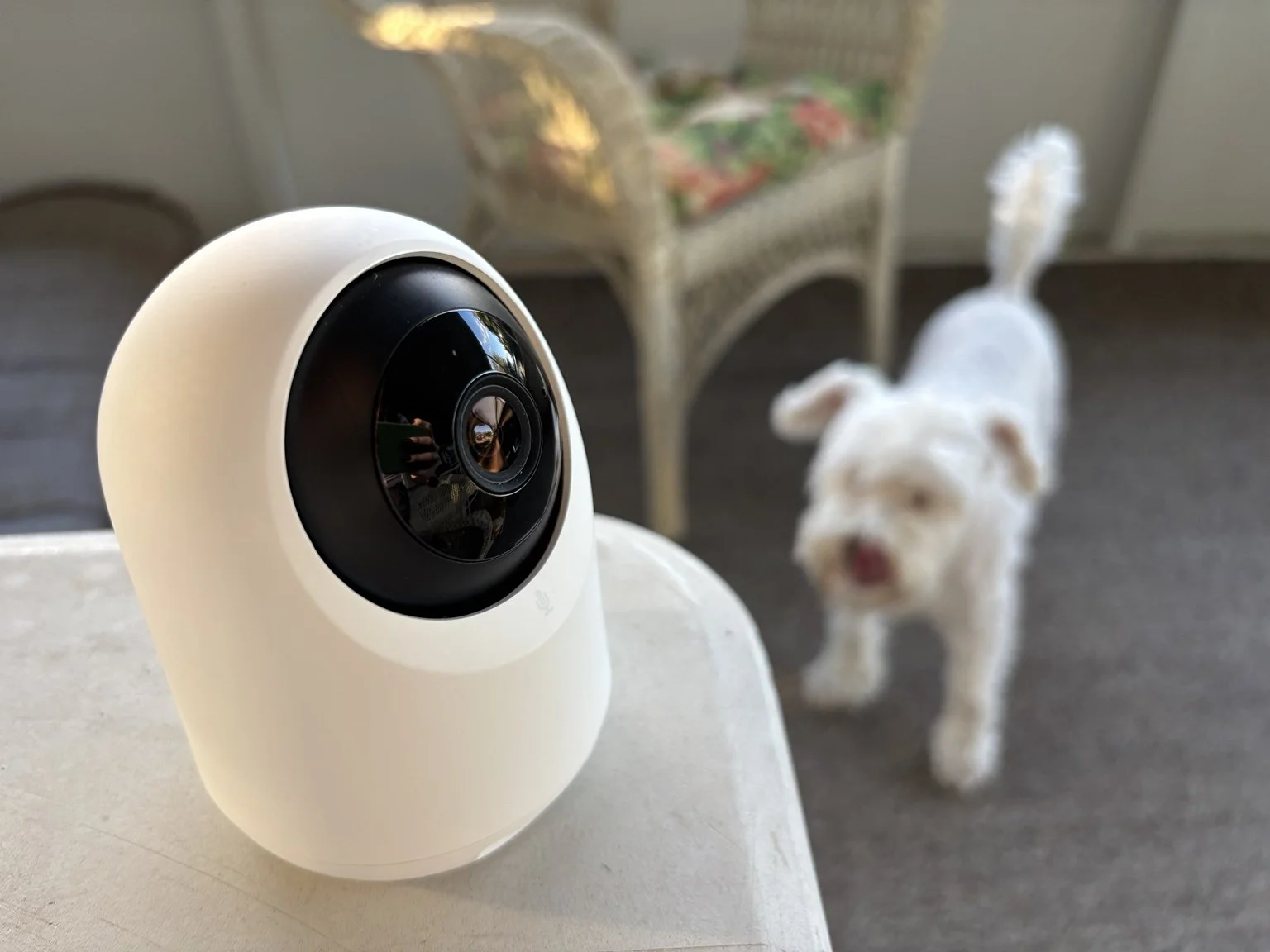
At their core, the two do the same job: show you what's happening at home while you're out. Most modern indoor security cameras offer live streaming, motion detection, night vision, and two-way audio. Depending on the model, you may also get automatic tracking, smartphone notifications, and recording to either a microSD card or the cloud. Dedicated pet cameras build on that foundation with features aimed at owners, such as bark recognition, activity notifications, and remote treat dispensing.
The line between the categories is blurring, though. Plenty of regular security cameras now include pet detection and barking alerts, so you may not need a dedicated pet camera to keep an eye on your dog. The real question is whether what's left is worth the premium.
What Dedicated Pet Cameras Offer
Beyond basic video monitoring, dedicated pet cameras offer a few features designed specifically with animals in mind. Some focus on keeping owners informed, while others provide ways to interact with pets remotely.
Pet-Specific Alerts and Activity Monitoring
The most useful pet-camera feature is behavior recognition. Rather than pinging you every time something moves, some models alert you when your dog barks or gets unusually active. That's helpful with a vocal dog or one prone to separation anxiety, because you can get a sense of how the day is going without constantly opening the live feed.
These features aren't exclusive to pet cameras, however. The TP-Link Tapo 2K C210P2 is a regular indoor security camera, yet it offers AI-powered pet detection, barking and meowing alerts, motion tracking, and smartphone notifications. If you mostly want to know how your dog's day is unfolding, that may be plenty, with no need to pay extra for a specialized camera.
Treat Dispensers and Remote Interaction
Remote treat dispensing is the one feature that genuinely sets many pet cameras apart from conventional security cameras.
Products like the Furbo 360° Dog Camera and the Petcube Bites 2 Lite let you launch treats from a smartphone app. That gives you a way to interact with your dog from afar, and it can be handy for rewarding good behavior or providing a little enrichment. The Furbo 360° adds automatic tracking and a rotating camera that follows your dog around the room, while the Petcube Bites 2 Lite pairs a stationary 160-degree wide-angle lens with an adjustable treat dispenser.
How useful any of this is depends entirely on the dog. I'm not convinced every dog needs remote interaction. We've used regular security cameras with two-way audio to talk to our miniature schnauzer, River, and it seemed to upset her more than comfort her. She could hear us but couldn't tell where we were, which left her confused and restless. For that reason, I'd be more inclined to simply check in on her rather than try to interact with her through a camera.
That said, I'm fairly confident she wouldn't object to a treat launcher.
Subscription-Based Features
Cost is the other big consideration. Some cameras cover the basics for free, but cloud recording, advanced notifications, and activity summaries often sit behind a paid subscription. Furbo, for example, sells a standalone 360° Dog Camera that includes live viewing, treat tossing, and basic barking alerts with no subscription. More advanced notifications and video history require its Furbo Nanny plan, which starts at $9.99 per month. Petcube works the same way: the Bites 2 Lite runs without a subscription, but smart barking alerts and cloud video history require the optional Petcube Care service.
I'd rather buy a camera outright and get the features I need without another recurring bill. Subscriptions aren't always a bad deal, though. If you want detailed activity tracking or access to recorded footage, the added cost may be worth it. Either way, check which features come with the camera and which are locked behind a plan before you buy.
Three Cameras Compared
These three models take noticeably different approaches to watching your pet, and together they show how dedicated pet cameras stack up against a conventional security camera.
Furbo 360° Dog Camera: A Dedicated Option for Interactive Monitoring
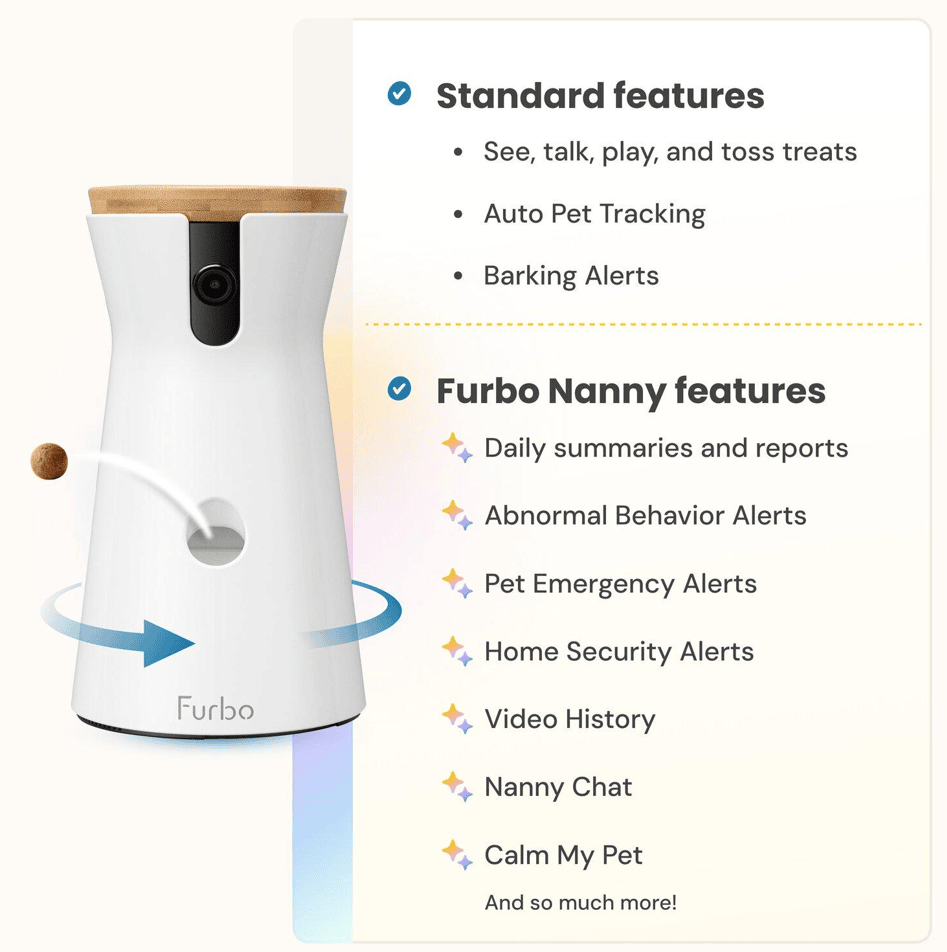
The Furbo 360° Dog Camera is built for dog owners who want more than a video feed. It has a rotating 1080p camera, automatic tracking, two-way audio, night vision, and a built-in treat dispenser. The standalone version includes basic barking alerts without a subscription, while Furbo Nanny adds more advanced alerts and access to recorded video clips.
Its biggest strength is the pairing of pet-focused features with remote interaction. The flip side is that if you only check in occasionally, much of it may go unused. Keep in mind, too, that Furbo's subscription-required purchase options differ from the standalone camera in both terms and included features, so confirm which version you're buying.
Buy the Furbo 360° Dog Camera on Amazon!
Petcube Bites 2 Lite: A Wide-Angle Pet Camera With Treat Dispensing
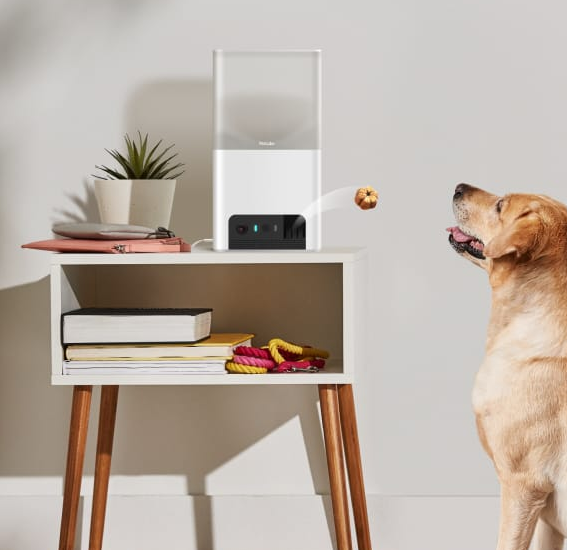
The Petcube Bites 2 Lite takes a different approach to interactive monitoring. Instead of a rotating camera, it uses a stationary 160-degree wide-angle lens meant to capture much of a room. It also offers 1080p video, night vision, two-way audio, and a treat dispenser that accommodates different treat sizes.
Basic live viewing and interaction work without a subscription, but smart barking alerts and cloud video history require Petcube Care. That's worth noting if you care more about notifications than treats. The Bites 2 Lite suits someone who wants a dedicated pet camera with a wide view and occasional treat dispensing. Its fixed lens is the main drawback for a dog that frequently moves between different areas of a space.
Buy the Petcube Bites 2 Lite on Amazon!
TP-Link Tapo 2K C210P2: A Security Camera With Pet-Friendly Features
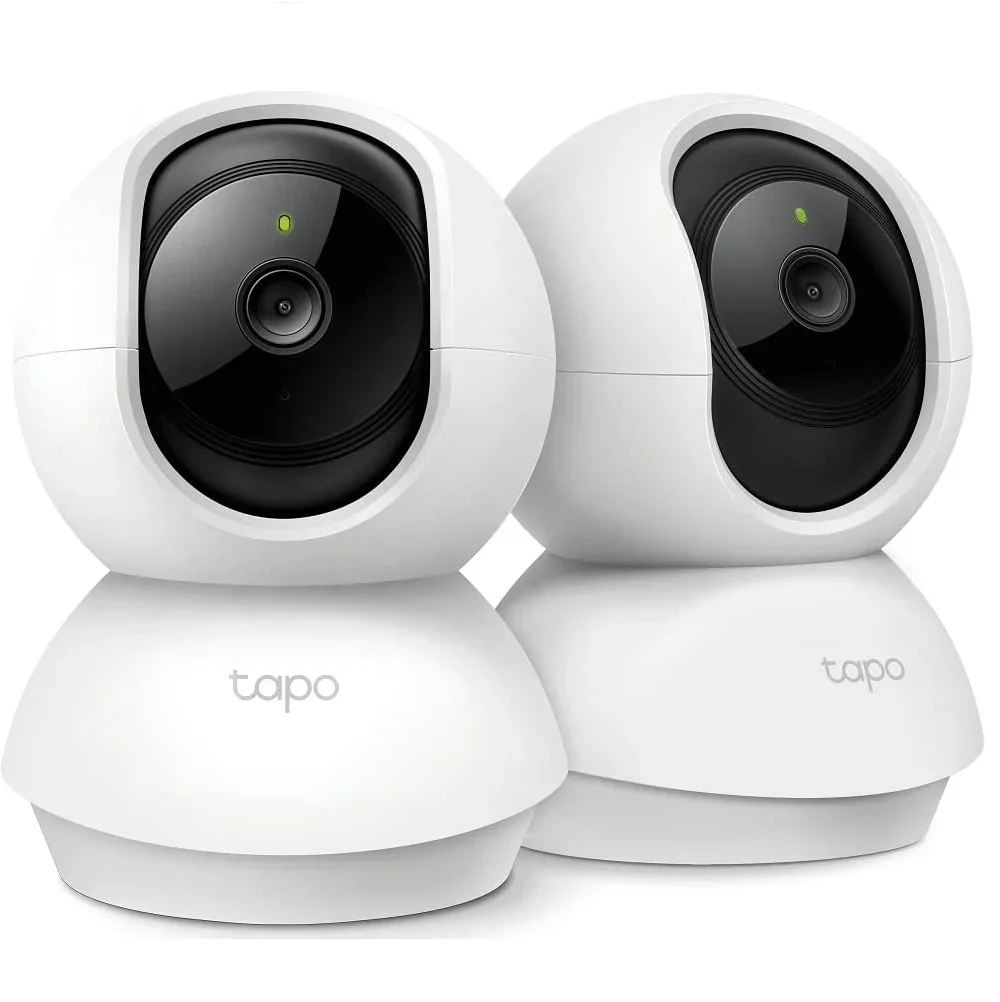
The Tapo 2K C210P2 shows why a dedicated pet camera isn't always necessary. It's marketed as an indoor security camera, but it includes AI-powered pet detection, barking alerts, and automatic motion tracking. It also offers 2K QHD video, night vision, two-way audio, and a rotating camera for covering different parts of a room.
Unlike the dedicated pet cameras above, it supports local recording to a microSD card with capacities up to 512GB, an alternative to paying for cloud storage through the optional Tapo Care subscription.
Its main limitation is the lack of interactive features like treat dispensing. But if you mostly want to watch your dog, get barking notifications, and review footage without a monthly fee, it's a compelling alternative.
Buy the TP-Link Tapo 2K C210P2 on Amazon!
Dog Camera Features That Matter
Start with why you want to monitor your dog at all. Some owners are happy with a live feed they can open whenever they feel like it. Others want notifications about barking, unusual activity, or movement around the house.
For us, it's about health. Our dog has a history of digestive problems that have occasionally required emergency veterinary care, so being able to check on her while we're out is reassuring. I like seeing whether she's resting comfortably, pacing, or acting differently than usual. A camera can't diagnose a medical problem or replace a vet, but it could help us notice concerning behavior sooner and get her help faster.
Barking alerts matter too, especially if you don't know how vocal your dog gets once you leave. A camera can't stop the barking, but it can reveal patterns, so you can address a problem before it becomes routine or turns into a source of noise complaints from the neighbors.
Practical details count as much as spec sheets. A camera that covers the spots where your dog actually spends time, like the crate, the couch, or the door, will tell you more than one with a longer feature list. If you're away overnight, night vision quality and a stable Wi-Fi connection matter more than treat dispensing ever will.
And don't assume a higher price means better video quality or more reliable monitoring. That comes down to the individual camera, its software, and how well it performs day to day, regardless of whether it's marketed for pets or home security.
Final Thoughts: Do You Really Need a Dedicated Pet Camera?
For most dog owners, a dedicated pet camera isn't strictly necessary. Modern indoor security cameras already deliver much of the same monitoring: live video, night vision, motion detection, and even barking alerts. Pet cameras stand out for their interactive features, and whether those are worth paying for depends on your dog and your needs.
Personally, I'd go with a conventional indoor security camera that has reliable barking alerts and local recording. Checking on our dog without disturbing her is worth more to me than dispensing treats or talking through a speaker, particularly if it means skipping another monthly fee. I can still see the appeal of a dedicated pet camera for owners who want more interaction or detailed activity monitoring.
Before you buy, think about which features you'd realistically use and what you're willing to spend. The best camera for watching your dog isn't the one with the most features. It's the one that gives you the information and peace of mind you're after.
