AI Is Getting Too Invasive — And We're Drawing the Line in the Wrong Place
Disclosure: We may earn a commission when you purchase through links on our site. This does not influence our reviews or recommendations.
I use AI every day. I also don't have an Alexa in my house. People assume those two facts conflict. They don't, and together they show where the tech industry is starting to lose me.
I don't want weaker AI. I don't want these systems crippled because someone is nervous about what they might eventually do. Make them smarter. Give them better reasoning, let them work across apps, and let them become the most powerful tools we've ever built. But I decide where they stop. That's the part we're losing as AI stops being something we sit down and use and becomes something companies want living permanently in our homes, cars, phones, glasses and televisions.
Help Is Not the Same as Access
My ideal relationship with AI is simple. I have a problem, I hand over what's needed to solve it, and it helps. If tomorrow I want to connect another service because the payoff justifies it, that's my call. Meta's Muse agent aims much further. The company describes an agent that connects to your email, calendar and Instagram, browses the web, makes purchases, fills out forms, tracks goals, and keeps working in the background after you close the app. Meta says it can also come back to you with suggestions before you ask. Meta deserves credit here. It says Muse has permission controls, requires approval for important actions, keeps an audit trail, and walls conversations off from its ad systems. Those protections matter.
But look at the pitch. It used to be "ask it a question." Now it's "let it into enough of your life that it knows what you need before you do." That changes who is in charge. A tool waits for you to pick it up. This one is already in the room.
Capability Isn't Permission
An AI could someday read every email I've received, know every appointment on my calendar, see through every camera in my house, track every purchase and every drive, and remember every conversation we've had. Fine. Build it. But being able to do something doesn't mean it's allowed to. I should be able to draw a red line through that list wherever I want:
Read this folder, not that one.
Check my calendar when I ask you to schedule something, not around the clock.
Help me shop when I ask, but don't build a psychological profile of what I'll buy next.
Remember this conversation. Forget that one.
Don't use this microphone. Don't use this camera.
Don't offer suggestions unless I've switched that on.
None of that should live six menus deep or on page 47 of a privacy policy. Those boundaries should be part of the product.
What Real Consent Looks Like
Right now the deal is: here's everything we can do for you, and the limits are somewhere in a document designed not to be read. That isn't consent. It's a trap with a checkbox. Real consent has three parts. I choose what the system does. I choose what it doesn't. And when I say stop, it stops, with no guilt-trip prompt, no quietly degraded service as punishment, and no setting that flips itself back after the next update. Bundling is the sneakiest violation. You turn off the one invasive feature and discover it also broke five things you actually wanted. That's not a technical limitation. It's leverage.
Shop the latest tablets on Amazon!
The Alexa Lesson
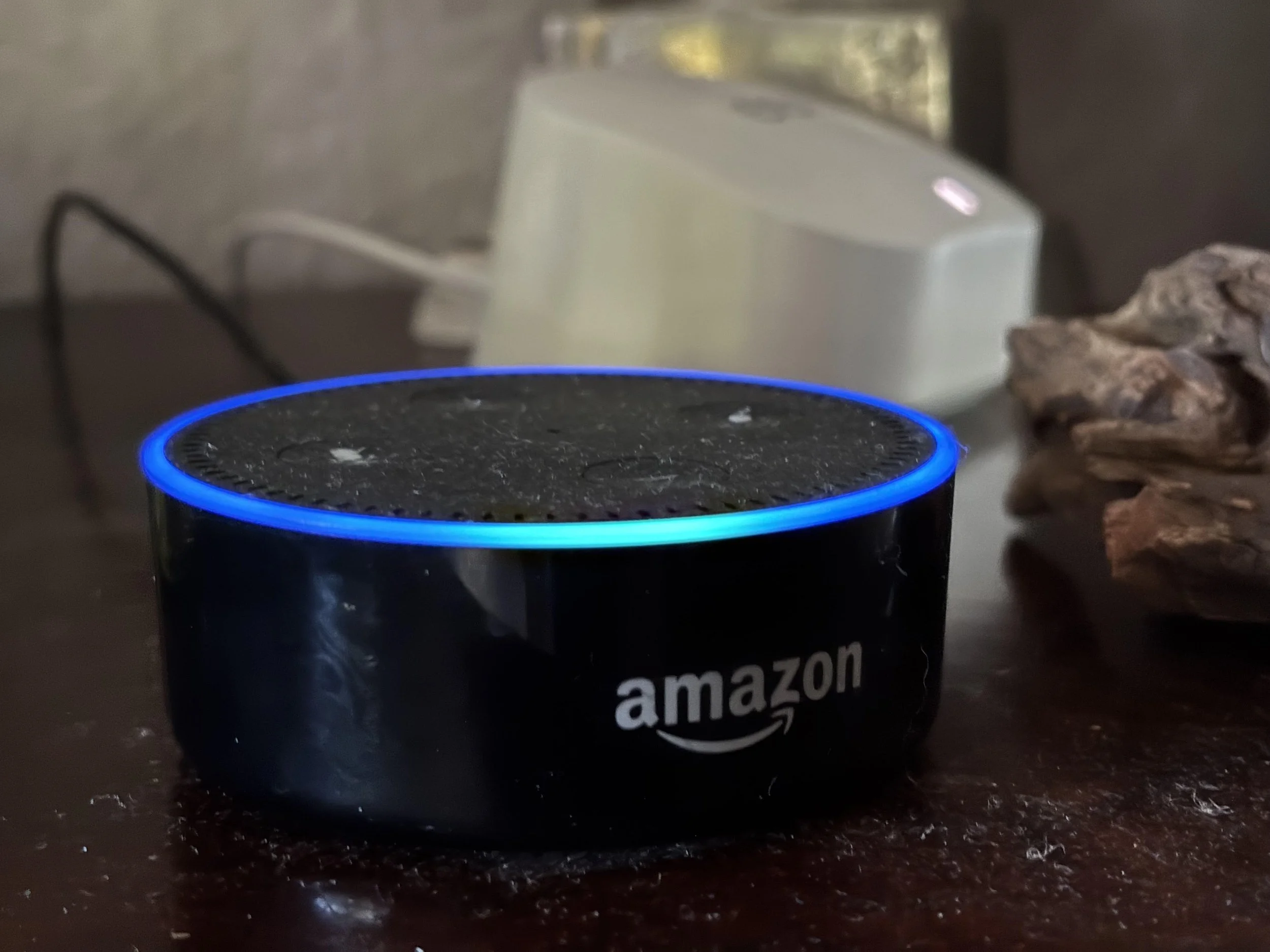
I've never wanted an Echo in every room. That doesn't make Alexa bad technology. Amazon gives owners real controls, including a mic-off button that physically cuts power to the microphones, plus tools to review and delete recordings. But deleting your recordings doesn't necessarily delete every other record tied to those interactions, and Alexa touches shopping data and connected third-party services too. Maybe you're comfortable with that trade. I'm not, and that should be allowed. The problem is the industry treating total access as the default and making everyone else justify opting out.
Now It's Cameras Everywhere
I'm a truck guy, so I've been watching what GM is doing with the 2027 Silverado and Sierra: a software-defined vehicle with a new interface, built to keep gaining features through over-the-air updates. Then I watched TFL Truck demonstrate the new interior camera system, including the ability to pull up views of the different seating positions inside the truck, every seat, every person. That's where I stopped. I don't want cameras looking at me and my passengers inside my own truck.. That's the line, and I'm not a fan. And it's not just trucks. Fleet systems track drivers. Televisions carry cameras. Smart speakers carry microphones. Glasses record. Phones are permanent bundles of lenses, mics and location sensors. Every one has a reasonable pitch on its own. Stack them up and you have to ask where the line actually is.
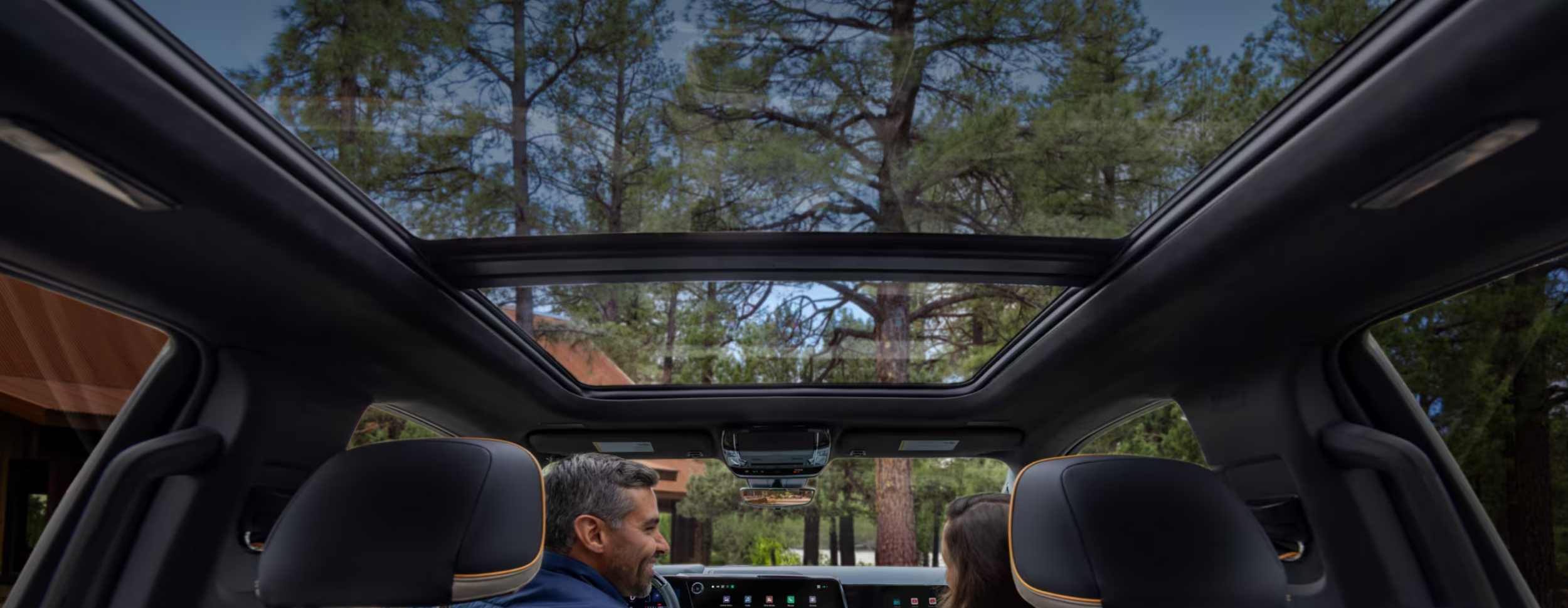
Image credit - GM - chevrolet.com/upcoming-vehicles/2027-silverado-1500
I'm not a privacy extremist. I use cloud services, shop online and trust my phone with plenty. I'll trade some data for something useful. But when even someone like me looks at yet another camera pointed inside something he owns and asks why does this need to be here?, the industry has a trust problem. People have answered that problem for years with a sticky note over the laptop camera. It was never paranoia. It was the one off switch that couldn't be argued with, overridden or updated away. A sticky note can't cover a camera built into the headliner. So the next step is a drill bit, and I'm closer to that step than I'd like to admit. When customers are doing hardware surgery on a product they paid for, the customer hasn't failed. The manufacturer has.
The Question We Should Be Asking
We keep debating how powerful AI should be allowed to get. That's the wrong question. The right one is: how much should AI be allowed to do before the person using it explicitly says yes? Someone may want Muse managing their calendar and watching prices. Someone may want Alexa in every room, or a truck that knows who's in which seat. That's their call, and it's no more valid than mine. The point is that neither of us should dictate the other's relationship with technology, and neither should the companies selling it. So here's what I'm asking for. Build the most capable AI you can. Then hand me a control panel with individual switches: what it remembers, what apps it touches, whether it acts without asking, whether it works in the background, whether it contacts me first, which mics it hears, which cameras it sees, and what leaves my device. Make every one obvious. Back them with real hardware where you can, a physical shutter or a switch that cuts power, because a promise isn't enforcement. I don't want an intentionally stupid AI. I want an incredibly powerful one that knows when it hasn't been invited into the room.
Until then, I'm keeping the sticky notes handy. And the drill bits.