AI Is Getting Better at Everything. So Why Aren't Consumers Asking For It?
Disclosure: We may earn a commission when you purchase through links on our site. This does not influence our reviews or recommendations.
This is a follow-up to an article I previously wrote for HomeTechnologyReview.com, “The Best AI in Home Tech Might Be the AI You Never Notice.
A few months ago I wrote that the best AI in home tech is the AI you never notice — the kind that just makes things work better without demanding you manage it. Since then I reviewed an AI hearing aid, sat in on more client conversations than I can count, and spent an afternoon bouncing the same question between ChatGPT and Gemini. That combination changed the article I thought I was going to write.
The technology has clearly gotten better. What I'm no longer sure of is whether "AI" itself has gotten more valuable as a thing people actually buy.
Nobody asks for AI. They ask for the result.
I install and service home technology for a living, and I'll say this plainly: in the past year, I have not had a single client ask for a product because it has AI in it. Not once. Not as a feature request, not as a deciding factor between two options, nothing.
What they ask for is specific. They want the security camera to stop sending them alerts every time a squirrel runs across the yard. They want the thermostat to stop running when nobody's home. They want to be able to hear their kids at the dinner table without cranking the TV volume during a movie. If AI is what solves that, great — but it's never the pitch. It's the mechanism, not the motivation.
That's the pattern I saw play out again with the hearing aid I reviewed recently. Nobody buying a hearing aid is shopping for "AI." They're shopping for the ability to follow a conversation in a loud restaurant without asking someone to repeat themselves three times. The unit I tested does that noticeably better than older, non-adaptive hearing aids, because it's using AI to identify the acoustic environment in real time and adjust processing accordingly — separating speech from background noise instead of just amplifying everything equally. That's a genuine, measurable improvement in someone's daily life. It also happens to be one of the clearest examples I've come across of AI actually being worth the label.
So the technology is working. The category of "AI-powered" as a selling point still isn't.
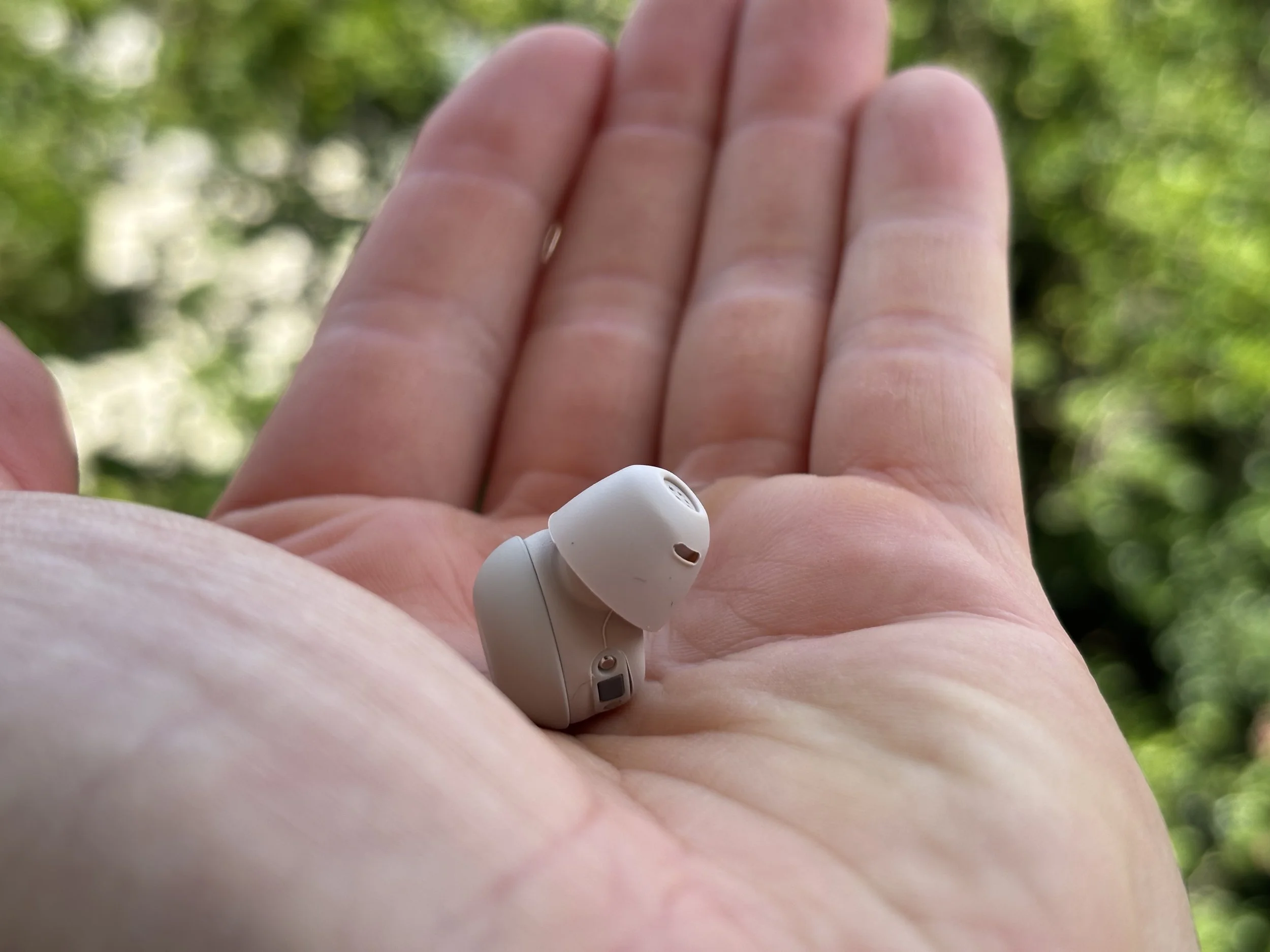
Yup, these hearing aides have the option to have AI in them! Check them out on Amazon!
We've done this before, and it had wires
The comparison that keeps coming to mind is Bluetooth in the early 2000s. Once it became cheap and available, it went into everything — not because every product needed it, but because it was there and it sounded modern. Headphones and speakers needed it, obviously. Cars needed it. Keyboards and mice, sure, fine. And then you had the stuff nobody asked for: Bluetooth toothbrushes, Bluetooth picture frames, Bluetooth umbrellas that would light up or chime if you left them somewhere — solutions to problems that didn't exist, built because the chip was cheap and "smart" sold better on a box than "dumb."
Eventually the market sorted itself out. Bluetooth stuck permanently in the categories where it solved a real problem, and it quietly disappeared everywhere else, or just stopped being mentioned because it became assumed — nobody brags about Bluetooth in a car anymore, it's just expected.
AI is going through the identical sorting process right now, just faster and louder. Hearing aids, cameras, speech processing, room correction, upscaling, robotic navigation — these are the categories where the underlying technology solves a problem that was genuinely hard to solve any other way, and the results are hard to argue with. Then there's the enormous pile of products where the honest answer to "why does this need AI" is "because it's 2026" — the same energy as a Bluetooth umbrella, just with a different acronym on the box.
The "Kayak for AI" problem
Here's the part that surprised me. While I was working through the same question with both ChatGPT and Gemini side by side, comparing how each one answered, it struck me how much this resembles the mess travel booking used to be before aggregators existed. There used to be a pile of individual airline sites and travel deal sites, and the entire experience was checking each one separately, hoping you weren't missing a better price somewhere else. Then Kayak and its competitors showed up and did the checking for you.
I think we're heading toward the exact same fix for AI models. Right now the honest answer to "which AI should I use" is "it depends which one you asked, and probably you should ask two or three of them and compare." That's not sustainable as a permanent state of affairs — it's the travel-site problem all over again, just with chatbots instead of airfares.
It's not hard to picture a version of this where you type one question — something like "what's the best $500 handheld for GameCube and PS2 games" — and it quietly checks that question against several leading models, then either shows you the individual answers side by side or hands you back a synthesized consensus. Whether that becomes a standalone product or a feature baked into an existing tool, something in that shape seems close to inevitable. There's real demand for not having to be the one doing the comparison shopping between models.
And that possibility raises the actual interesting question, which isn't "which AI wins" — it's whether anyone ends up caring which one wins at all.
TVs with AI built in? Yup, on Amazon!
The winning AI might be the one nobody names
That's the thread that ties this whole update back to what I argued the first time around. If something like a Kayak-for-AI actually shows up and works, most people are going to stop thinking about which model is under the hood the same way they stopped thinking about which search engine's index was better once Google just became "search." You won't care whether ChatGPT or Gemini or Claude or whatever comes next generated the answer. You'll care whether the answer was good.
That's the same pattern as the hearing aid. Nobody wants to know which neural network identified the restaurant noise and pulled out the voice in front of them. They just want to hear the conversation. The AI that wins, in the sense that actually matters to a normal person's life, is the one they stop being able to name.
So where does that leave the original prediction? Stronger, honestly. AI as a technology keeps getting better, fast, in ways that show up in real products solving real problems — the hearing aid is proof of that. But "AI" as a label, as something people are actively shopping for, still isn't showing up in a single client conversation I've had. The gap between those two things hasn't closed. If anything, the arrival of a dozen competing chatbots and the very real possibility of something aggregating all of them suggests the label is on its way to mattering even less, not more, while the underlying technology keeps quietly getting folded into everything that's actually worth using.
The AI wars probably don't end with one model winning outright the way Google won search. They end when people stop caring which one they're using — which was the whole point of the original piece, and now I've got a hearing aid and a browser full of chatbot tabs to back it up.