SIVGA Lyrebird Review: Can It Beat the Kiwi Ears Halcyon?
Disclosure: We may earn a commission when you purchase through links on our site. This does not influence our reviews or recommendations.
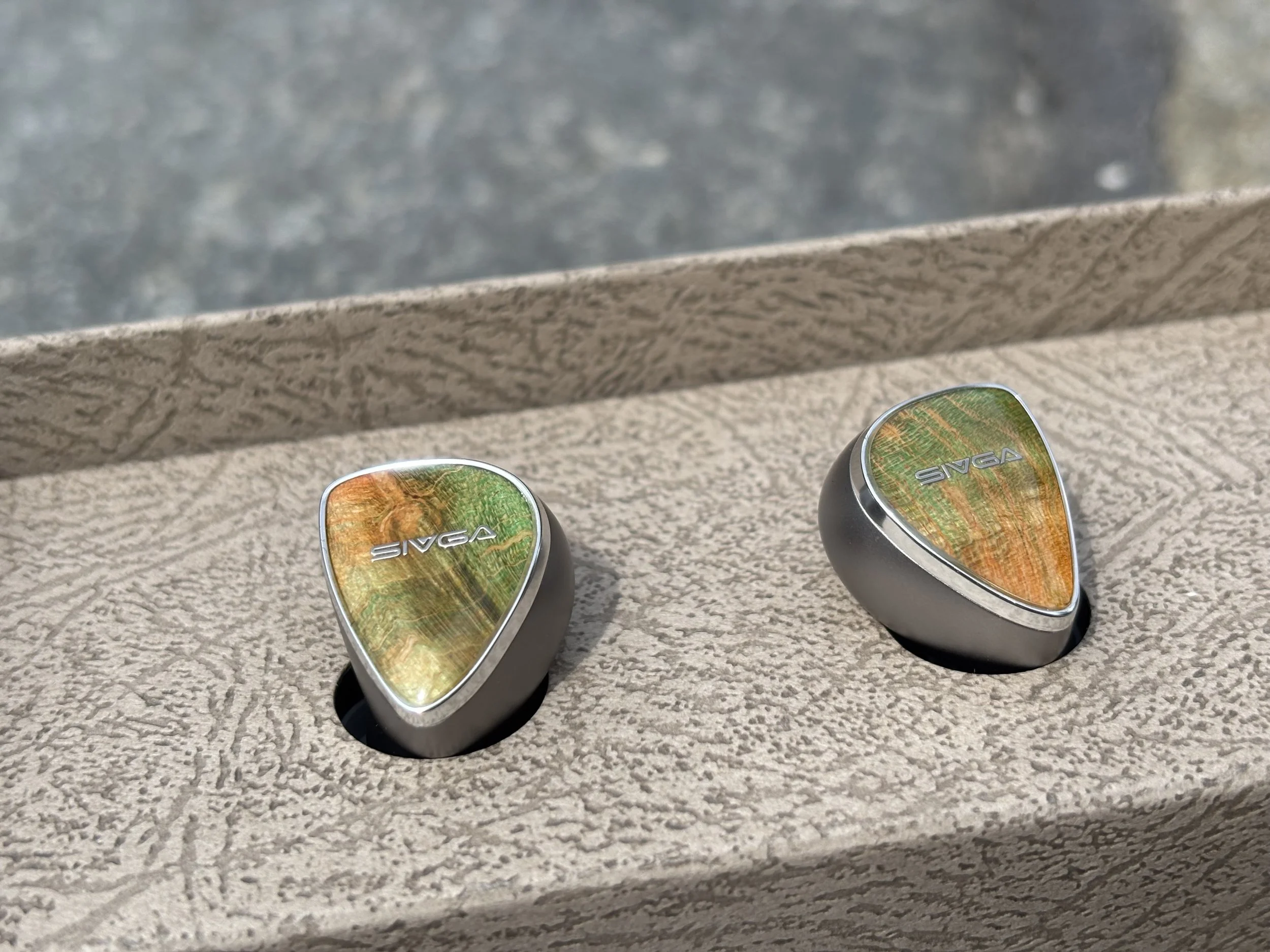
I'll be honest, I almost didn't take the Lyrebird seriously when I saw the price. $149 for something that looks like this? I've been burned before by IEMs that nail the unboxing and then completely fall apart the second you put them in your ears. So I went in expecting to write one of those "gorgeous but hollow" reviews.
That's not what happened.
First Impressions: The "Wait, How Much?" Moment
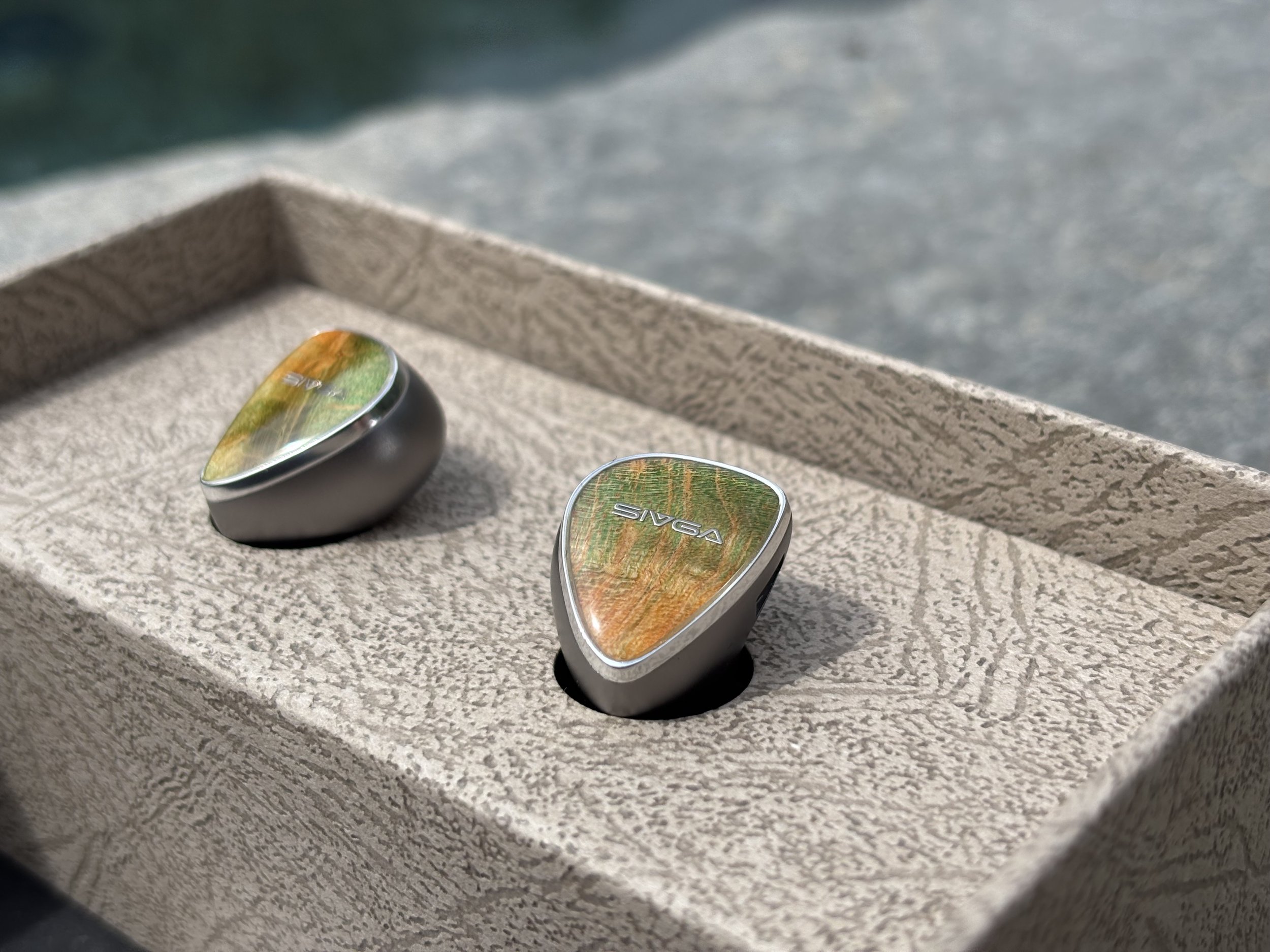
Before I even got them playing music, I was already mentally pricing these at $400+. The build, the finish, the way the whole package feels when you open it, none of it screams budget. If you'd handed me this box with no price tag and asked me to guess, I wouldn't have guessed anywhere near $149. I would've said $400 without blinking, and I don't think I'd have been the only one.
That's the thing that makes the Lyrebird interesting before you've even listened to a single track. SIVGA clearly wasn't trying to make something that looks "good for the price." They were trying to make something that looks good, period, and the price just happens to undercut everyone's expectations.
What Is Going On With This Cable?
I need to get this out of the way because it's the one part of the package that doesn't match the rest, and it's a little stranger than I first let on.
The cable itself is fairly bulky to start with, that part I expected once I picked it up. It is detachable from the earpieces, so credit where it's due, SIVGA didn't hard-wire it. What I didn't expect was that the cable SIVGA includes in the box only comes terminated in 4.4mm balanced, with no 3.5mm option included.
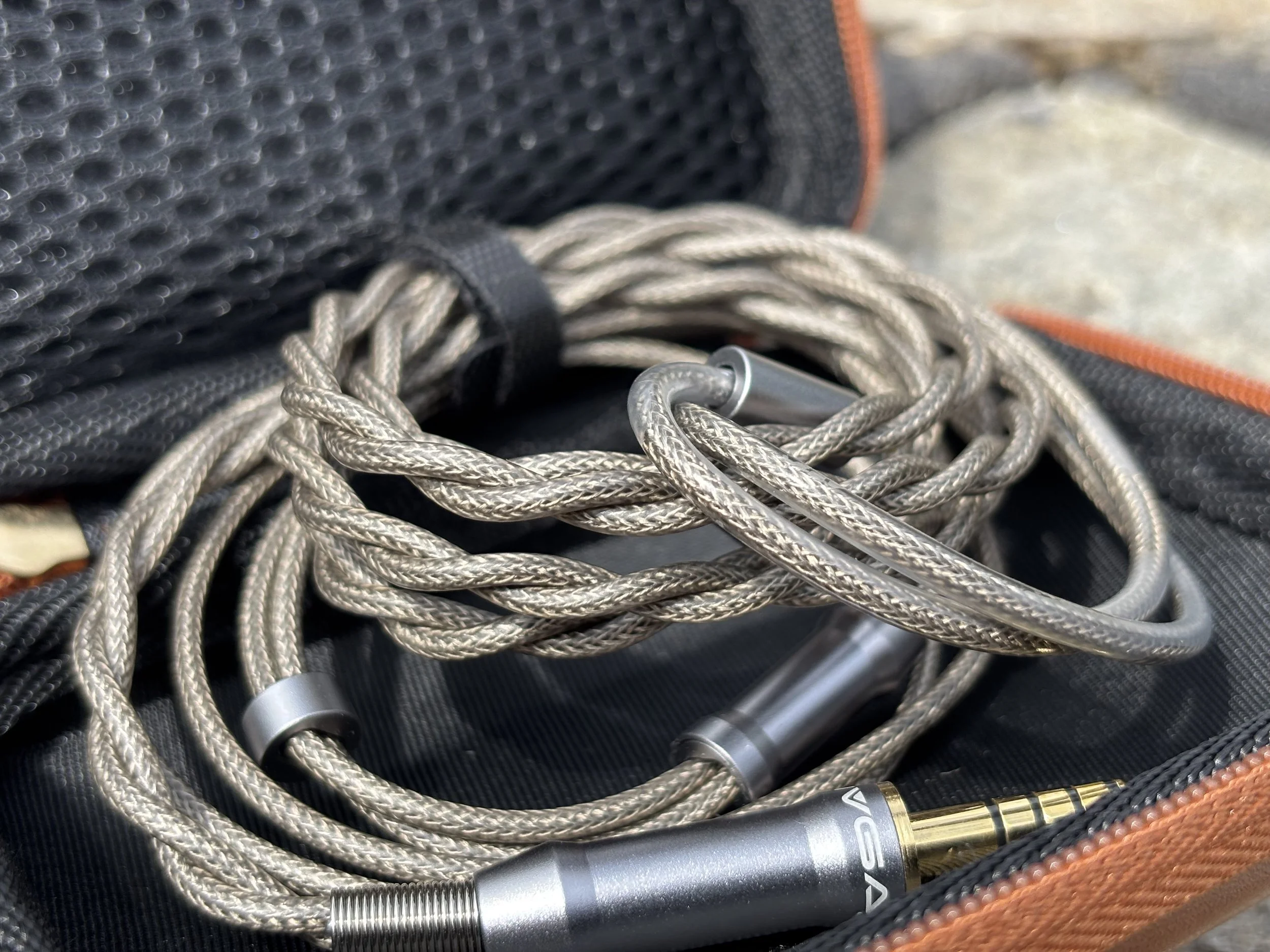
To be clear, there's nothing wrong with 4.4mm as a standard. It's showing up more and more on higher-end portable DACs, amps, and DAPs, and if you're already living in that ecosystem, it's a fine choice. The issue is that 4.4mm balanced just isn't as universally compatible as a standard 3.5mm single-ended connection. Most phones, laptops, and entry-level sources don't have it.
That makes the Lyrebird oddly picky about what you can actually plug it into out of the box. If your source doesn't have a 4.4mm balanced output, you're stuck sourcing another cable, an adapter, or a dongle DAC with balanced out before you can use these the way they were intended, which is a strange first hurdle to put in front of a $149 IEM.
Honestly, I wish SIVGA had just included a 3.5mm cable in the box alongside the 4.4mm one, or made the plug end itself swappable. The connector at the earpiece being detachable is nice, but it doesn't solve the actual problem, which is that most people don't own a 4.4mm balanced source and now have to go buy one just to use these out of the gate.
It's a weird decision precisely because everything else about the Lyrebird is so polished. The shells are gorgeous, the packaging feels expensive, the tuning punches well above the price, and then you get to the cable and suddenly you need a 4.4mm balanced source just to get started. It's not a dealbreaker, but it's easily the strangest part of an otherwise fantastic package, and it's the first thing I'd tell SIVGA to fix on a follow-up.
Sound: Balanced, Natural, Not Trying to Impress You in 30 Seconds
Once they're actually in my ears, the cable stops mattering, because the sound is where the Lyrebird really earns its keep.
The bass is natural. Not boosted to hit hard in a five-minute store demo, not scooped back to chase some "audiophile" reputation either. It's just... right. There's enough weight and presence to keep music feeling full, but it never bleeds into the mids or tries to be the main event. That's a tuning philosophy I respect a lot more than I used to, because it's so easy to get wrong in either direction at this price point.
Where the Lyrebird does have some bite is up top. The treble is genuinely lively, there's real energy and sparkle in the upper register, and on brighter recordings it can get close to the edge of what I'd call fatiguing during longer sessions. I don't mind it personally, it gives cymbals and strings a sense of air and detail that a lot of "safe" tunings sand off, but if you already know you're sensitive to treble, this is worth an audition before you buy rather than a blind pickup. It's not a flaw so much as a point of view, SIVGA clearly tuned this for people who want an energetic, detailed top end rather than a laid-back one.
Lyrebird vs. Kiwi Ears Halcyon
The IEM I keep coming back to as a point of comparison is the Kiwi Ears Halcyon, and it's a genuinely interesting contrast because the two sets are chasing different priorities.
The Halcyon isn't a bass-forward set, and it doesn't pretend to be. Sub-bass is deep and controlled without muddying the mids, though bass-heads will notice the mid-bass punch is restrained, kick drums come across as defined rather than physical. Mids are clean and neutral, but vocals sit slightly behind the instruments rather than up front, favoring space over intimacy. The real story is the treble: the Halcyon's MEMS driver delivers fast, extended highs loaded with microdetail, and it does it with essentially zero harshness. That combination, that much top-end extension with none of the fatigue, is rare, and it's the Halcyon's whole identity.
Put next to that, the Lyrebird feels like the more emotionally engaged of the two. Its bass has more weight and presence, which makes it feel fuller and more physical track to track, and its vocals sit further forward instead of receding behind the instrumentation. The trade-off is treble character: the Lyrebird's top end has real energy and bite that can edge toward fatiguing on brighter material, where the Halcyon stays composed and detailed no matter how hot the recording gets.
Neither approach is wrong. If you want an IEM that disappears and just resolves detail cleanly for hours, the Halcyon's restraint is the better tool. If you want something with more physical presence and a vocal-forward, "in the room with you" feel, and you don't mind a livelier top end, the Lyrebird is the one I'd reach for.
Final Verdict
The SIVGA Lyrebird is one of those rare products that actually manages to surprise me. The design had me expecting a premium price tag, the sound quality did nothing to talk me out of that expectation, and then the actual price completely reset how I thought about the whole package.
Is it perfect? No. That 4.4mm-only cable is a genuinely odd choice, and the treble won't be for everyone.
But everything else here, the design, the presentation, and especially the tuning, feels like SIVGA aiming well above the Lyrebird's actual price bracket and mostly landing the shot.
At $149, this isn't just "good for the money." It's good, period, and it happens to cost a lot less than it should.