
Disclosure: We may earn a commission when you purchase through links on our site. This does not influence our reviews or recommendations.

Good headphones don't necessarily have to cost a fortune, but there's a difference between finding a bargain and getting something you'll be happy using for years. If you're shopping on a tight budget, OneOdio's Fusion A70 and A71 offer two affordable options, depending on whether you prefer wireless convenience or a traditional wired connection. Both are foldable, over-ear headphones with 40mm drivers and connections suited to everyday listening and audio equipment. The A70 adds Bluetooth for wireless playback, while the A71 sticks to a wired-only design. Neither is likely to compete with more expensive headphones in overall performance, but they could make sense if you're looking for something inexpensive that gets the job done.
OneOdio Fusion A70: A little more flexibility
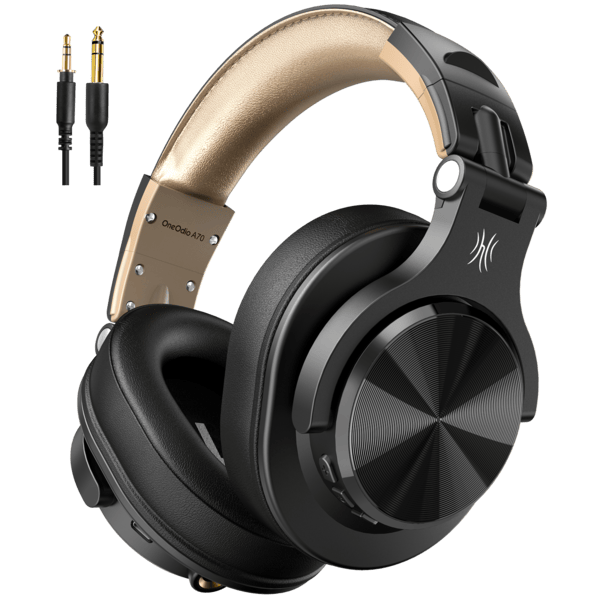
The Fusion A70 is the more versatile of the two, combining Bluetooth 5.2 connectivity with the option to listen through a cable. You can pair it with your phone or laptop for music, podcasts and everyday listening, then switch to a wired connection when using compatible audio equipment. OneOdio advertises up to 72 hours of wireless playback, although actual battery life will depend on volume and usage. That's a substantial amount of listening time between charges, particularly for a budget pair. And if the battery runs out, the headphones can still operate through their wired connection.
Inside are 40mm neodymium drivers, with support for Hi-Res audio when connected by cable. The included 3.5mm and 6.35mm cables make the A70 compatible with a variety of devices, from laptops and compatible phones to mixers and audio interfaces. There's also a built-in microphone for calls, while the foldable design makes the headphones easier to store or take along. The main limitation is that versatility doesn't necessarily translate to better sound quality. Hi-Res support is a nice addition, but it doesn't tell you much about how accurately or pleasantly a pair of headphones reproduces music. And while Bluetooth is convenient for casual listening, a wired connection is still preferable for recording or monitoring audio where latency matters.
Who it's for: Anyone who wants an inexpensive pair of headphones for everyday listening, with the flexibility to switch between Bluetooth and wired connections.
OneOdio A71: Keeping things simple
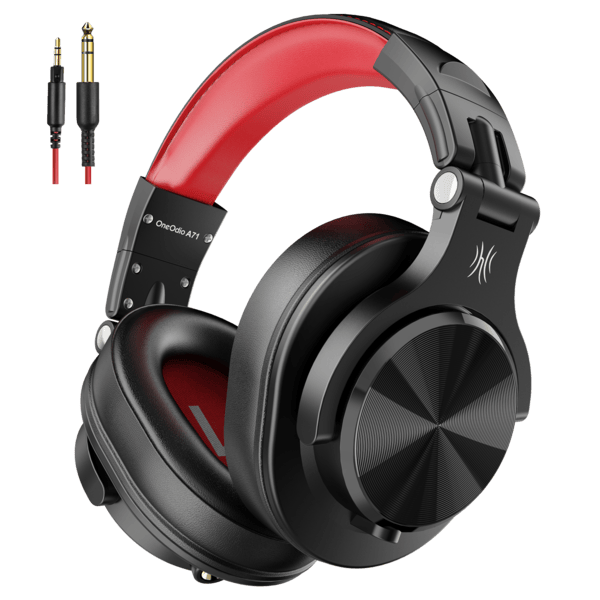
The A71 takes a more straightforward approach, skipping Bluetooth and relying entirely on a wired connection. That means no batteries to charge, no pairing process and no wireless connection to worry about. If most of your listening happens at a desk or through equipment with a headphone jack, that simplicity might actually be preferable.
Like the A70, the A71 uses 40mm neodymium drivers and supports Hi-Res audio. It includes a 3.5mm cable with an inline microphone for everyday devices, along with a 6.35mm adapter cable for compatible audio equipment. OneOdio markets it for DJing, mixing and studio monitoring, although its wired design is just as useful for ordinary music listening. The A71 also has swiveling earcups for one-ear monitoring, an adjustable headband and a foldable frame for storage. Its SharePort feature allows another pair of headphones to connect for shared listening, which could be useful when working on music with someone else.
Of course, the biggest drawback is the cable itself. You'll need an adapter for phones and tablets without a headphone jack, and you won't have the freedom to move around without staying connected to your device. Still, if wireless listening isn't something you'd use, there's little reason to pay extra for it.
Who it's for: Anyone who primarily listens at a desk, uses wired audio equipment or wants a basic pair of headphones without the added complexity of Bluetooth.
What to consider before buying
It's worth keeping your expectations realistic when shopping for budget headphones. Both models offer a reasonable selection of features for their intended use, but budget is the important word here. Spending a little more can make a noticeable difference in sound quality, comfort and overall construction, particularly if you use headphones for several hours every day. Better-quality ear cushions and a more comfortable headband, for example, can make a real difference during longer listening sessions.
Also, don't put too much weight on their studio credentials. While both models support wired listening and are marketed toward DJs and audio enthusiasts, that doesn't automatically make them suitable for critical mixing or professional monitoring, because they definitely are not. Frequency response, tonal accuracy and comfort matter far more than a Hi-Res label on the packaging.
If you mainly need an inexpensive backup pair, something for occasional listening or headphones you won't be too concerned about replacing or for kids, either model could be a practical choice. But if you're buying your primary headphones and plan to use them regularly, it's worth considering whether a slightly larger investment would serve you better in the long run.
Which should you choose?
Between the two, the Fusion A70 is probably the better all-around option. Having Bluetooth for everyday listening and a wired connection for everything else gives it more flexibility, especially if you regularly switch between devices. The A71 makes more sense if you know you'll rarely use wireless, although it's a little harder to pin down exactly who it's best suited for. Perhaps kids or anyone who just needs an inexpensive pair of headphones? It's a simpler option for desk setups, occasional audio work or anyone who prefers plugging in a cable and forgetting about it.
In the end, both are best approached as budget headphones rather than serious upgrades. They're reasonable choices when keeping costs down is the priority, but if sound quality, long-term comfort and durability matter more to you, spending a bit extra on a better pair may be the smarter purchase.
