Disclosure: We may earn a commission when you purchase through links on our site. This does not influence our reviews or recommendations.
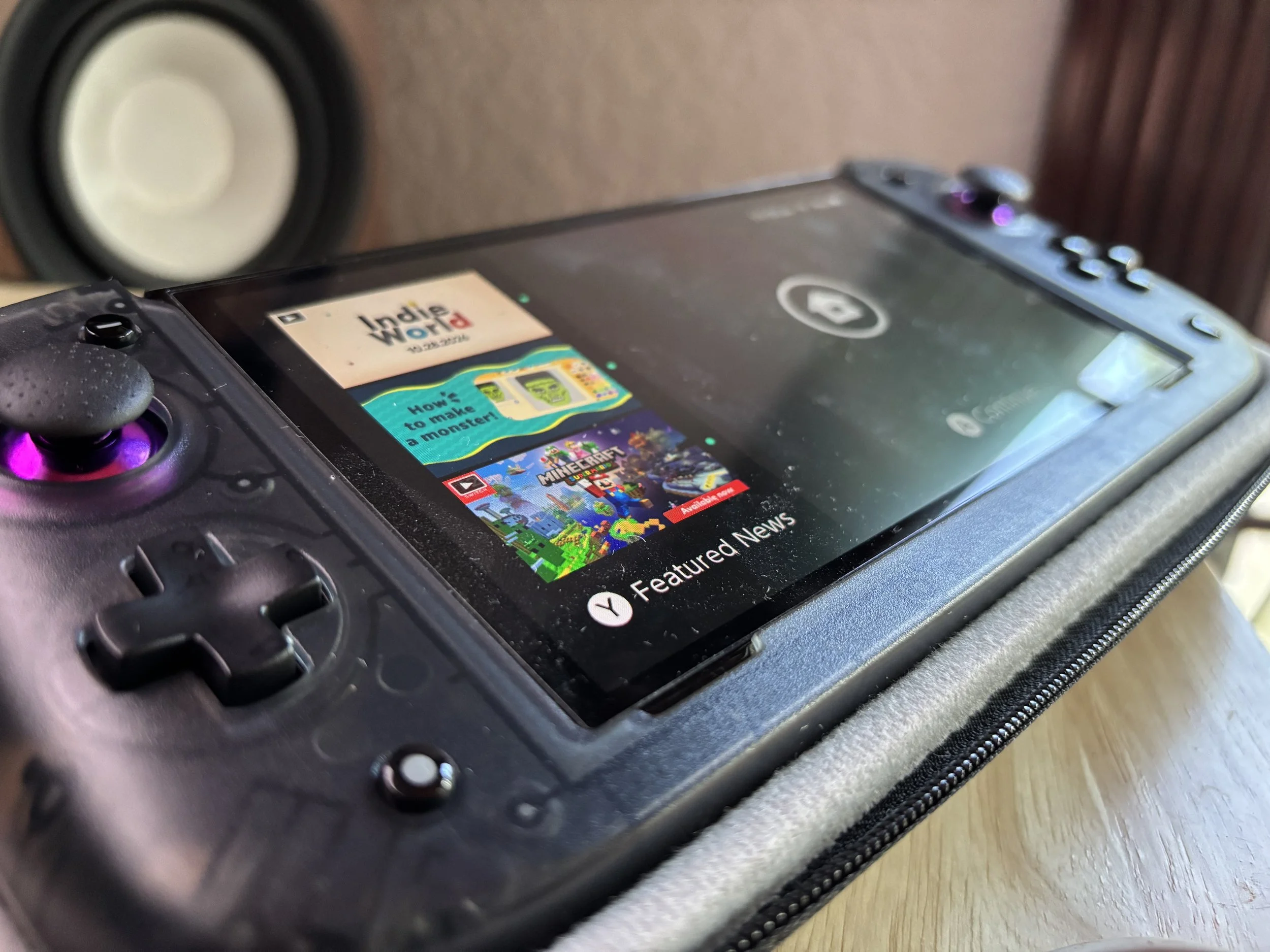
My Switch 1 OLED, with the new CRKD Nitro Deck +
A $500 console is only the first bill. After a conversation with my niece, I’m asking whether Nintendo’s hardware and software pricing add up, even for a fan like me.
A conversation about games
My 11-year-old niece recently got a Nintendo Switch 2, and when I saw her last night I asked what she had been playing. A lot of minecraft and Stardew Valley (one of my all time favorite games as well) she told me she doesn’t own a single Switch 2 game. What! She has the console and can play the original Switch games that are compatible with it, but she hasn’t bought anything made specifically for the new system. When I asked why, she said the games simply cost too much.
Her family paid around $450-500 (I think $450) for the console, which was the list price until September, and the plan was to get a newer, more capable system that would last for years. That’s a sensible decision. I just couldn’t argue with her reasoning once she explained it, because I’m an adult who has reviewed technology for years, and I’m about 80 to 90 percent against buying a Switch 2 for the same reason. I own a Switch 1 OLED, I could afford the new console, and I like Nintendo. The math still doesn’t work for me. One anecdote isn’t data, and I’ll get to the evidence that cuts the other way. But when an 11-year-old and a technology reviewer independently reach the same conclusion about Nintendo's prices, something is seriously wrong with the value proposition.
Buy Retro Handhelds on Amazon!
Buy the Nitro Deck+ on Amazon!
What a Switch 2 actually costs
The Switch 2 launched in the US on June 5, 2025, at $449.99. Nintendo raised the price to $499.99 on September 1, 2026, with similar increases in Canada (to $679.99) and Europe (to €499.99). The increase followed a run of hardware price hikes across the industry, including the PS5, the Xbox Series consoles, and Nintendo’s own original Switch, whose US prices went up in August 2025. At $499.99, the Switch 2 now costs what the PS5 did when it launched. The Mario Kart World bundle, which included a digital copy of the game for the same $499.99, was discontinued last December, so buyers can no longer get the game folded into the console price.
Software pricing is more varied than the headlines suggest. Mario Kart World lists at $79.99 in the US, but Donkey Kong Bananza launched at $69.99, and Nintendo has priced other titles lower. Some Switch 2 Edition releases, such as Super Mario Party Jamboree and Kirby and the Forgotten Land, list at $79.99, with a $19.99 upgrade pack for people who already own the original. So the accurate description is that premium first-party Switch 2 games run $70 to $80, not that every game costs $80.
That is still a clear step up from the Switch era, when The Legend of Zelda: Tears of the Kingdom was the only first-party title priced at $70 and nearly everything else was $59.99 or less. It is also higher than the roughly $70 that most big PS5 and Xbox releases cost at the time of the Switch 2’s launch.
Here is what that does to the total: A Switch 2 plus Donkey Kong Bananza and Mario Kart World comes to $649.97 before sales tax. That’s insane! Three games at $79.99 each puts you at $739.96, and five brings it to $899.94. None of those figures include a case, screen protector, extra controller, or the microSD Express card (have you seen those prices?!) needed to expand storage. Hardware isn’t what people buy a console for, and the games are where the cost keeps growing.
My niece’s situation
Buying the Switch 2 wasn’t a bad decision for her family. Her mother already owns an original Switch, the new model has a larger screen and better performance, it plays many of the same games, and it gives her access to future releases. Spending around $450 on current hardware instead of aging hardware is easy to defend.
But it is odd to buy a company’s newest system and then decide its native games are too expensive. She is the customer Nintendo should want: young, enthusiastic about the platform, and already surrounded by Nintendo games at home. I’m not making assumptions about her family’s finances, and there is a real difference between being unable to afford something and judging that it isn’t worth the price. Because I am in the same boat, it’s way too expensive. Yeah, I could drop the cash, but the value isn’t there. Either way, the price is a barrier between her and the platform.
It’s also fair to say Nintendo isn’t struggling to sell this hardware. The company reported 19.86 million Switch 2 units sold in its first fiscal year, and it has said adoption is running ahead of the original Switch. At the same time, Nintendo says sales were concentrated in the launch year and has forecast lower hardware sales for the current fiscal year, partly because of the price increase. Nintendo can price games at $70 to $80 because millions of people have shown they will pay it. My argument is about value for the rest of the audience, not that the company is failing.
Why I’m not upgrading from my Switch OLED
I bought my Switch OLED in January 2025 for about $350 (eBay!) with 4 games, and I remember thinking even then that it was a lot of money. I chose the OLED model for its 7-inch screen, which has excellent contrast and vibrant color. It has since gone up in price, and Nintendo’s US list price is now $399.99. To be honest, I haven’t used it as much as I expected. For the past year and a half I’ve been deep into Android-based retro handhelds. But I recently bought a grip (CRKD Nitro Deck +) for the OLED because I want to spend serious time with The Legend of Zelda: Breath of the Wild, a game I own but haven’t finished. That is the problem with upgrading now: I already have hardware that plays games I haven’t gotten to, so the Switch 2 would have to justify itself on its new features alone.
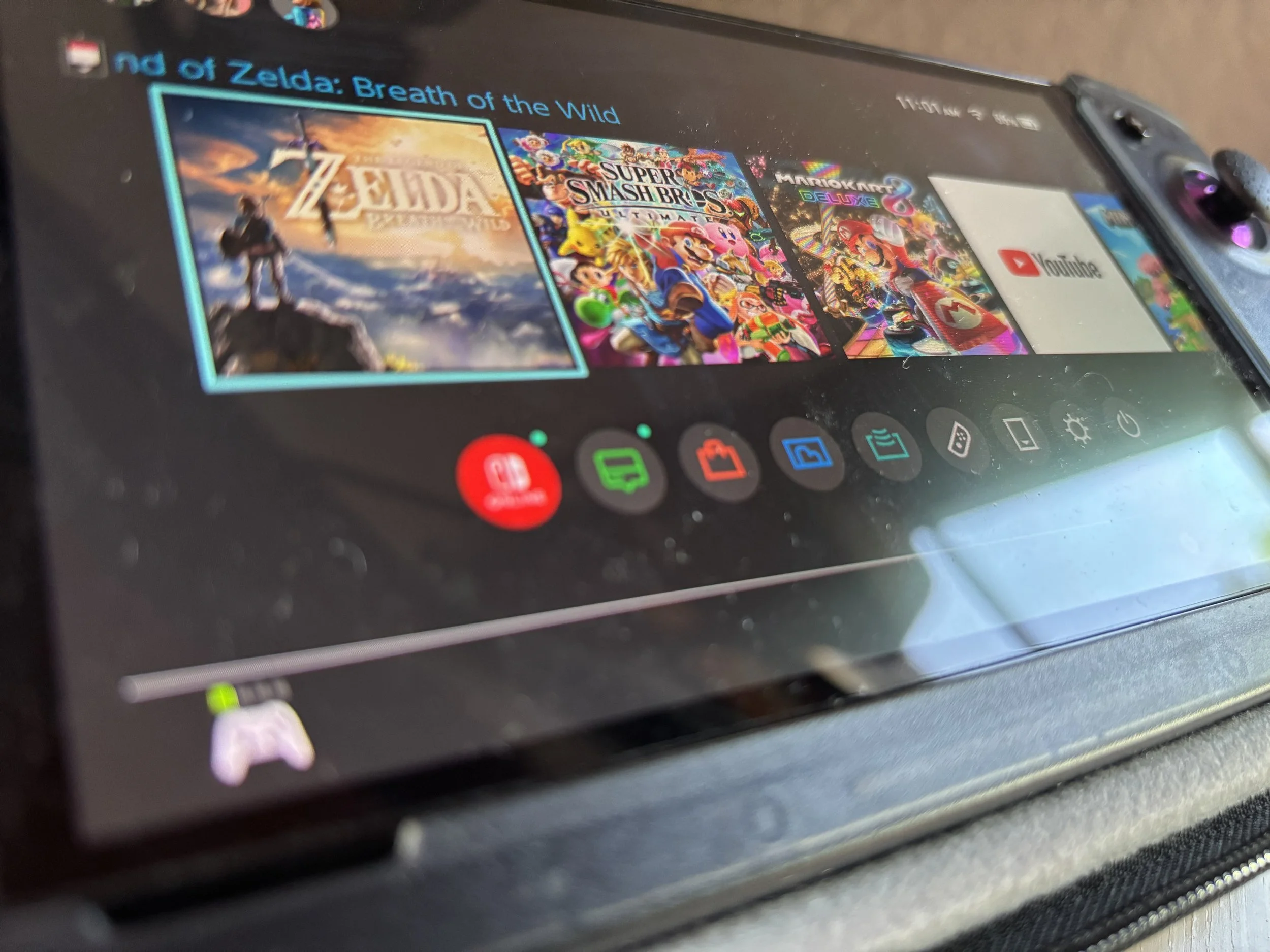
Those features are real. The Switch 2 has a much stronger processor, a larger 7.9-inch screen, 1080p resolution, refresh rates up to 120Hz, variable refresh rate, and HDR10 support. It also opens up the new exclusives. But the screen is an LCD, and my current one is an OLED. There is no OLED Switch 2 at the moment, and Nintendo’s decision to use LCD is understandable given the cost of the display, but it means that upgrading would mean trading the screen I like for a bigger one I like less. For someone who values OLED black levels and contrast, that’s a downgrade in one of the areas that matters most on a handheld. So I am not gonna pay more for a downgrade.
The real question is whether I’d get $500 worth of additional enjoyment. Better performance and a bigger screen are nice, and the exclusives are tempting. Right now, though, I don’t think they’re worth that much to me, especially when each major new game costs another $70 to $80.
Nintendo games rarely get cheap
It’s not only new releases that cost a lot. Breath of the Wild launched in March 2017 at $59.99, and its list price on the original Switch is still $59.99 nearly a decade later. Retailers discount it regularly, and sales in the high $30s to mid $40s have been common, with used copies often cheaper than that. But Nintendo has never given its top first-party games a permanent price cut the way Sony and Microsoft routinely do, and PC games are discounted far more aggressively. Hence, why I love steam so much.
That has a real upside. If you buy physical Nintendo games, they hold their resale value better than almost anything else in gaming, so you can recover a good share of what you spent after you finish them. It’s one reason I prefer physical copies. The downside falls on anyone building a library from scratch, who pays near-launch prices for years. With Switch 2 games starting at $70, the gap between Nintendo’s pricing and its competitors’ gets wider.
Buy Retro Handhelds on Amazon!
Buy the Nitro Deck+ on Amazon!
What I’m buying instead
On October 22, I preordered the AYN Odin 3 Portal, and my total came to around $430. I’ve spent a lot of time with the Odin 2 Portal (I play it daily!) and like the combination of strong hardware, a 7-inch 120Hz OLED display, and the flexibility of Android. AYN’s early-bird pricing starts at $399 for the 12GB/128GB model, $479 for the 256GB version, and $549 for the 16GB/512GB model, with regular prices of $419, $499, and $579. A 1TB model costs $669 at the early-bird price. Shipping is scheduled for early November.
This is not a like-for-like comparison, and I want to be clear about that. The AYN doesn’t offer official access to Nintendo’s exclusives, and it costs about as much as a Switch 2 without including any games, so it’s not cheaper in any simple sense. Emulation involves its own questions of compatibility, performance, and the legality of obtaining game files. If you specifically want the newest Mario or Zelda, the Switch 2 is the way to play them.
But the two products do compete for the same entertainment budget. For roughly $430, I’m getting a powerful OLED handheld that fits the way I already play. For about $500, I’d get a Switch 2 with an LCD screen and an empty game library. I think Nintendo should be concerned that someone who likes its products, owns its hardware, and can afford the upgrade still finds the alternative more appealing.
Backward compatibility helps, but only so much
Nintendo deserves credit for supporting many original Switch games on the Switch 2. If you have a big library of compatible cartridges and digital purchases, the upgrade is much easier to justify, because you carry your collection forward. Digital purchases can generally be downloaded again on a Switch 2 through the Nintendo Account that bought them, subject to Nintendo’s account rules.
My own library is small, with two or three physical games and at least one digital purchase, so I’d be spending hundreds of dollars to play many of the same games on a faster system. Some enhanced versions also cost extra: the Switch 2 Edition of an existing game can require a paid upgrade pack, such as the $19.99 packs Nintendo listed for Super Mario Party Jamboree and Kirby and the Forgotten Land. Backward compatibility is a useful feature, but it doesn’t answer the question of what I’d be paying for.
Why the physical format matters more at $70 to $80
When a game costs this much, I want to own it in a way that lets me play it years from now, lend it, or sell it. Nintendo’s Switch 2 ecosystem complicates that because of game-key cards. These look like ordinary cartridges, but they don’t contain the full game. On first use they prompt a download of the game data over the internet, and the card has to stay in the console whenever you play.
Lets be clear, I will NOT buy any digital games, if I am paying $80 for a game, I want a REAL COPY of it. I want to be able to play it in 10 years without internet or resell it.
Nintendo has confirmed that the cards aren’t tied to an account or console, so they can be lent or resold, and the next owner downloads the game again. Nintendo of America’s then-president Doug Bowser has said the format mainly lets publishers sell games larger than a standard cartridge can hold at retail. The risk is long-term: a game-key card depends on Nintendo’s servers staying online for anyone who needs to download the game again. Boxes label which format you’re getting, and many third-party releases use game-key cards, while Nintendo’s own big releases generally ship on full game cards. Anyone paying $70 or more should check the label before buying.
Nintendo can charge what it wants, and I can decide it isn’t worth it
Nintendo isn’t obligated to sell games cheaply. It spends heavily on hardware, development, marketing, and online services, its franchises are valuable because people want them, and if millions of customers pay $80 for a game, the company has every reason to keep charging it. A game that gives you hundreds of hours of play can be an excellent value even at that price.
But consumers have budgets, families have other expenses, and not everyone plays every game for hundreds of hours. A console and a handful of games can approach $1,000, which is a lot for a portable system. People weighing that cost, including existing Switch OLED owners who don’t see enough improvement to justify it, are customers Nintendo should be paying attention to.
Buy Retro Handhelds on Amazon!
Buy the Nitro Deck+ on Amazon!
Final Thoughts: When an 11-Year-Old and a Technology Reviewer Agree, Nintendo Has a Pricing Problem
I don't think the Nintendo Switch 2 is a bad console. Quite the opposite. It's powerful, versatile, and has some fantastic games available for it. But being a good console doesn't automatically make it a good value. We're now talking about spending $500 just to get through the door. Want three major new games? You're approaching $750 before tax. Want five? You're looking at nearly $900. And that's before accessories, additional storage, or anything else. At what point did we decide this was a reasonable amount of money to spend on a handheld gaming system?
And here's what really gets me. My 11-year-old niece has a brand-new Switch 2. She's happily playing Minecraft and Stardew Valley via Switch 1 cards, two games that don't even require Nintendo's newest hardware. When I asked why she hadn't purchased any actual Switch 2 games, she didn't give me some complicated explanation about graphics, performance, or exclusive titles. She simply said they cost too much. And you know what? I agree with her. I'm an adult. I review technology for a living. I own a Switch OLED, I love handheld gaming, and I have the money to purchase a Switch 2 and whatever games I want. But being able to afford something doesn't mean I'm willing to overpay for it.
I've already decided to spend approximately $430 on another Android gaming handheld because, for my gaming habits, it offers better value. My existing Switch OLED still looks fantastic, plays the games I own, and doesn't require me to spend another $500 just to keep enjoying Nintendo. Nintendo can point to millions of Switch 2 consoles sold. That's great. Clearly, plenty of people are happy paying these prices. But sales figures don't invalidate the concerns of customers who look at the total cost and decide they've had enough. And Nintendo shouldn't assume that customers who can afford its products will automatically continue buying them.
My niece is 11 years old. I'm an adult technology reviewer. We have different budgets, different gaming habits, and completely different perspectives on spending money. Yet somehow, we've arrived at exactly the same conclusion. Nintendo's newest games are simply too expensive to justify. And when an 11-year-old who already owns your newest console and an adult who can comfortably afford one both look at your game prices and decide they're not worth paying, that's a warning sign. Nintendo doesn't have a problem convincing people that its games are good. It has a problem convincing some of us that they're worth what it's charging.
And until that changes, Nintendo can keep its $500 console and $80 games. I'll keep my Switch OLED. My niece can keep playing Stardew Valley. And Nintendo can keep wondering why some of us aren't buying anything else.