
Disclosure: We may earn a commission when you purchase through links on our site. This does not influence our reviews or recommendations.
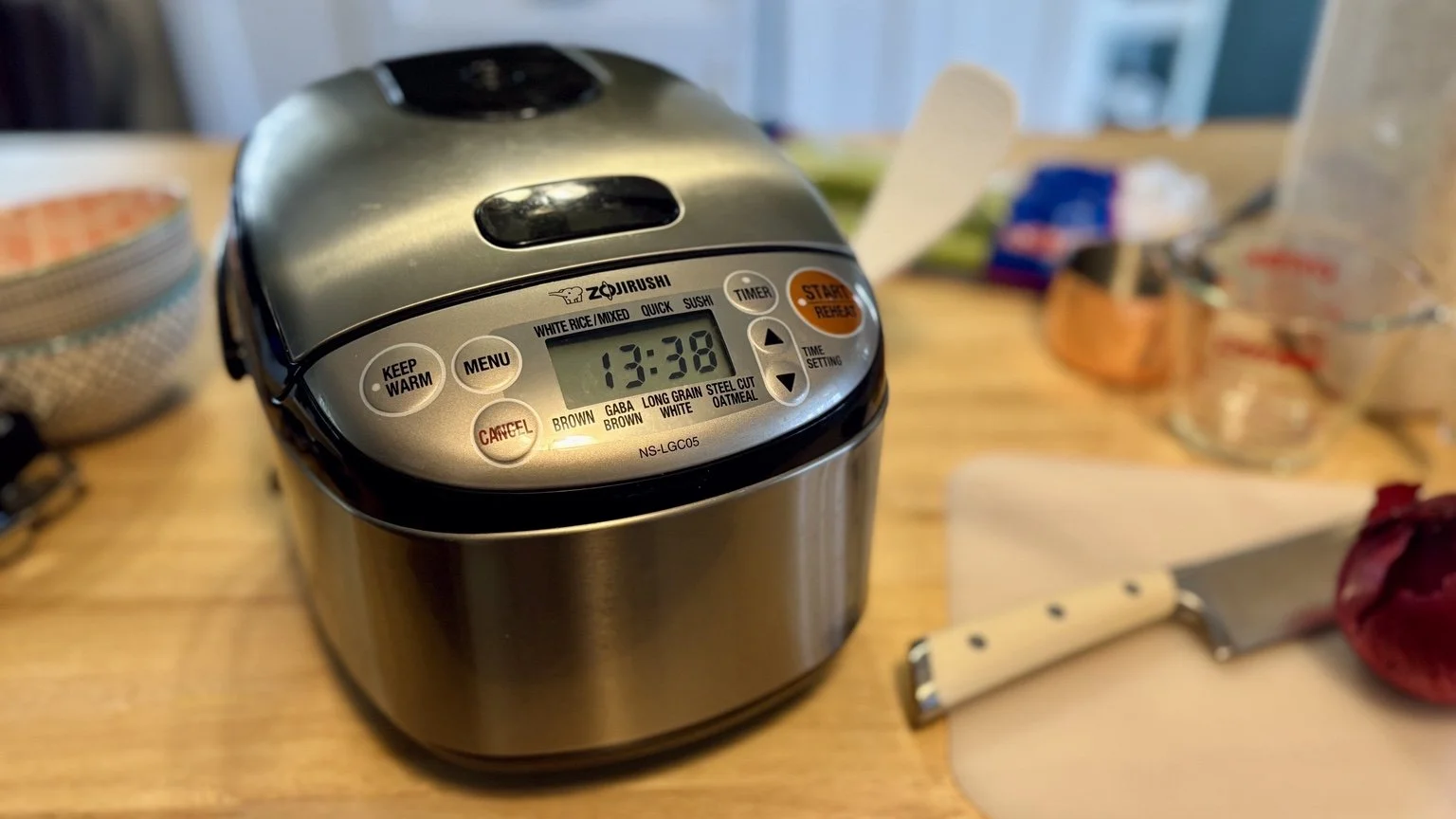
My Zojirushi Micon 3-Cup Rice Cooker as of 10/27/2026
Not everyone has the time or energy to cook a proper meal every day. Maybe you’re juggling work and other responsibilities, dealing with physical limitations, or just don’t particularly enjoy cooking. Between the prepping, cooking, and the inevitable mountain of dishes afterward, sometimes you just want to throw something together and be done with it.
There's certainly no shortage of kitchen gadgets promising to make our lives easier. But if you're anything like me, most of those supposedly convenient appliances end up collecting dust in a cabinet. Or worse, taking up valuable countertop space because they're too bulky to store anywhere else. And at some point, you start to question just how many of these things you actually needed in the first place.
Because, let's be honest, did I really need an electric can opener, dehydrator, waffle maker, and juicer? Don't get me wrong. Those appliances have their uses, and I know people who absolutely adore their waffle maker. But that doesn't mean they’re right for someone like me, who prefers to keep cooking as uncomplicated as possible. I dreaded cleaning that stupid waffle maker. It was clunky and had way too many little crevices. Finally, after several years of convincing myself I would come to love it, we parted ways.
So, which kitchen appliances actually make cooking easier without creating more work? I've narrowed this guide down to four gadgets that I think make sense for people who want to spend less time and energy in the kitchen. Three are appliances I've personally used and come to appreciate, while the other is a practical option I think is worth considering.
What Really Makes a Kitchen Appliance Worth Owning?
Before talking about the recommendations, I have a few requirements. Just because something is marketed as “convenient” doesn’t mean it’s practical for low-effort cooks.
For me, a kitchen appliance should meet these five criteria:
It genuinely saves time or effort.
It's easy to clean.
It doesn't take up unnecessary space. Countertop space is valuable, and bulky appliances need to earn their place.
It's easy to handle.
It's something I'll use regularly. (Not a novelty appliance that comes out of the cabinet twice a year.)
That said, not every gadget on this list is going to check every box perfectly. Some are larger or more expensive than others. But each one has made the list because I believe it can make cooking easier without adding more work in the process.
1. Zojirushi Rice Cooker: For Perfect Rice Without Babysitting the Stove
If you make rice regularly, I genuinely think a good rice cooker is one of the best investments you can make for your kitchen. For years, I struggled with cooking rice in a regular pot. I could never seem to get the temperature quite right. It would always turn out too mushy, slightly crunchy, or burn to the bottom of the pot. And if you've ever had to scrub a layer of burnt rice off a saucepan, you know how frustrating that can be.
Eventually, I bought a basic $30 rice cooker, and that alone was a huge improvement. Instead of constantly checking the stove, I could add the rice and water, press a button, and forget about it. Honestly, even a basic rice cooker can make your life easier, and for a lot of people, that might be all they’ll ever need. Some time later, we upgraded to a Zojirushi rice cooker Indiana got on QVC, and we haven’t looked back. It might be my favorite appliance.
What I like most of all is its consistency. The rice cooks evenly, I don’t have to monitor the temperature, and I no longer deal with burnt rice stuck to the bottom. Cleanup is a breeze, too, thanks to the removable nonstick cooking pot. I also love the different settings for things like brown rice and steel-cut oatmeal. We use ours at least a few times a week, which is exactly what I want from a kitchen appliance. Now, I will admit that Zojirushi rice cookers aren’t particularly cheap (expect to pay roughly $150 to $400 depending on the model), though I really do think the quality justifies the price.
Why it earns its place: Consistent results, minimal supervision, straightforward cleanup, and regular use.
Worth considering: If you only make rice occasionally, a less expensive rice cooker might be all you need. But for frequent rice eaters, the extra features and consistency of a Zojirushi can absolutely make the upgrade worth it.
Buy the Zojirushi Micon 3-Cup Rice Cooker on Amazon!
2. Vitamix Blender: Built to Last (and Last, and Last)
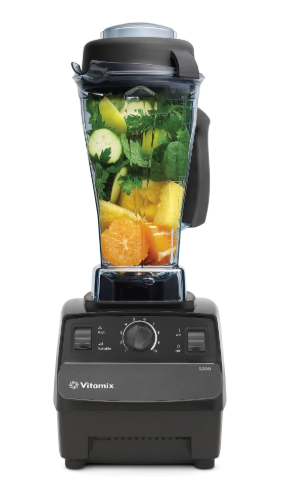
I'm not big on smoothies, but I do enjoy making protein shakes when I'm in a hurry or don't feel up to preparing a full meal. I also like having the option to whip up a homemade sauce or dressing to make an otherwise boring dinner a little more exciting. That's where my Vitamix blender comes in. But while its versatility and blending power are impressive, what really sold me on Vitamix was something else entirely: these things are ridiculously durable.
My dad has had his Vitamix for over 15 years now, and the thing just won’t quit. After all those years of use, it’s still going strong. That kind of longevity is hard to ignore, especially when so many kitchen appliances seem to give up after just a few years. In fact, I was confident enough in the brand’s reputation for reliability that I purchased my own Vitamix second-hand on eBay. How many kitchen appliances would you even consider buying used? That tells you how much faith I have in them. (One trade-off: Vitamix warranties often don’t transfer to second-hand buyers, so buying used does mean accepting that risk.)
Durability isn't the only thing it has going for it. Depending on the model, a Vitamix can handle everything from protein shakes and sauces to dips, dressings, and soups. And cleanup is refreshingly simple. I just add some warm water and a splash of dish soap, run the blender briefly, and rinse it out. No disassembly or scrubbing around sharp blades.
Now, Vitamix blenders aren’t cheap (new models generally run from about $350 to $700), and some models are fairly large and heavy. If you’re only pulling out a blender a couple of times a year, the investment might not be worth it. But for someone who uses one regularly, I think there’s a lot to be said for buying an appliance that you can reasonably expect to keep around for years. And if the price is a dealbreaker, a less expensive blender can still handle shakes and sauces. It just may not last as long.
Why it earns its place: Exceptional durability, dependable performance, versatile food preparation, and easy everyday cleanup.
Worth considering: The upfront cost is substantial, and full-size models can take up a fair amount of space. But if you use a blender regularly, the potential longevity can make that investment much easier to justify.
Buy the Vitamix 5200 on Amazon!
3. Air Fryer Toaster Oven: All the Convenience Without the Annoying Drawer
I know, I know. An air fryer is probably one of the most obvious recommendations for anyone who wants to make cooking easier. But hear me out, because I'm not recommending the standard basket-style air fryer. I'm talking about an air fryer toaster oven.
A few years ago, when air fryers were all the rage, I bought a traditional basket-style model. And despite how much everyone seemed to love theirs, I kind of hated mine. The problem wasn't necessarily how it cooked. It was the cleanup. I found the basket cumbersome to wash, with grease and food residue collecting on the crisper plate and in the drawer underneath. Eventually, I switched to an air fryer toaster oven, and I much prefer it. Its front-opening design and removable cooking trays are simply less of a hassle for me to clean.
Mine is also on the larger side. I can even fit an entire frozen pizza in it! I basically treat it like a miniature oven, which is handy when I don't feel like heating up the full-size one. It's great for reheating leftovers, toasting bread, and preparing quick meals without having to watch a skillet. Granted, these appliances aren't perfect. Some have multiple racks and accessories to clean, and they can take up a fair amount of counter space.
My particular air fryer oven is an older Gourmia model that's no longer available, but a promising alternative I found is the Ninja Flip Toaster Oven & Air Fryer. It offers eight cooking functions, enough room for a 12-inch pizza, and a removable crumb tray. I especially like its flip-up design, which lets you store the oven upright when it's not in use. That's a pretty clever way to reclaim some valuable counter space! It does have a relatively shallow interior, though, and its accessories still need cleaning. But for someone who wants the versatility of a countertop oven without sacrificing a huge chunk of counter space, I think it seems like a solid option.
Why it earns its place: Versatile cooking, convenient reheating, minimal hands-on effort, and potentially easier everyday cleanup than a basket-style air fryer.
Worth considering: Air fryer toaster ovens aren't necessarily easier to clean across the board, and some can be fairly bulky. The Ninja Flip addresses the counter-space problem, but its shallow interior may limit what you can cook.
Buy the Ninja Flip Toaster Oven & Air Fryer on Amazon!
4. Honorable Mention: Mini Electric Food Chopper: For When You Don't Feel Like Chopping Vegetables
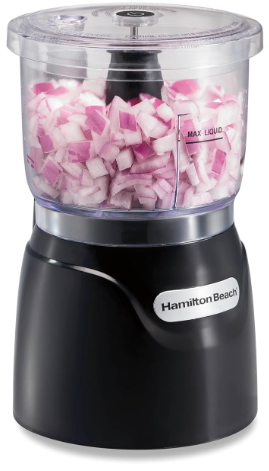
Sometimes it isn’t the cooking but alI of the preparation beforehand that stresses me out. Chopping onions, mincing garlic, dicing vegetables, and getting everything ready before you can even turn on the stove can make a simple meal feel unnecessarily complicated. That's where a mini electric food chopper comes in.
Unlike a full-size food processor, which can be bulky and come with an assortment of attachments, mini choppers are designed for smaller jobs. Most have a compact bowl, a removable blade, and a simple push-button or one-touch operation. They're especially useful for chopping onions, garlic, herbs, and other ingredients that would otherwise require several minutes to chop up by hand.
But, there is a catch. If you're only chopping half an onion, is it really worth dirtying another appliance? For someone who regularly prepares meals involving several chopped ingredients, a mini chopper could save a noticeable amount of effort. But if you're only occasionally cutting up a few vegetables, a knife and cutting board might still be the easier option.
If I were to buy one, I'd look for a compact model with a dishwasher-safe bowl and blade, minimal attachments, and as few awkward crevices to clean as possible. One that caught my eye is the Hamilton Beach Stack & Press 3-Cup Food Chopper. It has a straightforward design: just stack the bowl, blade, and lid, then press down on the lid to chop. No complicated controls. Better yet, the bowl, lid, and blade are all top-rack dishwasher-safe, making cleanup simple.
I haven't personally owned one of these yet, so I can't speak to how convenient this particular model is in daily use. But in theory, the Hamilton Beach checks quite a few of my boxes without adding unnecessary complexity.
Why it could earn its place: Less repetitive chopping, compact size, straightforward operation, and dishwasher-safe components.
Worth considering: It still introduces another bowl and blade to clean, and ingredients may need some preliminary cutting. If washing those components takes longer than the chopping itself, it probably doesn't belong in your kitchen.
Buy the Hamilton Beach 3 Cup Electric Vegetable Chopper & Mini Food Processor on Amazon!
Kitchen Gadgets That Don’t Make the Cut
A gadget that frustrates me might be one someone else can’t live without, and that’s fine. Plenty of people get real use out of stand mixers, waffle makers, and juicers. But these appliances share a pattern: they do one job well and leave a lot of parts to wash afterward.
A KitchenAid mixer is a good example. It’s heavy, it hogs counter space, and you’re left with a bowl and attachments to clean. If you only bake occasionally, a hand mixer handles most recipes, from cookie dough to cake batter to whipped cream, and rinses off in a minute. Juicers are similar. The juice is great, but the filter and pulp container need cleaning right away, or the pulp dries into something you have to scrub. And then there’s my old waffle maker, which I still don’t miss.
Before buying any specialized appliance, ask yourself three questions:
Will I use it at least once a week?
Can I clean it in about five minutes?
Is there a simpler tool that already does most of the job?
If you can’t say yes to the first two, or a simpler tool already covers it, skip it.
The Best Kitchen Gadget Is the One You’ll Actually Use
Every new appliance promises to make cooking faster or easier, but more equipment doesn’t mean less work. My rice cooker, blender, and air fryer oven aren’t the smallest or cheapest options, yet they’ve earned their place because I use them regularly and they clean up without a fight.
So before you buy anything, figure out what you dread most about cooking: the prep, the babysitting, or the cleanup. Pick the gadget that solves that one problem, and skip the rest. The last thing a low-effort cook needs is another appliance that creates more work than it saves.
