Disclosure: We may earn a commission when you purchase through links on our site. This does not influence our reviews or recommendations.
After more than a decade reviewing audio equipment, I thought I'd seen just about everything. Then I opened the MUSE HiFi M7, found four vacuum tubes inside a battery-powered amplifier, and realized I had no idea what category this thing belonged in.
Introduction: What Exactly Is This Thing?
I've been reviewing audio equipment for over a decade, and every once in a while, something shows up that genuinely catches me off guard. The MUSE HiFi M7 is one of those products. When I pulled it out of the box, I wasn't entirely sure what I was looking at. Was this a portable DAC, a desktop headphone amplifier, or some elaborate piece of audio artwork? I saw the battery inside and briefly wondered if it doubled as a power bank, too. Haha! And then I removed the magnetic glass cover. Four vacuum tubes. Four! Inside a battery-powered headphone amplifier. I actually smiled when I saw them. Sitting alongside a replaceable 18650 battery, replaceable op-amps, and an incredible amount of circuitry, the M7 looks like someone took a serious desktop amplifier, shrunk it down, and decided to throw a battery inside for good measure.
The specifications are just as impressive. We're talking about four JAN6418 vacuum tubes, a fully balanced architecture, an ESS ES9039Q2M DAC, Bluetooth 5.4, up to 3,500mW of rated output power, and a DualRail power system for battery and desktop operation. All packed into a massive chunk of metallic purple metal with glass on both sides. And somehow, MUSE HiFi calls this thing portable. Personally, I'd call it semi-portable, and even that's pushing it. But here's what really surprised me. The M7 retails for $399.99, with HiFiGo currently offering it for $359.99. After holding it, opening it, and listening through it, I would have guessed $500 or $600 without hesitation. The construction is outstanding, the engineering is fascinating, and the sound has been absolutely incredible.
It's not perfect. The display is tiny, the desktop power-on behavior is unusual, and I'm not convinced a heavy metal amplifier with magnetically attached glass is something I'd want to carry around every day. But after more than a decade reviewing audio equipment, I genuinely can't think of another product I've personally tested that fits into quite the same category. I still don't know exactly what to call the MUSE HiFi M7. But I know I absolutely love it.
Comparisons: What Do You Even Compare This Against?
Normally, I'd compare a product against other DACs or headphone amplifiers I've reviewed. But the M7 creates a problem. I genuinely don't know what category to put this thing in. I've reviewed tiny portable DAC/amps that are barely larger than a USB adapter. They're lightweight, convenient, and designed to work with smartphones and laptops. The M7? It's considerably bigger, heavier, and packed with far more hardware than your typical portable amplifier. Then you've got traditional desktop DACs and headphone amplifiers. These offer plenty of power and sophisticated circuitry, but most require an external power supply and aren't designed to leave your desk. Yet the M7 has a rechargeable battery, Bluetooth connectivity, and four vacuum tubes somehow squeezed into one enclosure.
I'm genuinely confused about what to call this thing! I think semi-portable high-end DAC/amp is probably the best description. You can move it around the house, take it traveling, or use it at your desk. But it's definitely not something I'd want hanging off my phone while walking around. I'm sure there are other ambitious transportable amplifiers out there, but nothing I've personally reviewed comes close to this particular combination of features, construction, and flexibility. And honestly, after more than a decade reviewing technology, I love finding something that I can't easily classify. That's part of what makes the M7 so interesting.
Design: A Beautiful Purple Brick
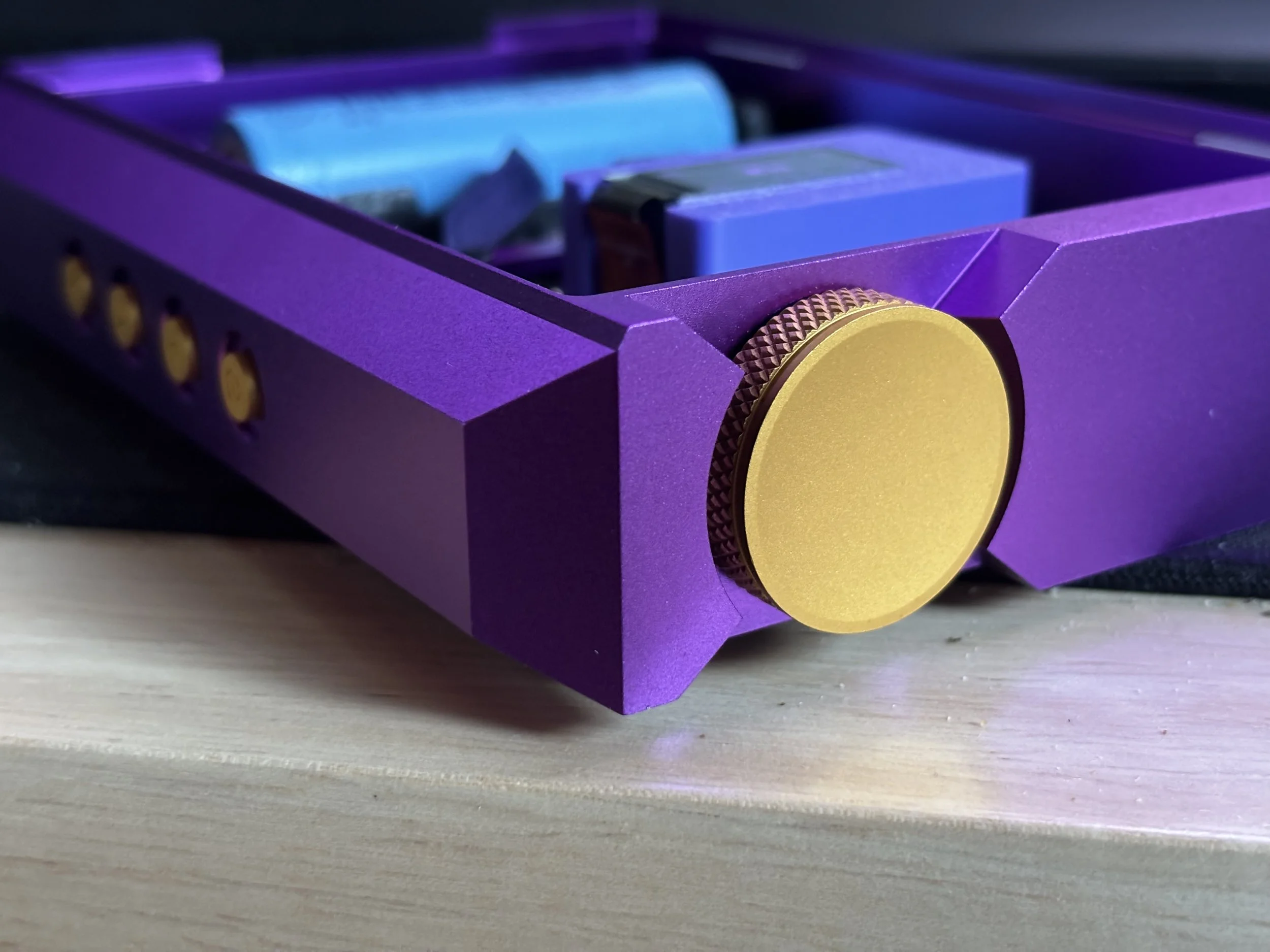
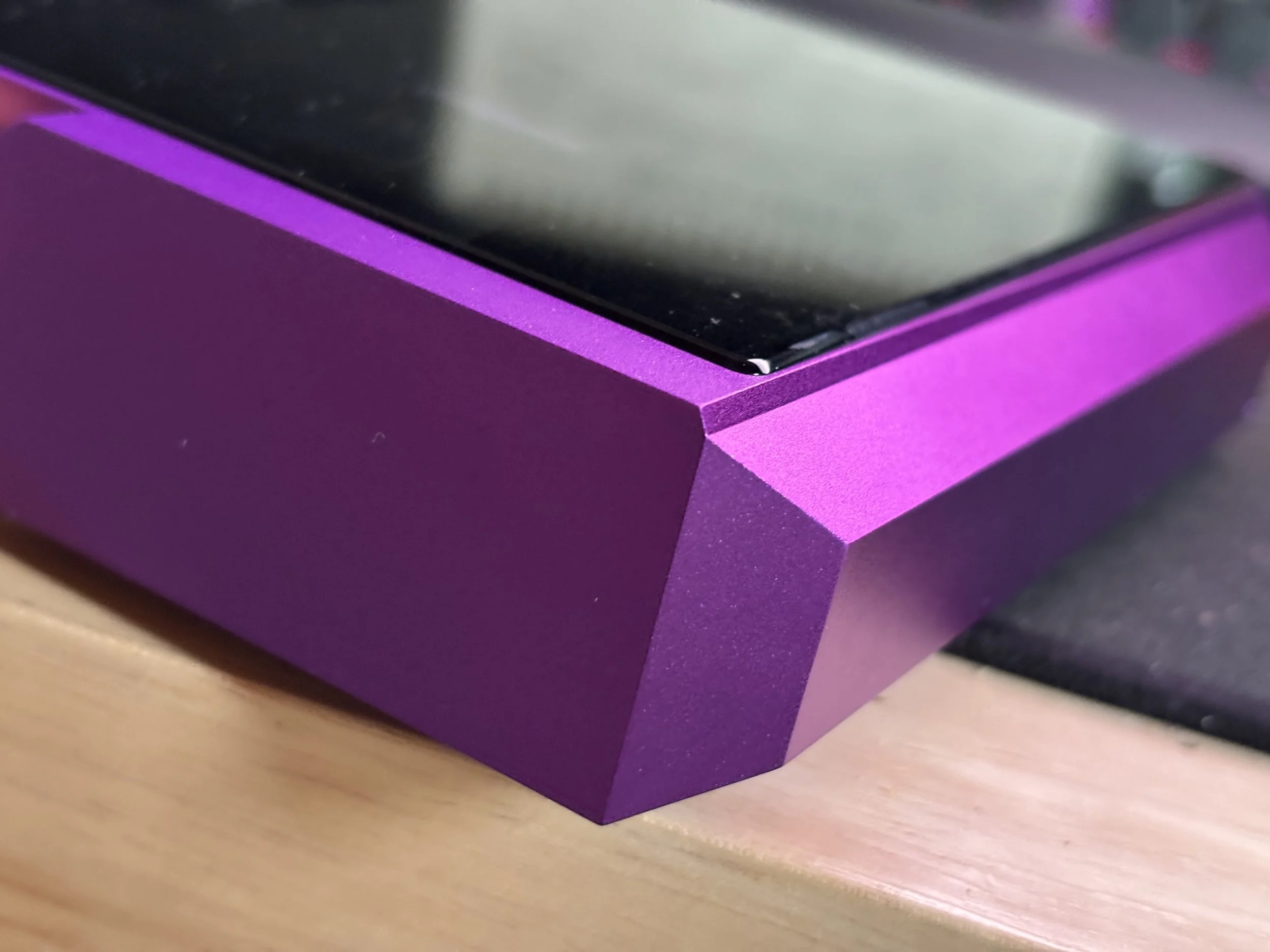
My review unit comes in metallic purple, and I absolutely love it. The finish looks fantastic against the glass panels and exposed internal components. It's bold, unusual, and unlike the ordinary black or silver boxes that make up most of the headphone amplifier market. Purple won't be for everyone. I'd love to see MUSE HiFi offer more adventurous finishes in the future, perhaps a bright blue or lime green. But personally, I wouldn't change the color of my review unit. The construction is just as impressive as the appearance. Pick up the M7 and you'll immediately notice the weight. The chassis feels like a solid block of machined metal, and there's a considerable amount of material here. It's basically a brick, only one that happens to contain a serious audio system.
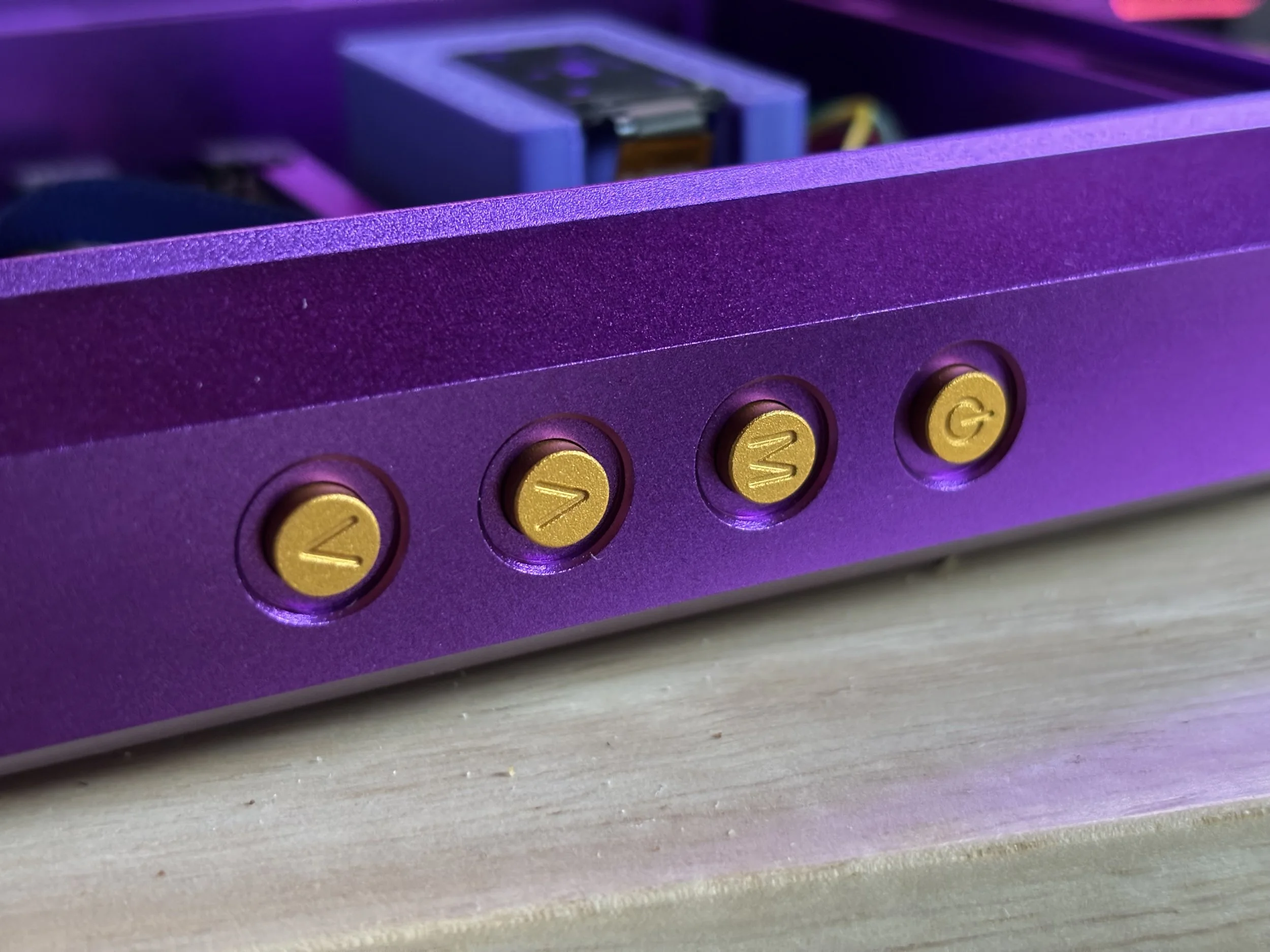
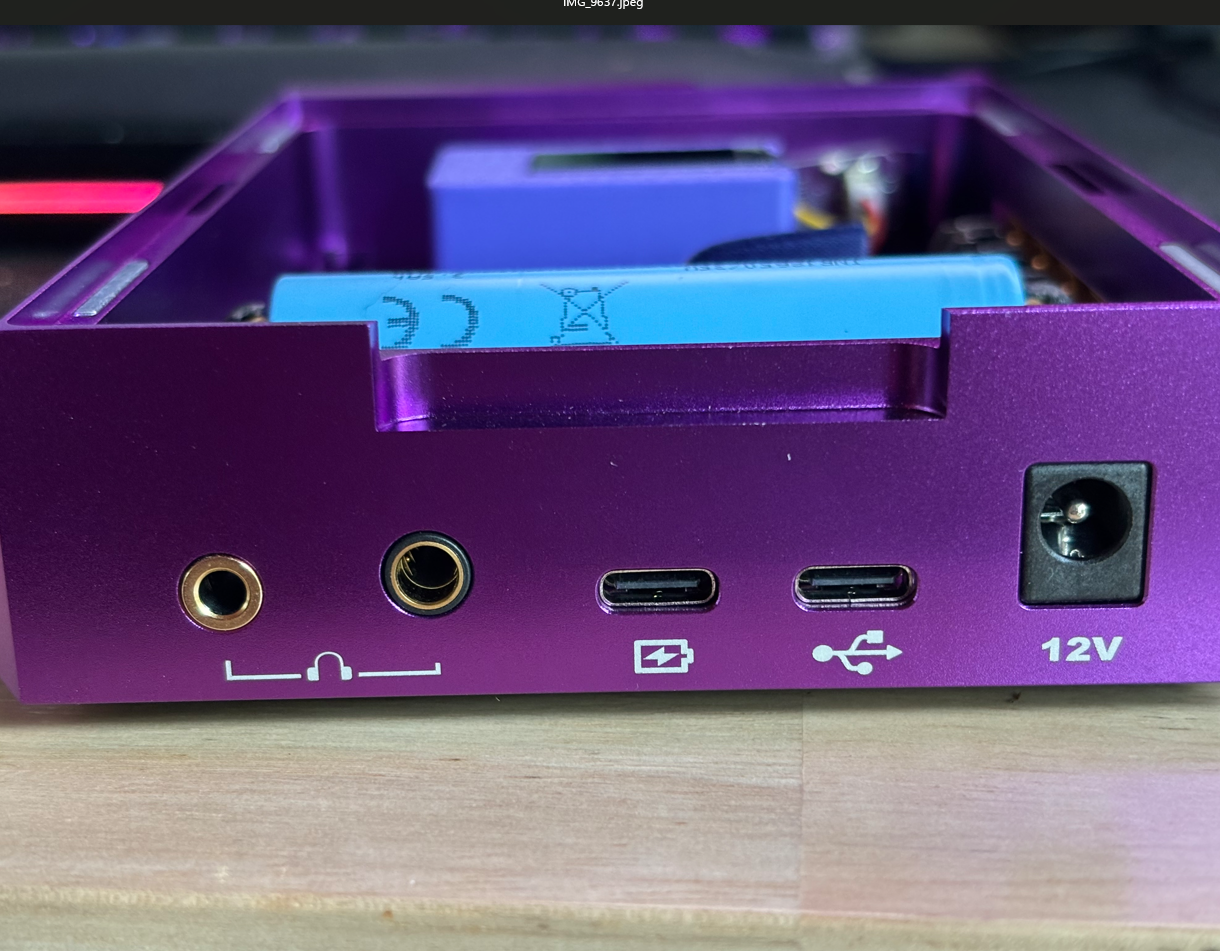
The main control knob feels excellent, with a satisfying tactile response. The smaller side buttons look just as nice, but they could use a little more feedback when pressed. They click, but there's not much sensation beyond that. Around the rear, the connections are cleanly arranged. You get two USB-C ports, a dedicated 12V desktop power input, and 3.5mm and 4.4mm headphone outputs. There's enough space around everything that the layout doesn't feel crowded. I would have liked a dedicated quarter-inch headphone jack. Given the M7's size and desktop ambitions, it would have made sense. An adapter solves the problem, but it's still something I'd like to see.
Overall, this is one of the most interesting-looking audio devices I've had on my desk. The M7 doesn't just look expensive. It feels expensive.
Four Vacuum Tubes. In a Battery-Powered Amplifier.
What….
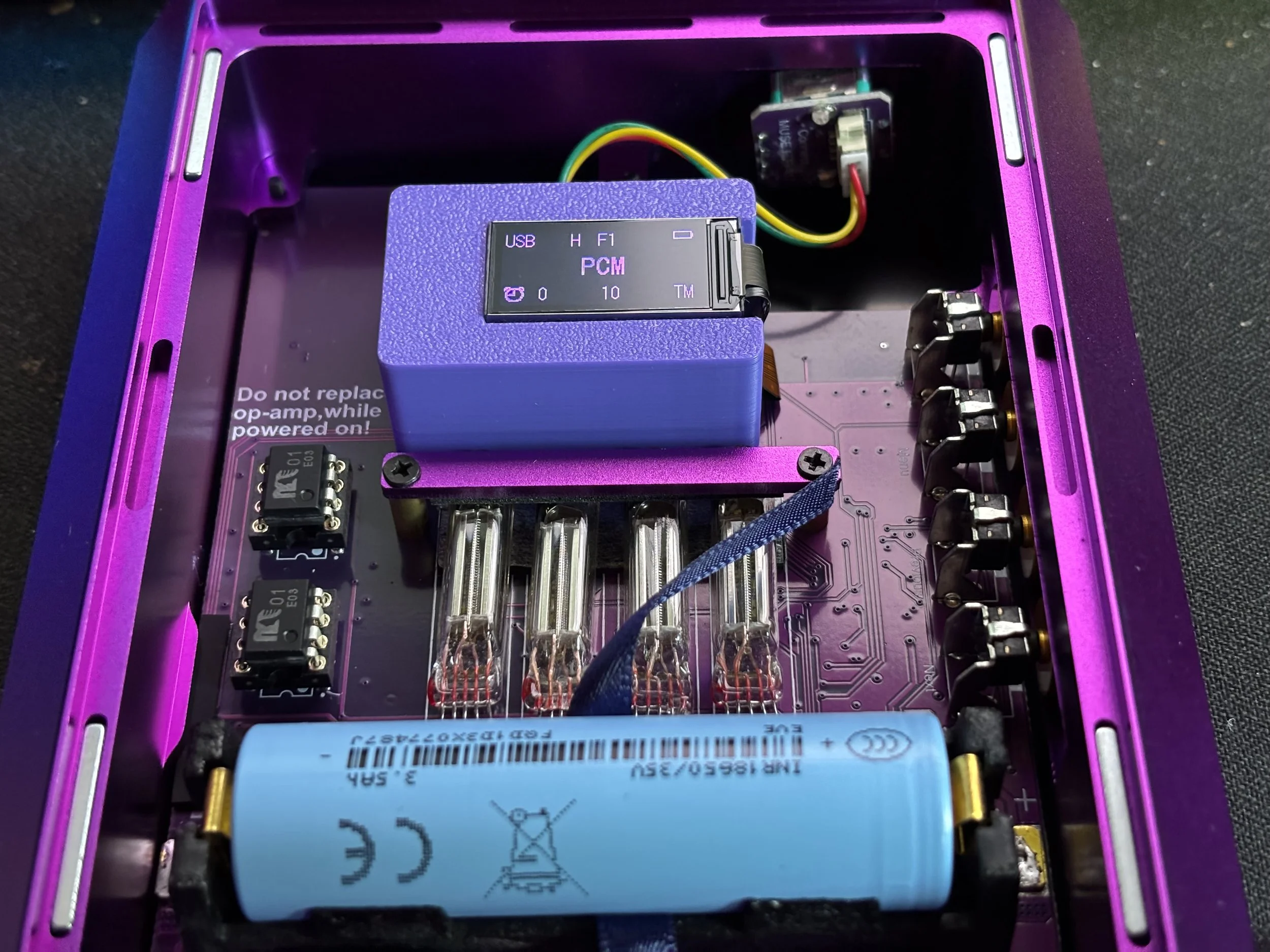
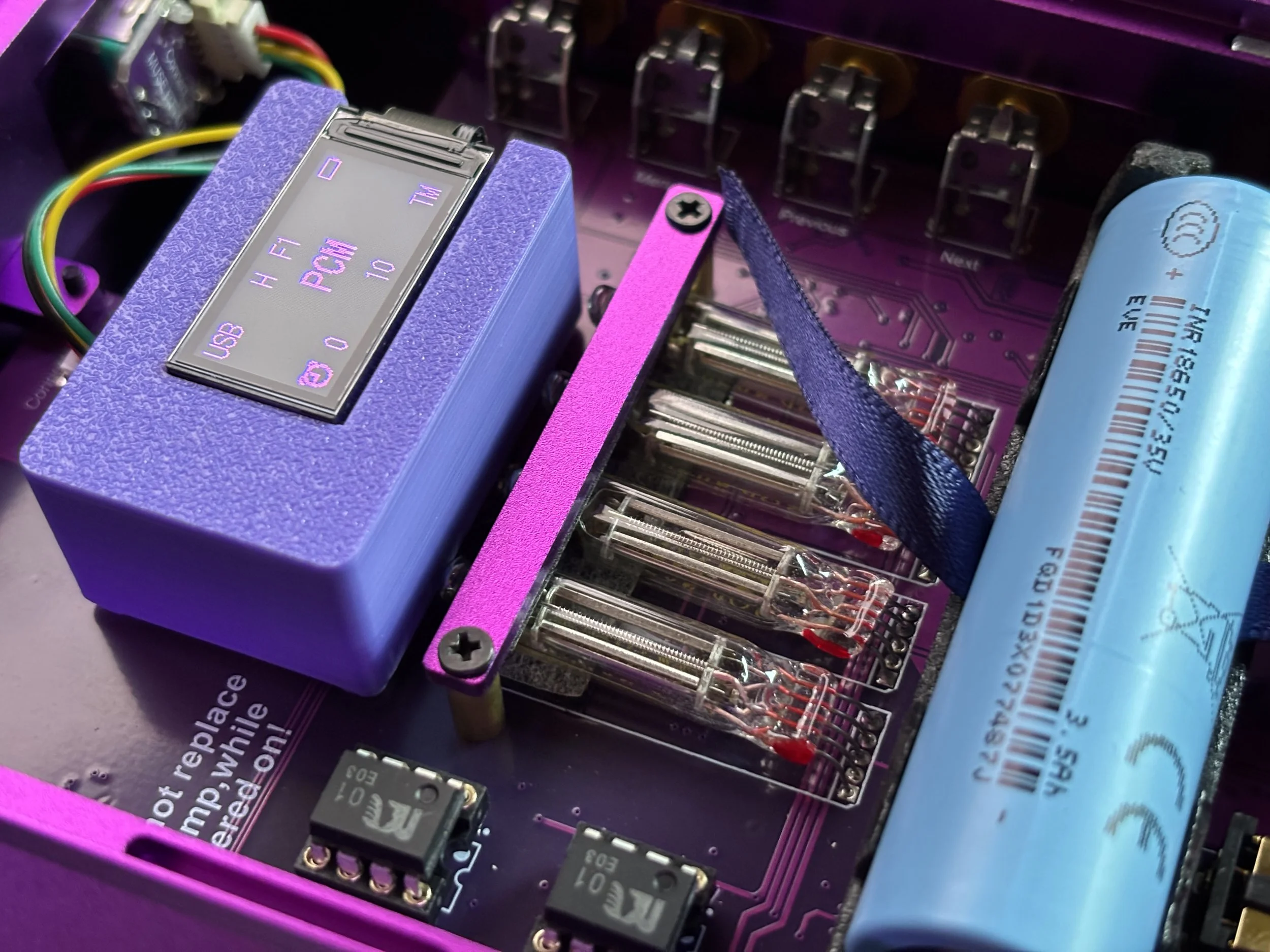
This is where things get ridiculous. Inside the M7 are four JAN6418 miniature vacuum tubes. Not one or two. Four. And they're part of a fully balanced tube preamplifier stage, with two tubes handling each channel's positive and negative signal paths. I've reviewed conventional tube amplifiers before, but seeing four miniature tubes packed into a battery-powered device this size is something else entirely. The M7 offers two amplification modes. VT uses the vacuum-tube stage, while TM provides transistor-based amplification. That gives you two different signal-path options without buying separate equipment.
MUSE HiFi describes the tube mode as warmer and smoother, while transistor mode is intended to offer a more direct presentation. I wouldn't automatically assume one is better than the other. That's going to depend on the headphones, music, and what you personally enjoy. The company also uses a suspended tube mounting arrangement intended to reduce vibration and microphonic noise. It's an interesting detail because miniature vacuum tubes can be sensitive to mechanical vibration. But what really got me was opening the M7 for the first time. I pulled off the magnetic glass cover, looked at the four tubes, the battery, and all the circuitry packed inside, and just smiled. I couldn't believe how much hardware was sitting in front of me. It's the kind of engineering that reminds me why I enjoy reviewing technology in the first place.
Under the Glass: Serious Audio Hardware
The M7 uses an ESS ES9039Q2M DAC alongside Qualcomm's QCC3095 Bluetooth platform, which supports Bluetooth 5.4 and aptX Lossless. That's a capable digital foundation, and the wireless connectivity is useful if you want to pair a compatible smartphone without running a USB cable. Of course, aptX Lossless requires support from the transmitting device, so not every phone will take advantage of it. The M7 also has some serious output capability. MUSE HiFi rates the 4.4mm balanced output at up to 3,500mW into 32 ohms. That's 3.5 watts, an impressive figure for something that can operate from an internal battery. That doesn't mean every headphone needs that much power, or that output wattage alone determines sound quality. But it does give the M7 flexibility beyond the small, low-powered DACs commonly paired with smartphones.
There's a substantial amount of amplifier hardware inside this thing, and the more you examine it, the more impressive the packaging becomes.
Listening Impressions: Smooth, Clean, and Powerful
This is where the M7 really won me over. The engineering is fascinating, and the construction is excellent, but none of that matters much if I don't enjoy listening to it. Fortunately, I absolutely love how this thing sounds. I've spent time listening to several different songs through the M7, and the first thing that stood out was how fluid the overall presentation felt. Music came across smoothly, with a natural sense of flow that made it easy to settle into a listening session rather than constantly analyzing the equipment. That's something I appreciate in a headphone amplifier. I want to hear the recording clearly, but I also want to enjoy the music. The M7 has been particularly good at delivering that balance during my listening.
Highs: Crisp Without Becoming Harsh
The upper frequencies were one of the first areas that caught my attention. Highs sounded crisp, clean, and well-defined, with plenty of clarity in the recordings I played. What I liked was that the presentation didn't strike me as excessively sharp or aggressive. There's a difference between hearing detail and having high-frequency energy constantly demanding your attention. The M7 gave me the clarity I wanted without making my listening sessions unpleasant.
On recordings with prominent cymbals, percussion, or other high-frequency content, I appreciated the sense of definition. The sound remained enjoyable rather than turning into something fatiguing. Of course, the headphones and recording play a major role in that result. I'm describing the listening experience I had with the M7, not claiming that the amplifier alone determines how every headphone will reproduce treble.
Bass: Deep Rumble and Plenty of Punch
The low end is another area where I really enjoyed the M7. Bass had a satisfying sense of depth, with the kind of rumble and punch that makes energetic recordings fun to listen to. I particularly appreciate equipment that can deliver low-frequency impact without making the rest of the presentation feel overwhelmed. During my listening, the M7 provided plenty of bass presence while keeping the overall sound enjoyable. There's a difference between bass that simply sounds loud and bass that has a satisfying sense of weight. What I heard through the M7 leaned toward the latter.
On music with stronger low-frequency content, that added physicality was one of the things I enjoyed most. It's worth remembering that an amplifier doesn't magically add bass extension to headphones that can't reproduce it. But with the headphones I used, I was very happy with the low-frequency performance.
Midrange: The Part That Holds Everything Together
The M7's smooth overall presentation was particularly enjoyable through the middle of the frequency range. Vocals and instruments sat comfortably within the music, without the sound drawing my attention to one particular frequency region. I wouldn't describe the M7 as dramatically colored based on these listening sessions. What stood out to me was how cohesive everything felt. The highs were clean, the lows had satisfying weight, and the midrange connected the two without making the presentation feel disjointed. That balance is a big part of why I found myself enjoying the M7 rather than constantly thinking about its specifications.
Dynamics and Overall Presentation
The M7 also delivered the kind of energetic presentation I enjoy from a capable headphone amplifier. When music became more demanding, with stronger bass passages or more instruments playing together, the sound remained engaging. There's a nice sense of impact when recordings call for it, but the overall presentation still feels smooth. I wouldn't claim that the M7 has objectively better dynamics than every desktop amplifier I've reviewed without controlled comparisons. But from a listening standpoint, I was impressed.
And that's really what matters to me here. The M7 is one of the more enjoyable compact headphone amplifiers I've spent time with. I found myself wanting to keep listening, trying another song, and appreciating just how much audio hardware MUSE HiFi managed to pack into this unusual enclosure.
Tube Mode vs. Transistor Mode
Having both VT and TM modes is a major part of the M7's appeal. VT engages the vacuum-tube stage, while TM uses transistor amplification. It's a fascinating feature because you can explore both approaches using the same DAC, headphones, and source equipment. MUSE HiFi describes VT as warmer and TM as more precise, but I haven't completed a controlled, volume-matched comparison that would let me confidently describe the exact differences I hear between them.
I don't want to invent a dramatic transformation just because the device contains vacuum tubes. What I can say is that I really appreciate having both modes available, and the M7 has sounded excellent during my listening sessions. For anyone who enjoys experimenting with audio equipment, that flexibility is part of the fun.
Portability: Let's Be Realistic
MUSE HiFi calls the M7 portable, and technically that's accurate. It has an internal battery and doesn't require a wall outlet for operation. But I think semi-portable is a much better description. My iPhone 15 is only slightly taller than the M7, while the M7 is substantially wider and thicker. It's also much heavier than the small DAC/amps people typically carry with their phones. Then there's the glass.
The M7 has glass panels on both sides, including a magnetic cover that allows access to the internals. The cover takes a reasonable amount of force to remove, so it's not something that simply falls off during normal handling. But it's still removable glass attached with magnets. I wouldn't want to toss this thing into a backpack without a protective case. For me, the M7 makes the most sense sitting on a desk, where I can appreciate the design, use it comfortably, and even remove the cover to look at the internal components.
It's portable enough to move between locations, but not particularly convenient for everyday mobile use. And I'm fine with that. The M7 prioritizes amplifier hardware, modularity, and construction over being small and lightweight. Just understand what you're buying.
Mag-Mod: Finally, Something Designed to Be Opened
One of my favorite features is MUSE HiFi's Mag-Mod system. The magnetic cover allows access to two replaceable MUSE01 op-amps and the internal 18650 rechargeable battery. I love this approach. So many electronics are designed to be sealed shut, with batteries and other components that are difficult or impractical to replace. The M7 actually encourages owners to access selected components.
MUSE HiFi specifies a 3,500mAh battery, with claimed runtime of up to 20 hours in transistor mode and 15 hours in tube mode. I haven't independently measured those figures. But the fact that the battery is replaceable is a major advantage for long-term ownership. And being able to experiment with compatible op-amps adds another dimension for enthusiasts. I also genuinely enjoy removing the cover just to look inside. Seeing the battery, tubes, and circuitry arranged in such a compact space is fascinating.
I wouldn't assume the vacuum tubes themselves are user-swappable, and any internal modifications should follow the manufacturer's instructions. But as far as serviceability and enthusiast appeal go, the M7 gets a lot right.
DualRail Power: Clever, With One Strange Quirk
The M7 uses a DualRail power system that supports both internal battery operation and a dedicated external 12V supply for desktop use. According to MUSE HiFi, connecting the external supply bypasses the battery and uses a separate power path. I like the flexibility, especially for a device that's intended to operate in more than one environment. However, I encountered something strange during setup. When I first connected the external power supply with the M7 switched off, I pressed the power button and nothing happened.
I thought it was broken. After waiting approximately 15 to 20 seconds, I tried again, and it powered on normally. I haven't confirmed whether this is an intentional startup sequence or something specific to my unit. But it's worth mentioning because it was confusing the first time. Once I understood the behavior, it wasn't a major inconvenience. Still, I'd like MUSE HiFi to explain it more clearly if it's normal.
The Display Needs to Be Bigger
My other notable complaint is the screen. It's small, and some of the text is difficult to read without looking closely. For a device this substantial, I think MUSE HiFi could have used a larger display without compromising the design. I also noticed that the display appeared considerably dimmer during USB operation than when I connected the external desktop power supply.
I'm not sure why that happens, but the difference was obvious. If you have trouble reading small text, this is something I'd consider before purchasing. The smaller side buttons could also use more tactile feedback, and I'd still like a dedicated quarter-inch headphone jack. None of these issues ruins the experience, but they're the areas I'd most like to see improved in a future revision.
Value: How Is This Under $400?
After spending time with the M7, I keep coming back to the price. HiFiGo currently lists it at $359.99, down from $399.99. That's a surprisingly reasonable amount of money for what you're getting. I realize $360 isn't inexpensive for a headphone amplifier, and not everyone needs this level of hardware.
But look at the construction and features. Four miniature vacuum tubes, a fully balanced preamplifier design, an ESS DAC, Bluetooth connectivity, substantial rated output power, replaceable op-amps, a replaceable battery, a dedicated desktop power supply system, and an unusually substantial metal chassis. That's a lot of engineering for the money. Holding this thing in my hand, I would have expected it to cost $500 or $600. And after listening to it, I think the value proposition becomes even stronger. At approximately $360, I think the M7 is an excellent purchase for someone who appreciates what it offers.
Final Thoughts: I Still Don't Know What to Call It
After more than a decade reviewing audio equipment, I thought I'd seen just about every type of DAC and headphone amplifier. Then the MUSE HiFi M7 showed up. I love the metallic purple finish. I love the massive metal chassis, the glass panels, the four vacuum tubes, and the ability to open the device and access the internal components. And I absolutely love listening to it. The sound has been smooth and fluid, with crisp highs, satisfying bass, and an overall presentation that's made my listening sessions thoroughly enjoyable.
It's one of the better compact headphone amplifiers I've used, and the fact that it operates from a rechargeable battery makes the engineering even more interesting. Is it perfect? No. It's too heavy and glass-covered for me to consider it a practical everyday portable DAC. The display could be larger and brighter, the side buttons could feel better, and the initial desktop power-on delay was confusing. I'd also love a dedicated quarter-inch headphone output.
But none of those issues changes how impressed I am with the M7. At $359.99, I think MUSE HiFi has delivered an unusually compelling combination of construction, engineering, features, and listening enjoyment. If you're an audio enthusiast who appreciates unusual hardware and wants something different from the ordinary desktop DAC or tiny portable amplifier, I strongly recommend the MUSE HiFi M7. I still don't know exactly what category it belongs in. But I know I'd happily keep one on my desk.