Kiwi Ears Chorus vs. Cadenza II Review: Which Budget IEM Sounds Better?
Disclosure: We may earn a commission when you purchase through links on our site. This does not influence our reviews or recommendations.
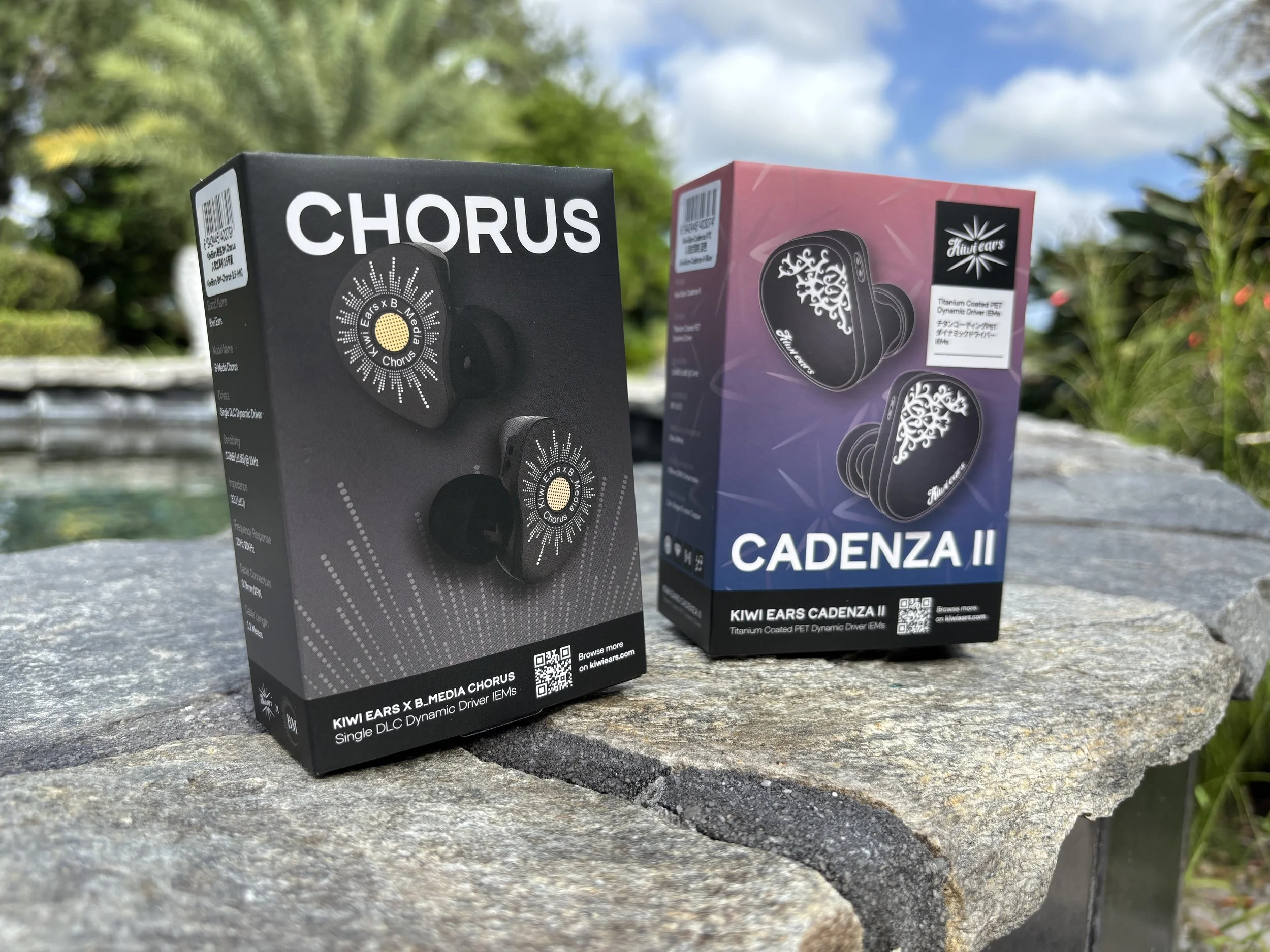
The budget in-ear monitor market has gotten absurdly competitive. Spending under $50 no longer means settling for thin, congested sound — and Kiwi Ears has built a chunk of its lineup around proving exactly that.
That creates an odd problem when two of the company's own IEMs land within $10 of each other. I spent a couple of weeks switching back and forth between the Kiwi Ears x B_Media Chorus (~$40) and the Kiwi Ears Cadenza II (~$50), and the honest takeaway is: it's close. Really close. Close enough that "which one is better" is almost the wrong question — "which one fits how you like to listen" is the right one.
The Specs, Briefly
Both are single dynamic-driver IEMs, which keeps them simple, easy to drive, and cheap to manufacture well — there's no crossover tuning to get wrong.
The Cadenza II's 18Ω impedance and 106dB sensitivity make it an easy load for phones, dongles, and basically any source you'd realistically pair a $50 IEM with — you won't need an amp. I'd expect similar behavior from the Chorus given the price bracket and driver type, though Kiwi Ears doesn't publish the same level of detail for it.
Specs only tell you so much, though. Two single-DD IEMs at similar price points can still sound very different depending on how the tuning is voiced, and that's exactly what's going on here.
Design & Build
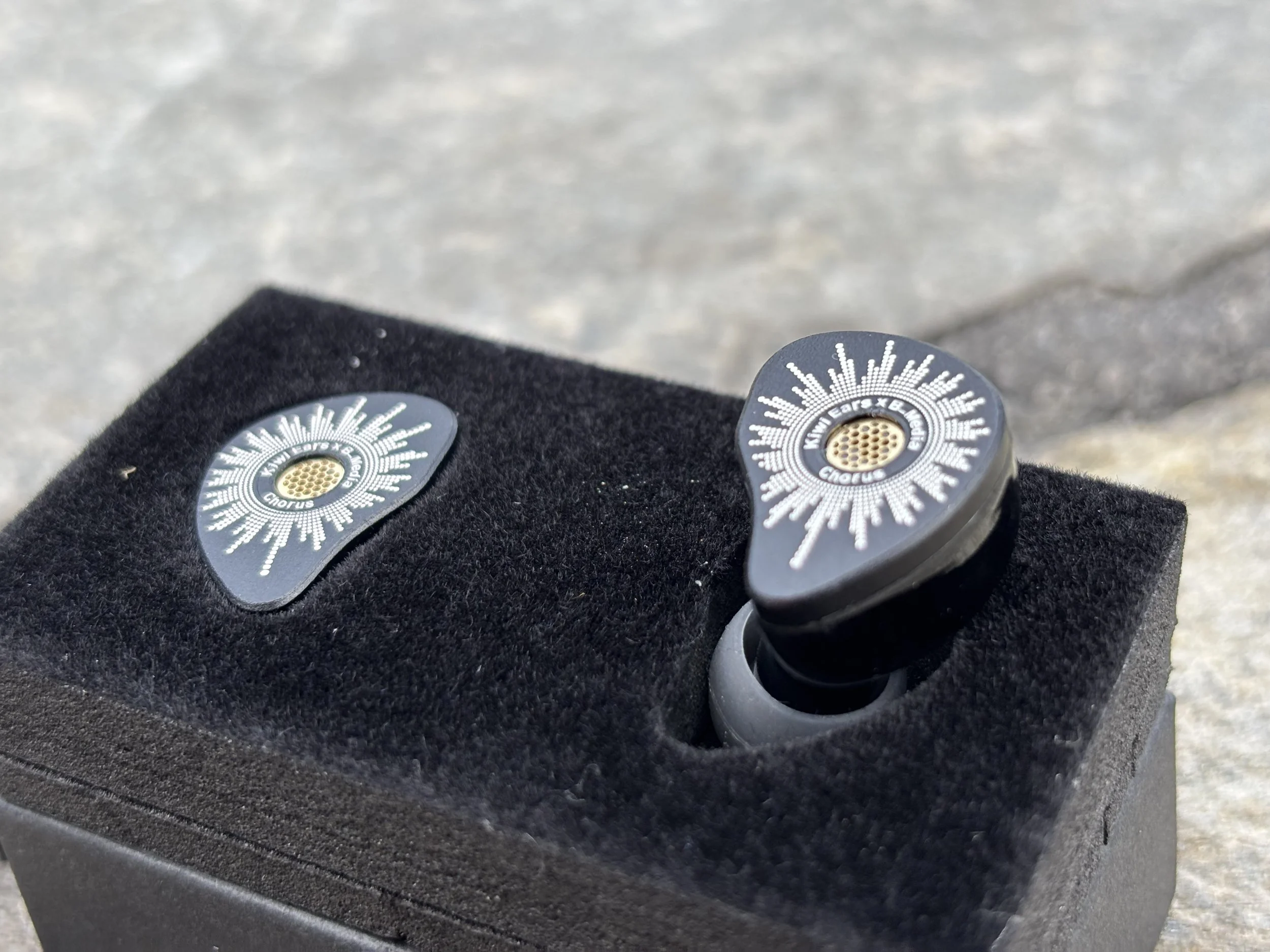
The Chorus is the pocket-sized one. Kiwi Ears leaned into a semi-open shell design here, built from lightweight medical-grade resin topped with a CNC-machined metal faceplate. The standout visual is a flower-shaped vent cut into that faceplate — partly aesthetic, partly functional, since it's there to relieve ear-canal pressure on a driver design that needs somewhere for air to go. At around 3 grams per shell, these things practically disappear once they're in your ears. The trade-off is that "semi-open" cuts both ways: don't expect much isolation on a commute or in a loud office. Cable-wise, you get a silver-plated 2-pin setup, and Kiwi Ears actually gives you a choice at checkout between a 3.5mm termination or USB-C — a nice bit of flexibility for something this cheap.
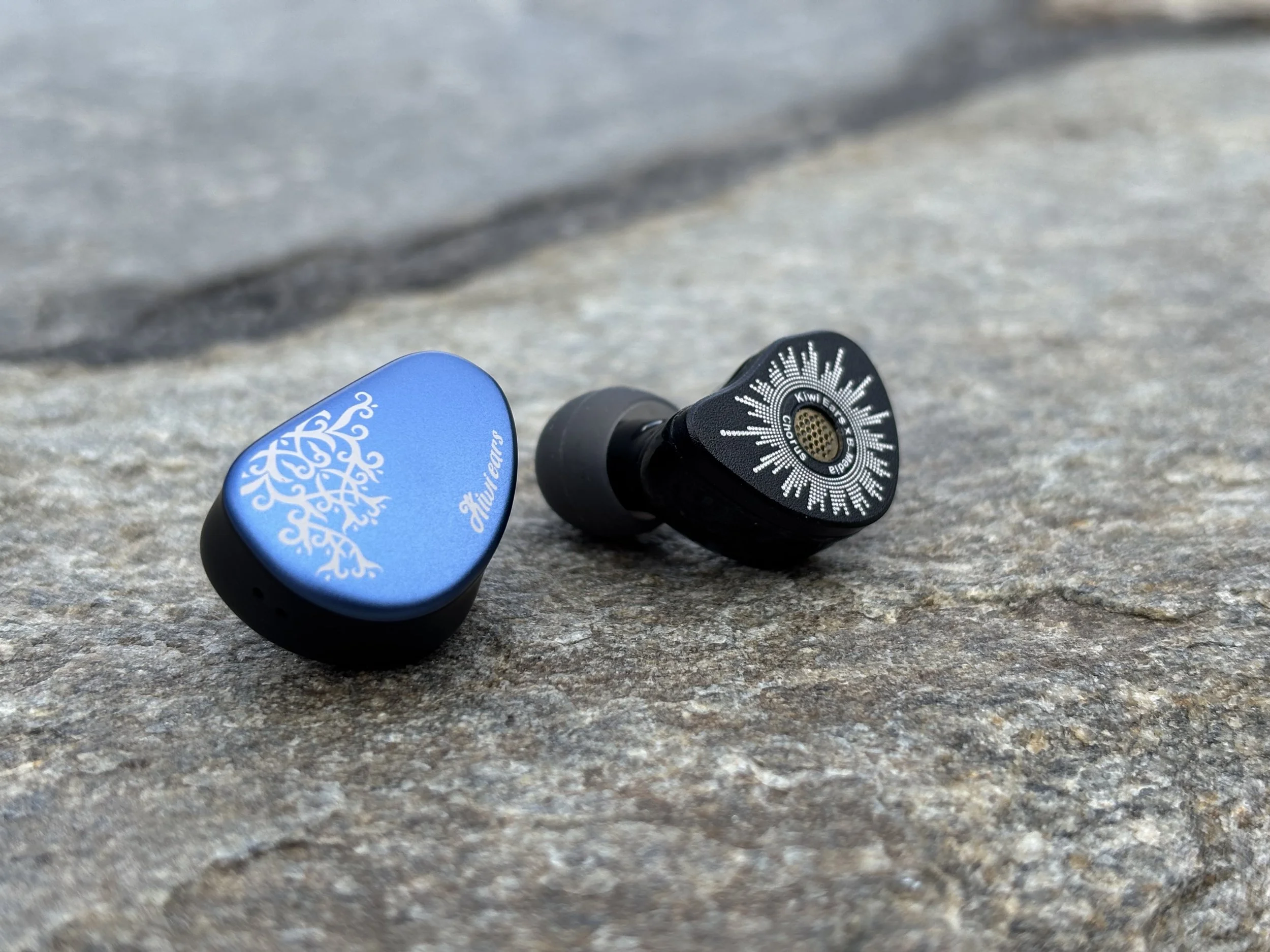
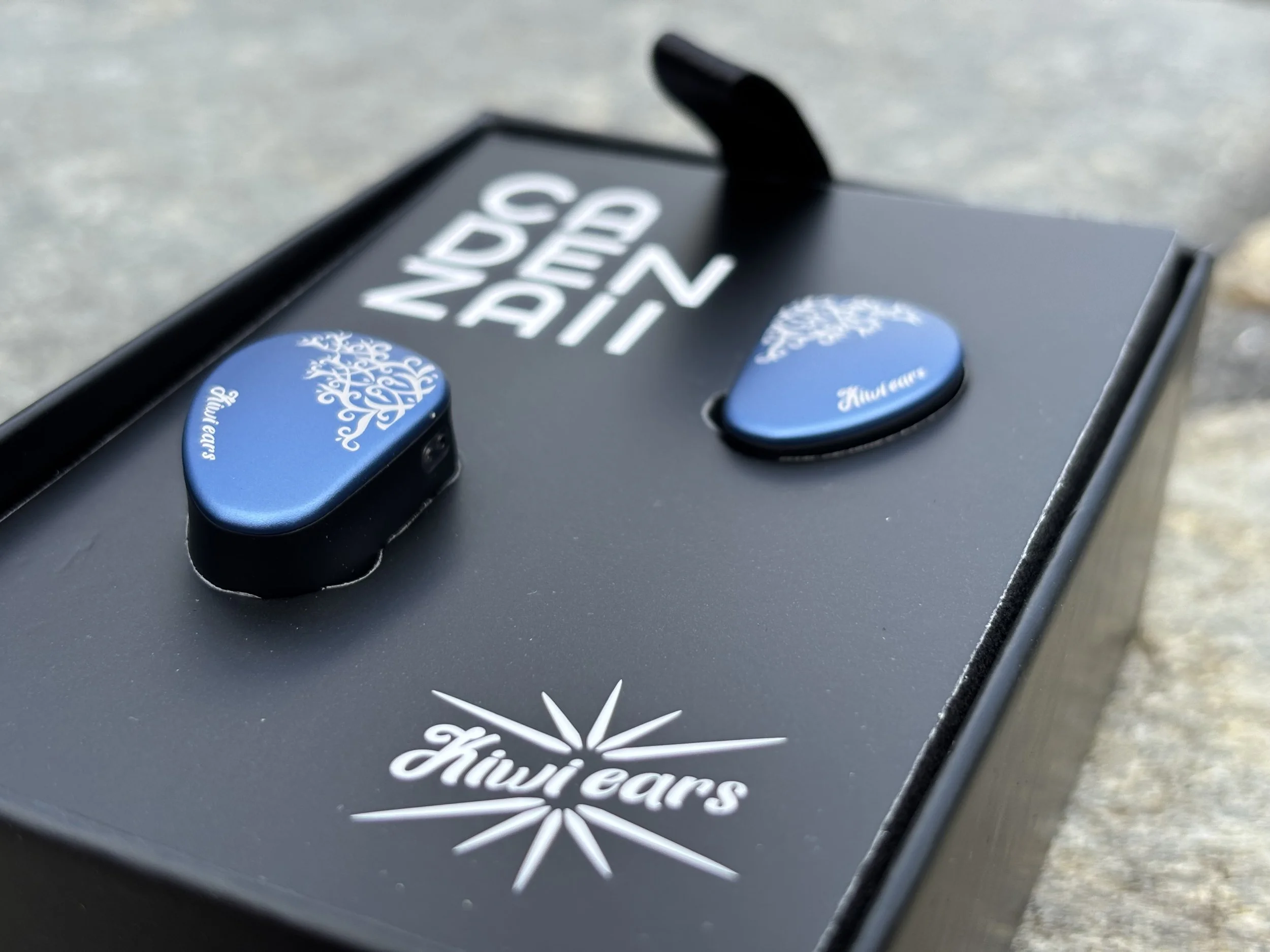
The Cadenza II bulks up, in a good way. Where the original Cadenza used a resin shell, the Mark II moves to a polycarbonate composite — more impact-resistant, and it has a slightly denser, more "premium" feel in the hand than resin typically does. Sitting on top is a CNC-machined, laser-engraved aluminum faceplate with a honeycomb pattern that catches light nicely without looking like it's trying too hard. It's a bit larger and heavier than the Chorus, but still light by IEM standards, and the fit is comfortable enough for long sessions. The stock cable is a 4-core braided single-crystal copper cable — a genuine step up from the twisted cable you'd expect at this price — though it only ships with a 3.5mm termination, no USB-C option here.
The vibe check: the Chorus feels like the fun, disappear-in-your-ear option — cute, light, a little bit of flair with that vented faceplate. The Cadenza II feels like the one that wants to be taken seriously — denser shell, nicer cable, more "desk accessory" energy. If build quality alone were the tiebreaker, I'd give the edge to the Cadenza II. But paired with everything else, it's still not enough to pull it clear of the Chorus for me.
How They Actually Sound
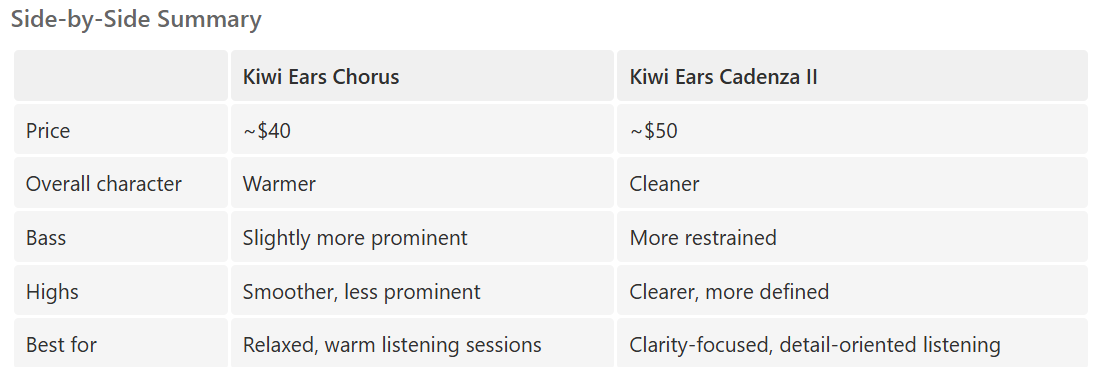
The Chorus leans warm. There's more bass presence — not basshead-territory, overwhelming levels, but a clear, consistent lift compared to the Cadenza II. That extra low end doesn't just sit in isolation either; it colors the whole presentation, giving the Chorus a relaxed, easy-to-listen-to character. It's the kind of tuning you put on and just enjoy, rather than one that invites you to pick apart the mix.
The Cadenza II leans clean. Switch over and the difference shows up mostly at the top end — the highs are noticeably clearer and better defined. Bass is more restrained by comparison. If your listening priority is clarity and separation over warmth and body, the Cadenza II is the one that's going to click. Vocals and finer details are a little easier to pick out against the more neutral low end.
Neither one tips into an extreme. The Chorus doesn't turn muddy, and the Cadenza II never gets thin or analytical in a fatiguing way. These are two moderate takes on warm-vs-clean, not opposite ends of a spectrum — which is exactly why the comparison is hard to call.
Which One Should You Buy?
Honestly, either. This isn't a case where the extra $10 buys you a meaningfully better IEM — it buys you a different one. If you handed me just one of these without a direct comparison, I'd be perfectly happy with it.
That said, my personal pick is the Chorus. I gravitate toward a slightly warmer signature with a bit more low-end weight, and that's squarely where the Chorus sits. Combine that with the lower price, and it edges out the Cadenza II for me — but only just.
If you know you prefer cleaner, more revealing highs, get the Cadenza II instead. That preference is common enough, and reasonable enough, that I wouldn't push back on it. Go with your ears, not mine.
Final Thoughts
What stands out most after living with both isn't which one wins — it's how good the budget IEM category has gotten that this is even a debate. At $40–$50, you're not choosing between "good" and "bad" anymore. You're choosing a flavor: warm and relaxed, or clean and detailed.
If I had to score it, the Chorus is a 9 and the Cadenza II is an 8.9. That's the entire gap. Don't overthink which one is "technically better" — pick the tuning that matches how you actually like to listen.