I Sold Sony and Samsung TVs for Years. Now I Buy Cheap TVs at Walmart.
Disclosure: We may earn a commission when you purchase through links on our site. This does not influence our reviews or recommendations.
"What TV should I buy?"
I hear some version of that question almost every day. And my answer today is nothing like the answer I would have given five or ten years ago.
I sold Sony and Samsung TVs as a dealer. I installed expensive displays in dedicated theaters and media rooms. I dealt with delivery trucks, install crews, warranty claims, and every headache that shows up after the box gets opened and something isn't quite right.
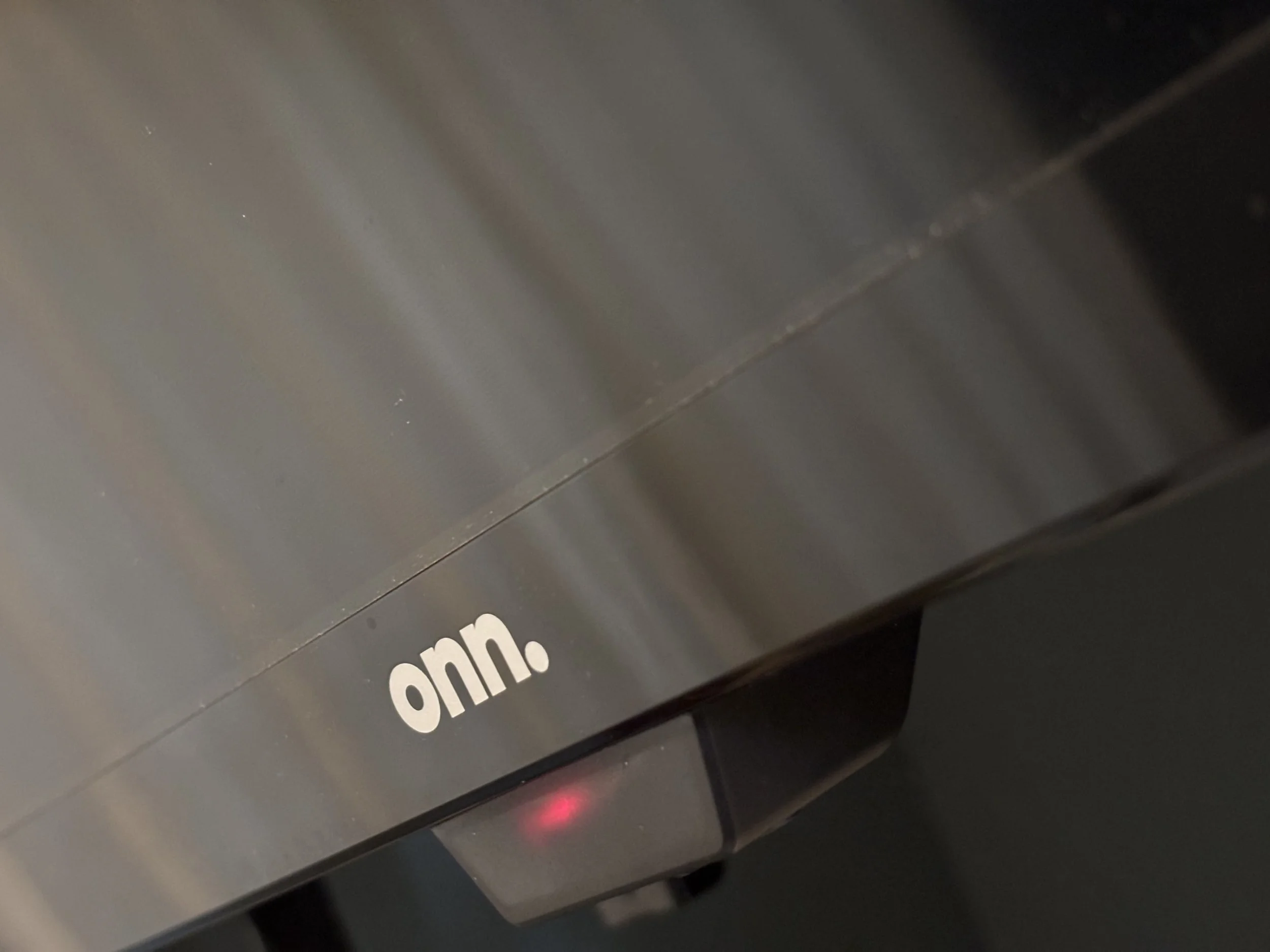
And today? I don't own a Sony. I don't own a Samsung. I own four Roku TVs, and three of them are ONN — Walmart's house brand. The 4th one is some random brand, forgot what it was but it’s also a Roku TV as well.
That's not a typo, and it's not me being cheap for the sake of it. Something actually changed.
Why I Stopped Selling TVs
Being a TV dealer sounds simple until you've done it, I was a dealer for over a decade. The margins on the sets themselves are thin — most of the real money was always in the install, the mount, the cable run, the calibration, the rest of the install. The TV itself was practically a loss leader to get in the door. Some brands do offer better margins than others, but it’s never been fun selling TVs.
Then you have to get a 75-inch piece of glass to someone's house without cracking it, get it up the stairs, get it on the wall, and get it working with whatever mess of streaming boxes and soundbars already lives in that room. And if anything goes wrong after that — a dead pixel, a panel that arrives damaged, a warranty claim the manufacturer wants to argue about — guess who's stuck in the middle? Not the manufacturer. Me. The client doesn't call Sony. They call me. It sucked.
So you're carrying real risk and real logistics for a product with a thin margin. That's the business and thats why I stopped selling them and just tell the client to pickup there own TVs. In case your wondering, I do low voltage in Orlando, FL, here is my site.
Then, About Five Years Ago, Something Happened to Cheap TVs
TVs at the bottom of the market used to be genuinely bad. Washed-out colors, terrible viewing angles, motion that fell apart the second something moved fast on screen. You bought cheap and you knew exactly what you were sacrificing.
That's not really true anymore. Somewhere around five years ago, the floor came up. LED backlighting got better and cheaper. Panel manufacturing scaled to the point where a "budget" panel today is closer to what a mid-range panel looked like a decade ago. Smart TV software — the stuff people actually interact with every day — got good enough on cheap sets that you stop noticing it at all. I still hate the smart stuff and just buy my own Roku to plug in and bypass all that trash anyway.
A $300 TV isn't trying to beat a $2,000 TV on paper, and it doesn't need to. It just needs to be good enough that most people stop thinking about the screen and start watching the movie. And well…hey it works better than most people think. Curious how speakers have changed in the last 10 years? Read my article here!
The 80–90% Argument
Here's the honest version, not the marketing version: in my day-to-day experience, a $300 TV gets you somewhere around 80–90% of what a $2,000 TV gets you, for roughly 15% of the price.
I want to be clear that's a gut feeling from someone who's set up hundreds of TVs, not a lab measurement. Nobody's running a colorimeter on my living room ONN. But it's a gap I feel, not a gap I can always point at on screen. In a normal room, with normal lighting, watching normal content, the difference has gotten small enough that it stops being the thing that matters. Most of my clients agree. When they ask, where should I get a TV? I saw Walmart, Amazon, Costco if you want. Just get the baddest TV you want for cheap and your good.
That last 10–20% is real. It's just increasingly a luxury tax, not a necessity.
Yes — Expensive TVs Are Still Better. Genuinely Better.
I want to be straight about this part, because it's where a lot of "cheap TVs are all you need" articles turn into nonsense: premium TVs are not a scam, and the gap is not fake.
Black levels and contrast. A good OLED can turn a pixel fully off. And if you ask me about OLEDs, I will always say they are pretty much the best out there, definitely get one. That gives you true black next to bright light in the same frame — something even a very good LED panel with local dimming can only approximate, usually with some blooming or haze around bright objects on a dark background.
HDR performance. Cheap TVs increasingly claim HDR support, but claiming it and delivering it are different things. A premium set can hit real peak brightness — often 1,000+ nits on the high end — with the local dimming zones to back it up. A budget set might technically decode an HDR signal without ever getting bright enough or precise enough to show you what that format was built for.
Processing. This is the one people underestimate. Upscaling, motion smoothing, and color processing are where the expensive chipsets in premium sets earn their keep, especially with lower-quality source material like standard cable or older streaming content.
Motion and gaming features. Higher refresh rates, better input lag, variable refresh rate support, faster response times — this matters a lot if you're a serious gamer or you watch a lot of fast sports. It matters far less if you're watching a sitcom rerun before bed.
Build quality. Better stands, better remotes, better long-term reliability data on the panel itself, generally more thoughtful port placement and cable management. Cheap sets cut corners somewhere, and it's usually here.
So my argument isn't "expensive TVs are a waste of money." It's this: the difference doesn't matter equally to everybody, in every room.
That's a much more honest argument than the internet usually wants to have about this.
My Own Living Room Is the Proof
I think I have four Roku TVs in my house right now. Three are ONN and one I don’t care, haha. That's genuinely funny to me considering how many premium sets I've sold and personally installed over the years.
But here's what actually happens: I buy a $300 55-inch TV, mount it, connect everything, turn it on, and I'm done. I don't care about the warranty terms. I don't spend three nights cross-referencing spec sheets and forum threads. I watch a movie.
I still work with high-end displays regularly. They look incredible — I'm not pretending otherwise. But at some point I stopped caring about squeezing out that last 10–20% in the rooms where I actually live my life. The TV stopped being a hobby object in my own house. It became a screen that shows me what I want to watch, reliably, without ceremony.
What I Tell Clients Now
Some clients are surprised when I don't try to sell them a $2,000 TV. Others look outright relieved.
I get both reactions, and I understand them.
If this is your dedicated home theater — a real media room, a man cave, a space where picture quality is part of the hobby — buy the awesome TV. Go big. I will happily help you pick it out, mount it, and set it up right.
But the TV in your bedroom? Your guest room? Your kid's room? Your regular, everyday living room where the TV is on in the background while life happens around it?
You might be genuinely shocked by how little you're giving up anymore by going cheap.
TVs have quietly reached a point where almost all of them look pretty similar at a glance, in a normal room, on normal content. If you're the kind of person who notices — really notices — spend the money and get the great one. But if you're like me, save the fifteen hundred bucks, grab something solid off the shelf at Walmart or Amazon, and go watch your movie. Still have blu-rays? So do I and it’s a good idea to keep buying them, read more here!