Disclosure: We may earn a commission when you purchase through links on our site. This does not influence our reviews or recommendations.
Five years ago, a $100 pair of headphones came with obvious compromises. You knew where the money had been saved the moment you put them on and a lot of them were junk or super bass heavy, which is also junk.
That's a much harder thing to say in 2026.
I've reviewed headphones and IEMs across an enormous range of prices, and somewhere along the way my own listening habits quietly changed on me. The three headphones I actually reach for every day — the ones I wear while working, editing, traveling, or just sitting around listening — each cost under $200, and together they don't add up to what a single mid-range flagship costs. None of them is a flagship. None of them was bought to make a point.
They're just what I keep putting on. And the reason, I think, is that the relationship between price and sound quality in personal audio has broken down — in the best possible way for anyone buying headphones right now.
The Bottom of the Market Got Ridiculously Good
The real shift over the past few years hasn't happened at the top. There are still excellent $1,000, $2,000, and $3,000 headphones out there, and they still sound like it. What's changed is the bottom.
A genuinely good $70–$150 headphone today can deliver sound quality that would have taken several hundred dollars to find five years ago. Driver technology has improved, tuning has gotten more consistent, manufacturing has tightened up, and competition — especially among newer Chinese-Kiwi and boutique brands — has become brutal. Companies are fighting over the same $50–$150 buyer with real R&D instead of just a lower price tag, and the buyer is winning.
I regularly put on inexpensive headphones now and have to remind myself what they actually cost. That didn't used to happen.
Expensive Headphones Haven't Become Pointless
I don't want to turn this into a "cheap headphones destroy expensive ones" argument, because that's not true and it's not what I've found. Real high-end headphones still do things budget gear can't. Better resolution, better imaging, more convincing separation and space, a more effortless top end. Materials and construction on a $1,000+ pair can be genuinely gorgeous in a way plastic just isn't.
A $150 headphone isn't secretly a $3,000 headphone in disguise. But here's the actual problem for the expensive end of the market: the $150 headphone doesn't need to be a $3,000 headphone. For something I'm wearing for hours while working or commuting, I don't need the last five percent of resolution. I need something comfortable that sounds really, really good — and that bar has gotten shockingly cheap to clear.
My Three Daily-Wear Headphones, and Why None of Them Cost Much
This is where the argument stops being theoretical for me. If you'd asked me a few years ago what a working audio reviewer would wear every day, I'd have guessed something expensive — I have access to plenty of it. Instead, here's what's actually on my desk and in my bag on a normal week.
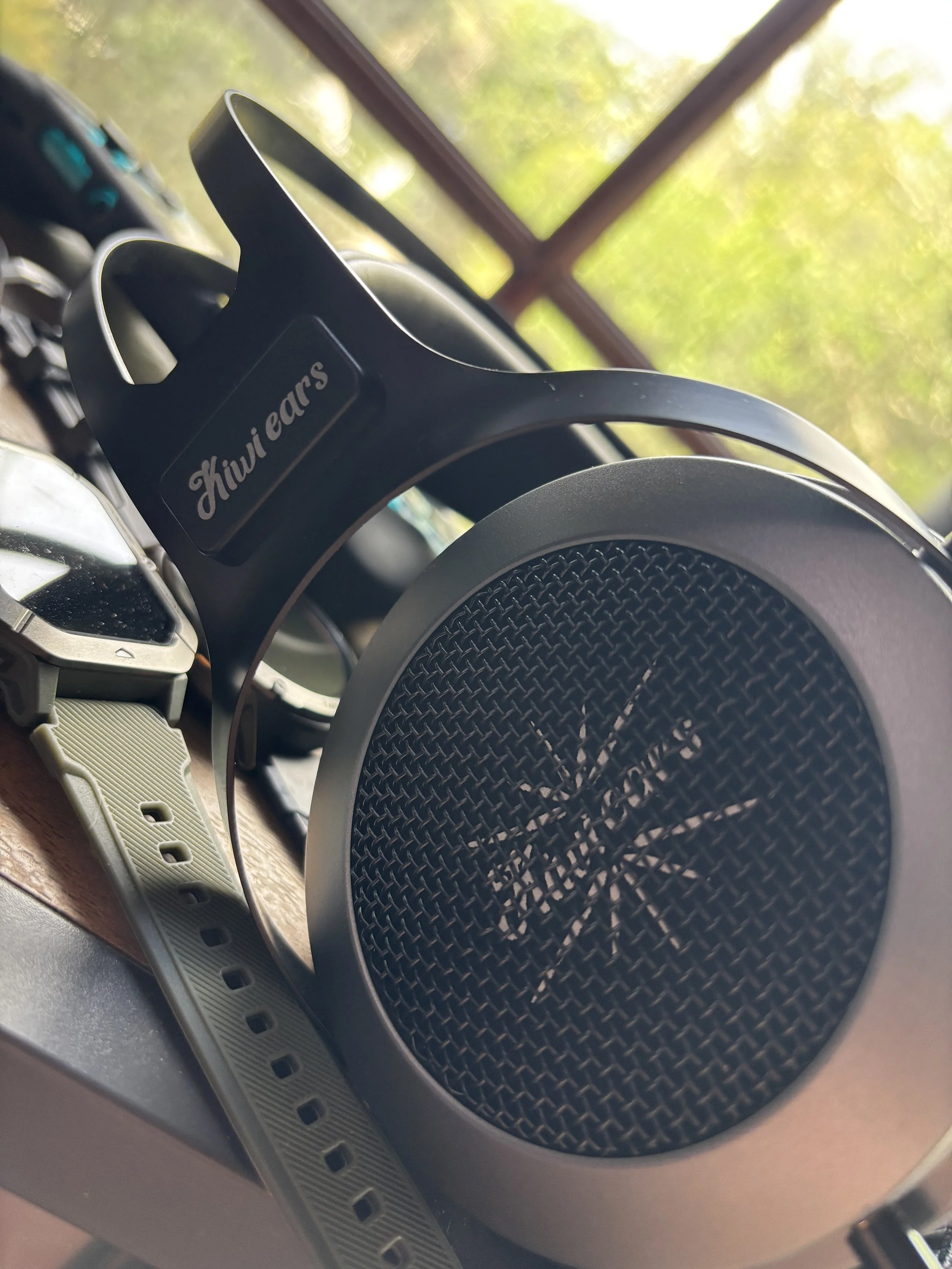
Kiwi Ears Altruva ($70) — the open-back I can't justify upgrading from
The Altruva is the one that started making me question the whole price ladder. It's an open-back headphone that costs $70, and after a year of regular use, it's still the one I gravitate toward for actual critical listening. The soundstage is the standout — open, airy, spacious in a way that's genuinely surprising at this price — paired with crisp, clean highs and mids that don't feel cut any corners. How do these sound so good for this price? They are crazy good!
I put it head-to-head with the Sennheiser HD 560S, which has been the standard "your first real open-back headphone" recommendation for years at around $200. The Sennheiser still wins on low-end control and overall refinement, which makes sense at nearly three times the price. But the gap is a lot smaller than the price difference suggests — the Altruva's soundstage feels just as open, and its mids and highs are arguably more engaging straight out of the box. It's become genuinely hard for me to recommend spending the extra $130 for what you actually get back. That's the trap with the Altruva: it's a bad "starter" headphone, because it doesn't give you much reason to move on from it.
Kiwi Ears Ardor ($99) — the wireless ANC pair that punches above its dual drivers
The Ardor is Kiwi Ears' first wireless over-ear, and it packs a dual dynamic driver setup (a 40mm driver plus a 10mm coaxial driver) with hybrid ANC rated around 32dB of noise reduction, Bluetooth 5.4, and genuinely long battery life — roughly 140 hours with ANC off, still around 70+ hours with it on. Honestly feels like it lasts forever, I don’t even remember the last time I charged them. All of that at under $100, sometimes closer to $80 on sale.
What surprised me isn't any single spec, it's how coherent the sound is for a headphone with two drivers trying to split frequency duties. Treble, mids, and bass all show up with real clarity rather than the one-note bass-forward tuning a lot of budget wireless ANC headphones default to. Build quality is where you can tell it's a $99 product — it's mostly plastic and doesn't have the reassuring heft of something like a Sony or Bose flagship — but the case, fold-flat hinges, and dual-device pairing make it a genuinely easy grab-and-go pair.
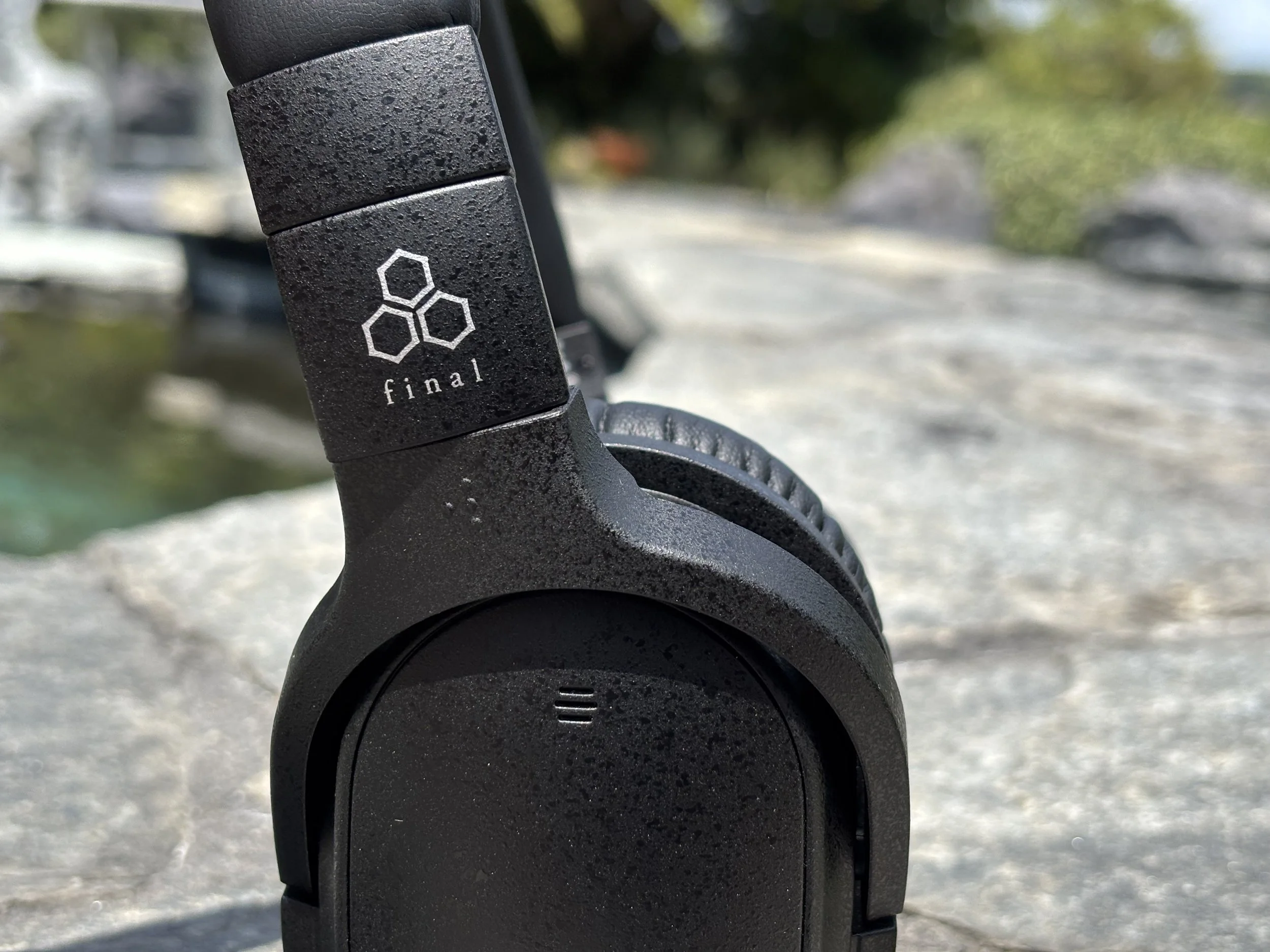
Final UX3000 ($150–200) — proof that ANC isn't the point anymore
The UX3000 sits in the most contested bracket in wireless audio: $150–200 ANC headphones, where Sony's ULT WEAR, the JBL Live 670NC, and Soundcore's Space One/Space Q45 line are all fighting for the same buyer. On paper, the UX3000 loses that fight. Sony's ULT WEAR delivers noticeably stronger active noise cancellation, the JBL Live 670NC isn't far behind it, and Bose's QuietComfort line remains the class leader for ANC at this price. If silencing a plane cabin is the priority, the UX3000 isn't the pick.
But ANC was never why I kept it in rotation. The tuning is what sold me — balanced, with clean, controlled highs and bass that's present without being boosted. Coming from something like Sony's ULT line, which needs EQ work to tame its bass, the UX3000's restraint feels like the more mature tuning, not the more boring one. Against the JBL Live 670NC's fun, energetic, EQ-friendly signature, the UX3000 takes the more neutral, audiophile-leaning route. The midrange is the one real weak point — vocals don't carry quite the authority of the highs — but it's a minor trade against everything else it gets right. It's also become, somewhat by accident, my gym pair: it's lighter than the Sony or Bose competition and clamps tightly enough to stay put through a workout, even though Final clearly didn't design it with the gym in mind.
None of these three was purchased to prove a point. They just kept winning the daily rotation against considerably more expensive gear sitting a few feet away.
Comfort Might Matter More Than Ever
Once inexpensive headphones cross the threshold of sounding genuinely good, the differences that decide what you actually reach for stop being about resolution and start being practical: weight, clamping force, pad material, heat, fit.
A technically superior headphone isn't necessarily the one you want on your head for four hours. I'd rather wear a comfortable $150 pair that gets 90% of the way there for five straight hours than keep adjusting a $1,000 pair that technically sounds better. That's a different question than "which headphone wins a critical listening session," and for daily wear, it's the more important one.
So What Are You Actually Paying For at the Top?
That's the question I find myself asking more and more when I review expensive headphones now. Once you're past a certain baseline of sound quality — a baseline that's dropped to well under $150 — additional money increasingly buys refinement rather than transformation: better materials, more elaborate construction, nicer accessories, more exotic driver technology, that last bit of resolution and imaging, and genuine luxury.
None of that is a bad reason to spend more. It's part of what makes high-end audio fun in the first place. But "this costs five times as much, so it sounds five times better" has never made less sense than it does right now. The diminishing returns have gotten brutal.
This Is a Genuinely Good Time to Buy Headphones
I don't read any of this as a knock on the headphone industry — it's one of the better things happening in consumer audio right now. Someone with $70–$200 to spend can walk away with legitimately excellent headphones or IEMs. You don't need to clear $500 just to get into "serious" personal audio anymore.
Spend more if you want better materials, more exotic engineering, or that last percentage point of performance. Spend more because headphones are your hobby and a $3,000 pair genuinely makes you happy — there's nothing wrong with that.
Just don't assume you have to. Increasingly, you really don't — and my own desk has been trying to tell me that for a while.