Edifier MR4.5 Review: How It Compares to Other $250 Desktop Speakers
Disclosure: We may earn a commission when you purchase through links on our site. This does not influence our reviews or recommendations.
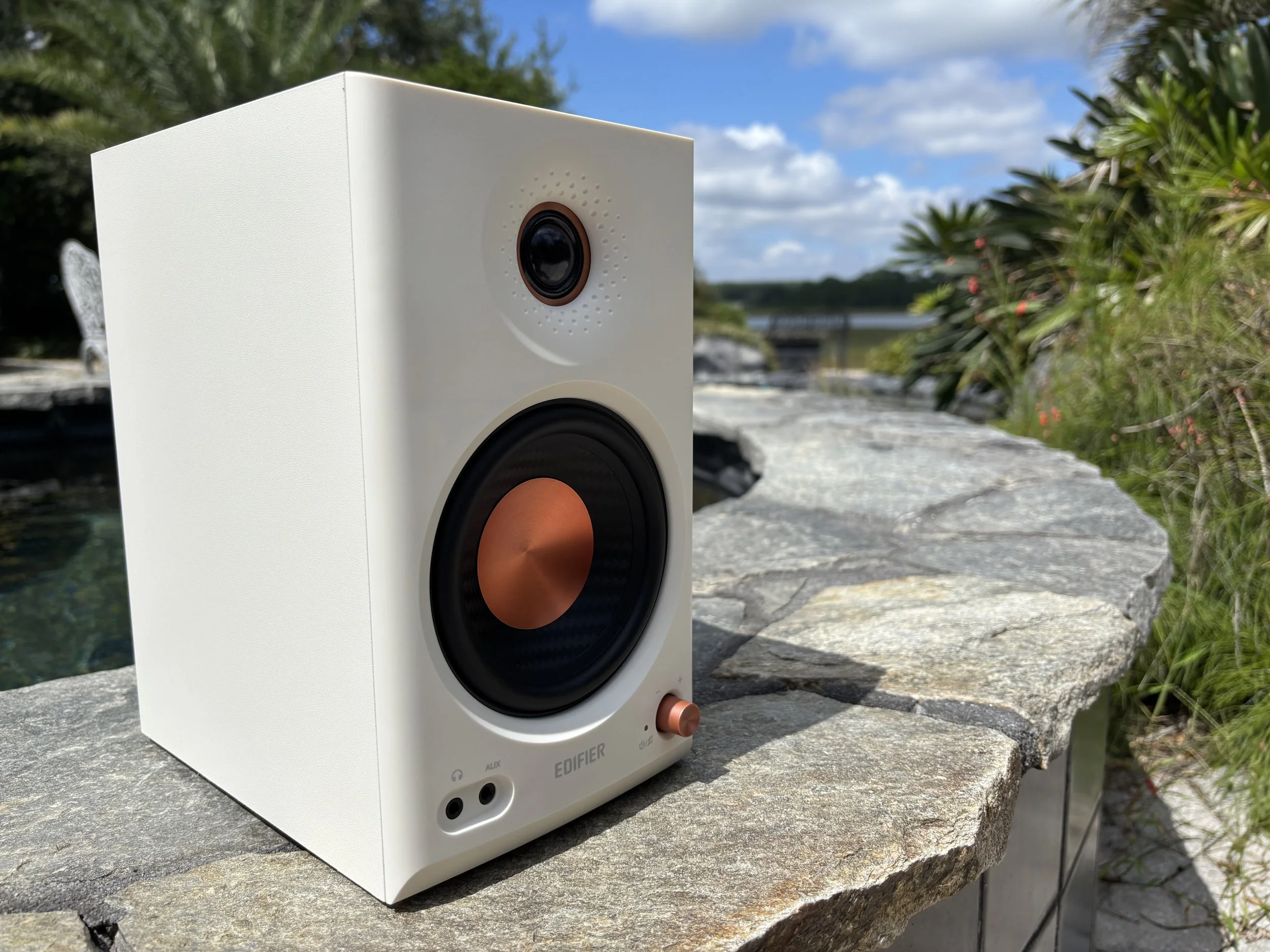
Shopping for desktop speakers around $250 is a weirdly crowded street fight. Pro-audio brands slum it in home studios, lifestyle brands charge a premium for a nice wood finish, and budget monitors sound fine right up until you push them. So instead of reviewing the Edifier MR4.5 on its own, I lined it up against three speakers people actually cross-shop against it — the JBL 305P MkII, the PreSonus Eris E5, and the Kanto YU6 — just to see what extra money (or less of it) actually buys you.
The short version: the MR4.5 is the rare speaker that doesn't make you negotiate with yourself about what you're giving up for the price. The interesting part is how.
The Contenders
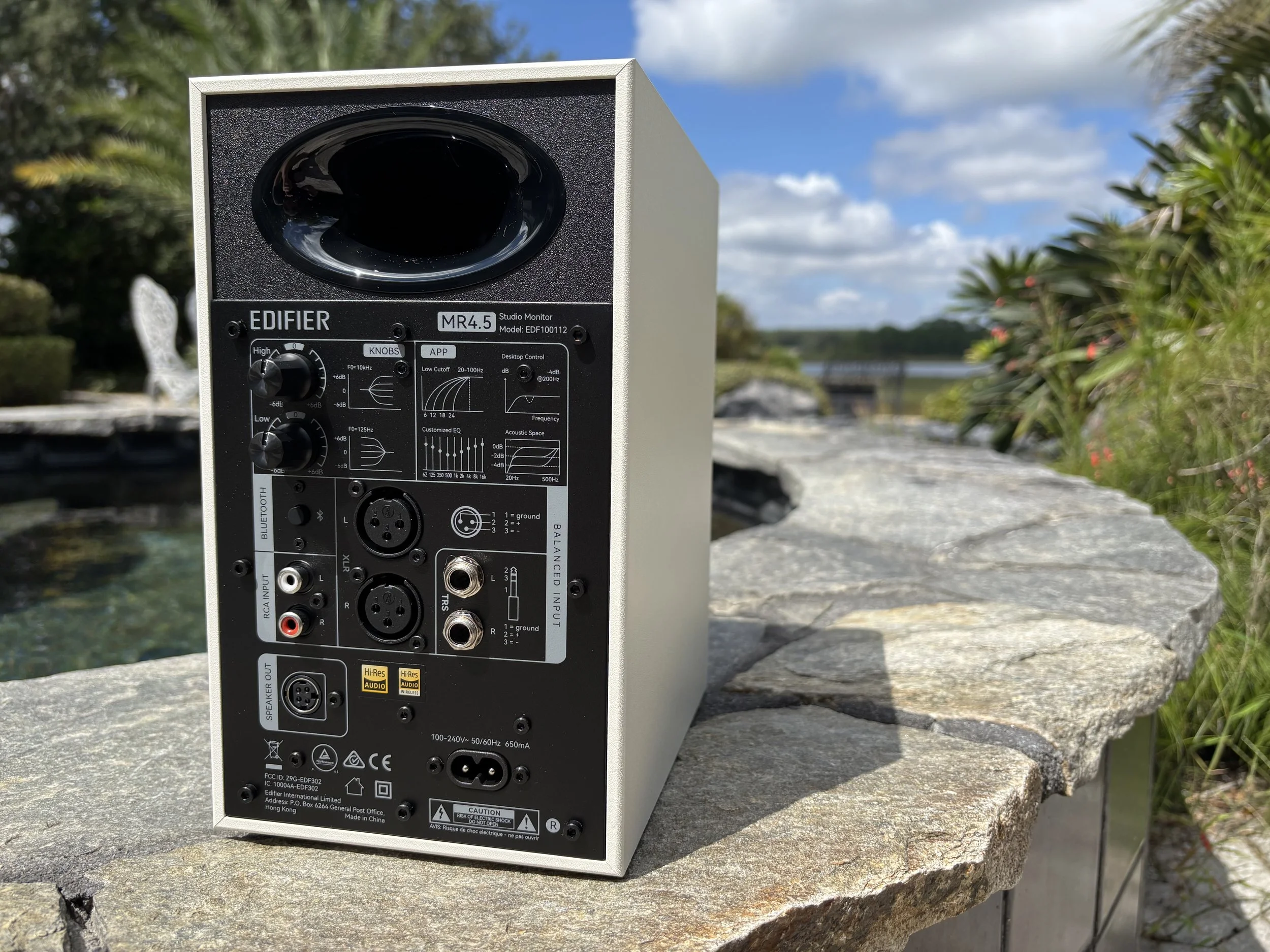
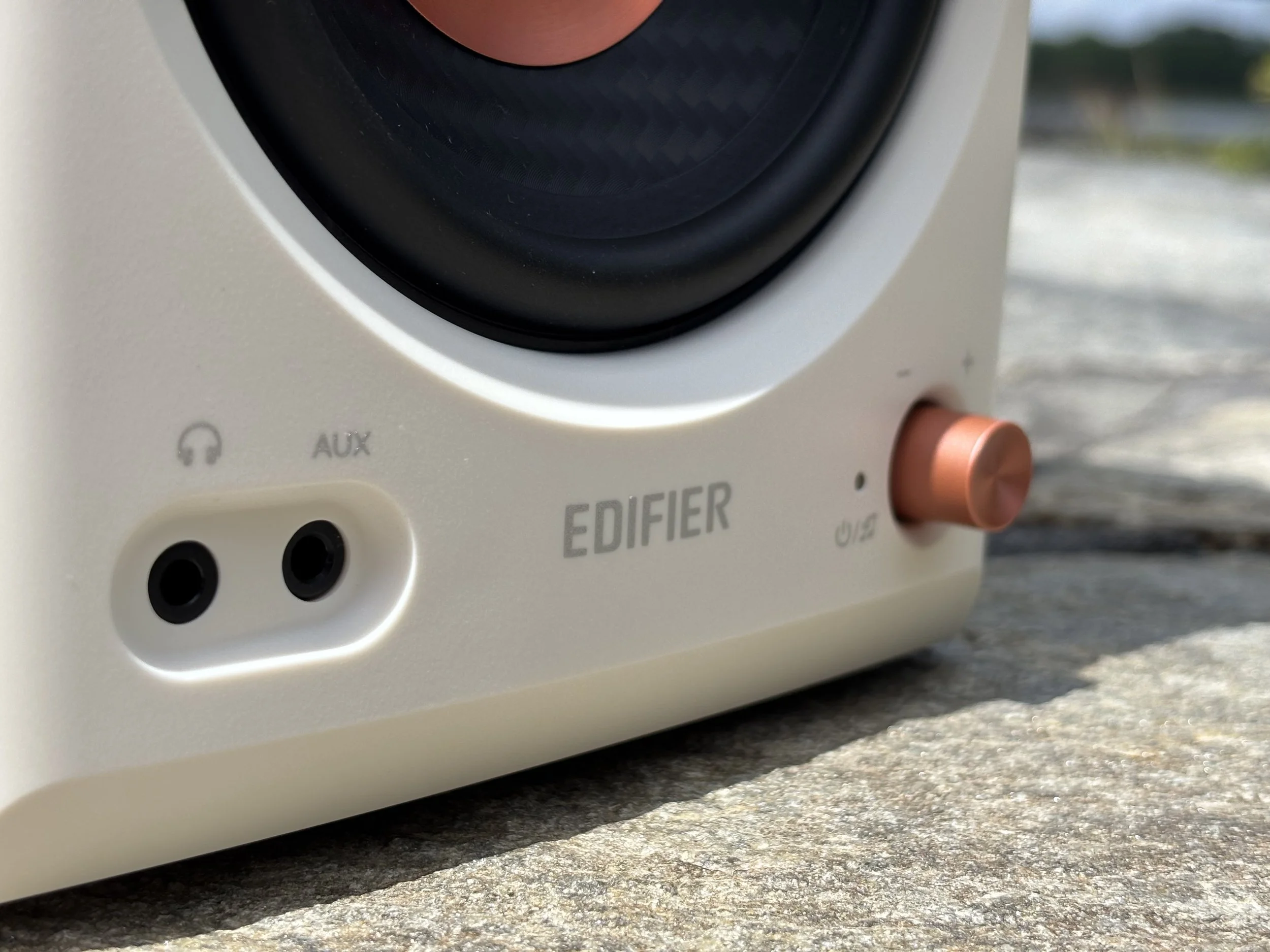
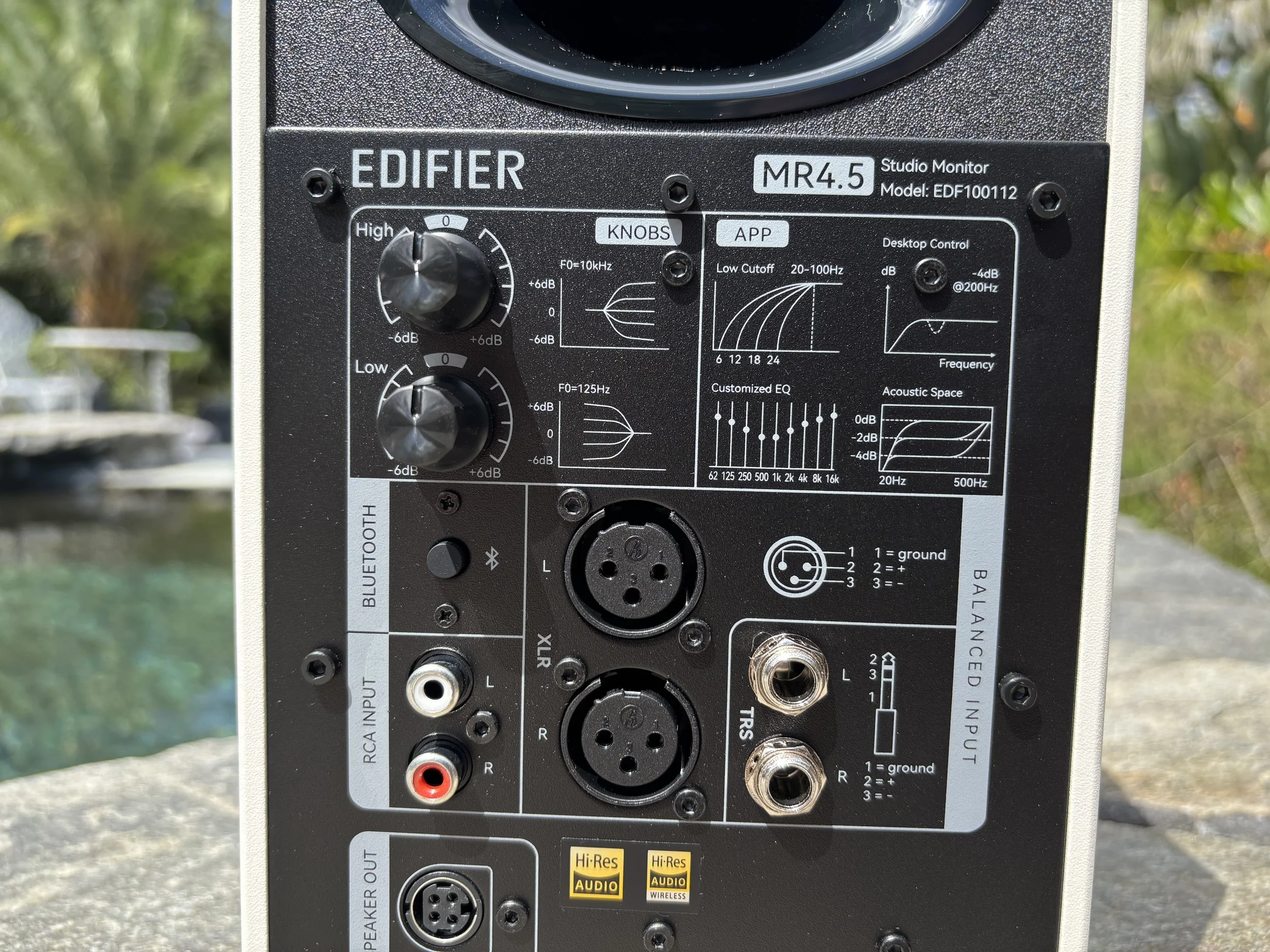
Edifier MR4.5 — $250/pair. A 4.5-inch bi-amped two-way design pushing roughly 80W combined, with a claimed flat response stretching from 50Hz up to 40kHz. It's Bluetooth-equipped with LDAC support, and covers every input format anyone's used since the '90s — balanced XLR and TRS, unbalanced RCA, and a standard 3.5mm jack.
JBL 305P MkII — around $170/pair. The default recommendation in home-studio circles for a reason: dual Class-D amps putting out roughly 82W combined, tight imaging, and a reputation that's outlasted several product generations. The catch is the input selection — XLR and TRS only. No RCA, no AUX, no Bluetooth. It assumes you're already wired into an interface.
PreSonus Eris E5 — around $150–200/pair. Class AB amplification split roughly 45W to the woofer and 35W to the tweeter, with XLR, TRS, and RCA inputs. What sets it apart is a row of physical knobs on the back for tuning acoustic space and frequency trim — no app required, nothing to sync, just turn a dial.
Kanto YU6 — around $400–480/pair. The overachiever of the group. A 5.25-inch Kevlar-and-silk-dome setup, but with a Class D amp rated around 100W RMS and 200W peak, a built-in phono preamp, dual optical inputs, and Bluetooth with aptX. It's built more like a hi-fi bookshelf speaker than a nearfield monitor, and priced accordingly.
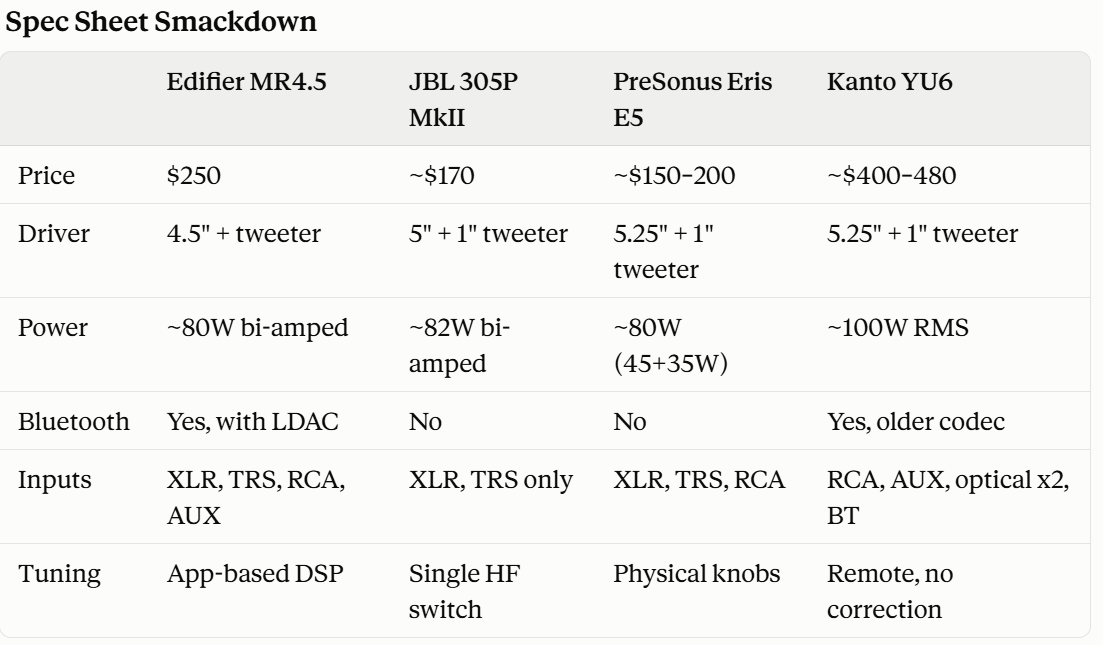
Look at that driver row for a second. The MR4.5 is giving up half an inch of woofer compared to every other speaker on this list — and in my testing, I coudln’t tell it was the smallest driver on the desk.
Where the MR4.5 Actually Wins the Argument
It's the only one that lets a phone app fix your desk. The JBL gives you one switch for high-frequency trim. The PreSonus gives you three knobs for acoustic space and trim, which is genuinely useful but static once you've set it and walked away. The Kanto doesn't bother with room correction at all — its remote handles volume and inputs, nothing more. Edifier's app is the only system here that actively compensates for low-frequency buildup from a corner desk or a wall-hugging setup, adjustable on the fly instead of locked to a physical position. I went in skeptical, because audio companies love bolting apps onto things that don't need them — but this is the one case where it earns the download.
It does more with less driver. A 4.5-inch woofer holding its own against three separate 5-inch-plus setups is the real story. Dense electronic tracks with a lot happening simultaneously in the low end and high end didn't turn to mush, which is usually the first place a smaller driver falls apart.
It's the only one that also wants to be a Bluetooth speaker, seriously. The JBL and PreSonus both assume a wired connection and nothing else. The Kanto has Bluetooth, but on an older codec. The MR4.5's newer Bluetooth standard with LDAC means it can double as a genuinely capable wireless system for your phone, not just a fallback you tolerate.
Where the Others Still Have a Case
The JBL 305P MkII undercuts the MR4.5 by $80 and has years of home-studio goodwill behind it, even if you're stuck with pro-only connectors. The PreSonus Eris E5 comes in cheaper still and offers similarly flexible tuning through knobs instead of an app — some people will straightforwardly prefer that, no phone or firmware involved. And the Kanto YU6, for the extra money, gives you a bigger cabinet, more raw power, and a phono preamp if vinyl's part of your life — it's simply playing a different game, closer to a hi-fi bookshelf speaker than a nearfield monitor.
None of that undoes the core finding: dollar for dollar, the MR4.5 is doing things that speakers costing the same or more aren't.
Bass Without a Subwoofer Tax
The recurring problem with budget-adjacent desktop speakers is that you eventually hit a wall and start pricing out a subwoofer. The JBL and PreSonus, being "serious" studio monitors, are honest and a little reserved about bass — accurate rather than thrilling, which is the point of a monitor. The MR4.5 hits harder than its 4.5-inch driver has any business hitting, without needing a sub to feel complete at normal desk volumes. It won't replace a subwoofer if you want bass you can physically feel — nothing this size will — but for electronic music and everyday desktop listening, I never once found myself wishing for one.
Verdict
If you want the cheapest way into a proper studio-monitor sound and don't mind XLR-only inputs, the JBL 305P MkII still makes sense. If you'd rather turn physical knobs than open an app and don't care about Bluetooth, the PreSonus Eris E5 is a fair trade. If your budget stretches further and you want something closer to a hi-fi bookshelf speaker with vinyl support built in, the Kanto YU6 justifies its price premium.
But if you want one pair of speakers that handles wired monitoring, wireless streaming, and room correction without forcing you to pick a lane, the Edifier MR4.5 is the one actually built for how most people use a desk right now. At $250, it's not just competitive — it's the one the others should be worried about.