Dangbei N3 Max Review: An Affordable Smart Projector That Delivers
Disclosure: We may earn a commission when you purchase through links on our site. This does not influence our reviews or recommendations.
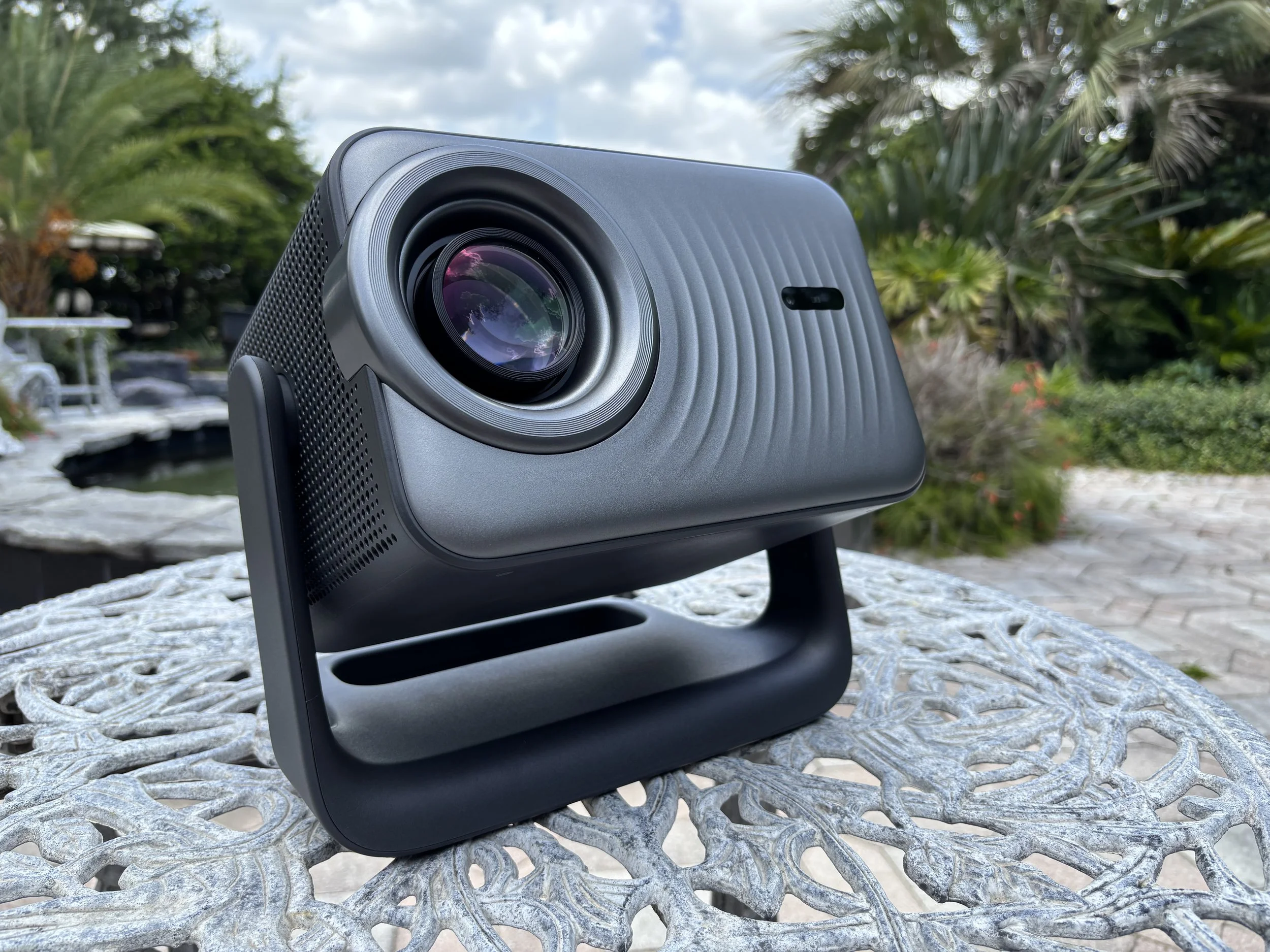
Projectors used to mean ceiling mounts, long HDMI runs, and an afternoon spent leveling a screen. That's changed. A wave of "smart" projectors now aims to be plug-and-play, and the Dangbei N3 Max is one of the better executions of that idea I've tested.
Dangbei isn't trying to out-spec the flagship laser projectors that run $2,000-plus. Instead, the N3 Max bets on native 1080p, an LED light source, automatic image alignment, built-in streaming, and a stand that rotates and tilts on its own base — all aimed at people who want a big picture without a home-theater install project. Buy it on Amazon!
Specifications
Native resolution: 1920 x 1080 (Full HD)
Brightness: 1,000 ISO lumens
Display technology: LCD panel, LED light source
HDR support: HDR10, HLG
Throw ratio: 1.14:1
Image size: 60–150 inches
Smart platform: VIDAA OS
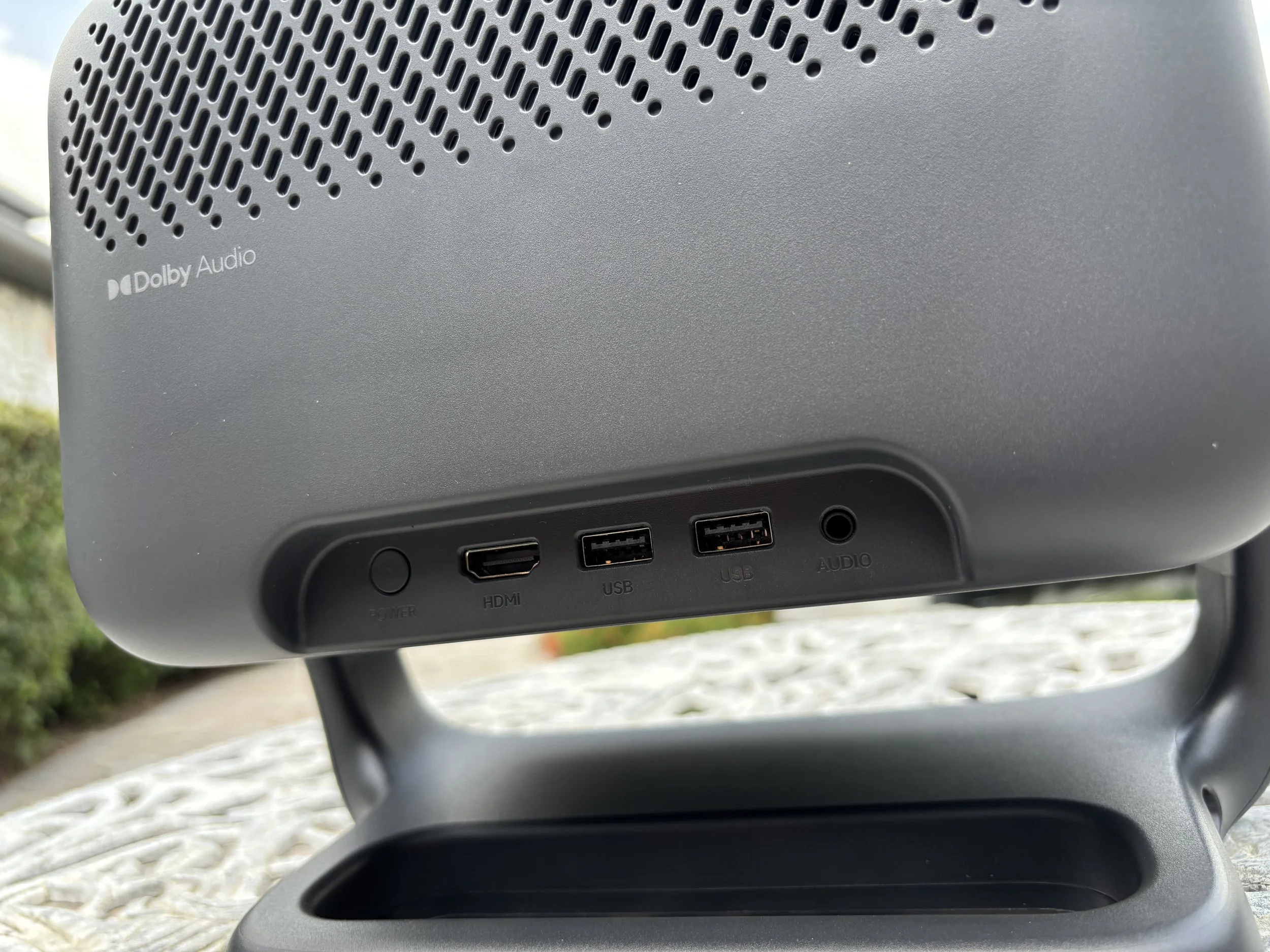
Connectivity: HDMI 2.0, dual USB, Bluetooth, Wi-Fi, 3.5mm audio out
Audio: dual 6W speakers
Automatic features: autofocus, auto keystone, screen fit, obstacle avoidance
Stand: integrated, 180° rotation
Rated LED life: up to 30,000 hours
A throw ratio of 1.14:1 means the projector needs to sit roughly 1.14 feet away from the wall for every foot of image width — so a 100-inch image (about 87 inches wide) needs around 8.3 feet of distance. That's a fairly standard short-to-medium throw, useful for smaller rooms but not a true short-throw unit that can sit right against the wall.
Design
The N3 Max skips the usual tripod-and-mounting-plate approach and builds the rotating stand into the projector itself. That single design choice does a lot of the work here: tilt it up for ceiling projection, rotate it toward a wall across the room, or angle it at a screen in the corner, all without extra hardware. Also check out our review on the DangBei N2 Mini Projector as well!
Build quality is solid — the housing doesn't flex or creak, and there's enough heft that it doesn't feel like it'll tip over if bumped, while still being light enough to carry room to room.
Setup
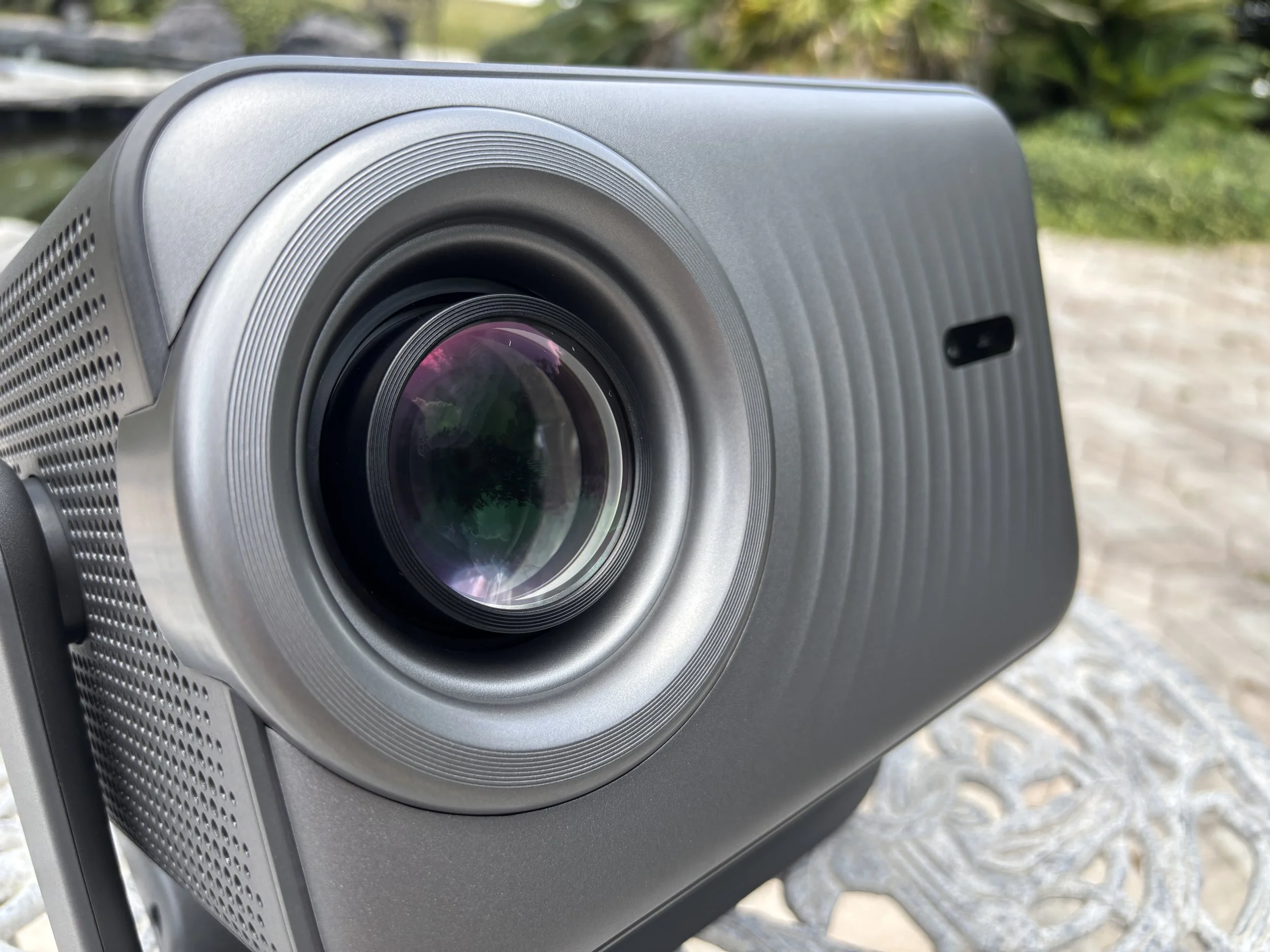
Setup is about as close to "unbox and go" as projectors get. Place it, point it roughly where you want the image, and power on. Autofocus, auto keystone correction, screen fitting, and obstacle avoidance (which detects things like light switches or picture frames on the wall and shrinks the image to avoid them) run automatically and typically land on a usable image within seconds.
This matters most for first-time projector buyers who don't want to manually correct trapezoidal distortion or fiddle with focus rings every time they move the unit.
Picture Quality
At 1080p, detail holds up well at the sizes most people will actually use it at — roughly 80 to 120 inches. Push much past 120 inches and softness becomes more noticeable, which is true of any 1080p projector; you're spreading the same pixel count over more area.
Color looks natural rather than punched up, and contrast is reasonable for an LED projector in this price bracket — not comparable to a laser projector with dynamic dimming, but not muddy either. HDR10 and HLG support add a bit of extra range on compatible content, though this isn't the kind of HDR performance you get from projectors with significantly higher peak brightness and better black levels.
1,000 ISO lumens is a moderate brightness figure. It performs best in a darkened room, holds up reasonably well with curtains drawn during the day, and will wash out noticeably in a fully lit room — the same tradeoff every projector in this brightness class makes. If you need daytime viewing with lights on, this isn't the projector for that; you'd want something rated well above 2,000 lumens.
The most consistent thing about the picture is the absence of obvious flaws: no significant rainbow artifacts, no aggressive sharpening halos, no unnatural color shifts. It's not a dazzling image, but it's a clean, dependable one.
Smart Features
VIDAA OS ships with Netflix, YouTube, Prime Video, and Disney+ built in, which covers most people's streaming needs without an external stick. The interface is reasonably responsive and apps open quickly enough that it doesn't feel like a budget smart TV from several years ago.
If you already own an Apple TV, Fire TV, Roku, or Chromecast with Google TV, the single HDMI 2.0 input works fine for those instead — worth noting since there's no second HDMI port if you want to keep an external streamer connected permanently alongside another source.
Audio
The dual 6W speakers are better than the bare spec sheet suggests — dialogue is intelligible and there's some low-end body, enough for casual, low-stakes viewing. But a projector's whole appeal is a large image, and a large image without matching audio can feel a little hollow. Adding a soundbar or Bluetooth speaker closes that gap quickly, and both HDMI ARC and Bluetooth make that straightforward. Interested in doing in-ceiling speakers? Learn more here!
Living With It
This is where a lot of budget projectors lose people — the picture's fine on day one, but the friction of realigning, refocusing, or fighting with the remote wears you down over a few weeks.
The N3 Max mostly avoids that. The rotating stand means you're not re-leveling it every time you move it, autofocus holds up reliably, and the software doesn't lag or hang. It's the kind of device that ends up getting used on a random Tuesday rather than only for planned movie nights.
Who It's For
The N3 Max makes sense for anyone who wants a genuinely large image — apartment dwellers, people without room for a dedicated theater, or anyone who wants to move a projector between a bedroom, living room, and backyard.
It's not for buyers chasing native 4K, laser illumination, or reference-grade contrast and HDR — that tier starts well above this projector's price and requires accepting a much less portable, more fixed setup. Looking for a more budget friendly option? Check out our review of the Aurzen Roku Projector here!
Bottom Line
The N3 Max's strength isn't any single spec — it's that Dangbei prioritized the parts of projector ownership people actually struggle with: alignment, setup time, and day-to-day reliability. The image is solid without being class-leading, the built-in smart platform covers the basics, and the stand design genuinely simplifies where and how you use it.
For a first projector, or a secondary one you don't want to fuss over, it does what it sets out to do without overselling itself.
8/10, it’s simple, easy to use and just works! Buy it on Amazon!