Remember the Ouya? The Nex Playground Shows How Far Gaming Has Come
Disclosure: We may earn a commission when you purchase through links on our site. This does not influence our reviews or recommendations.
I saw a Nex Playground sitting on a shelf at Target today, and it stopped me for a second. Not because it's some flashy piece of hardware — it's a plain white cube about the size of a coffee mug coaster — but because it reminded me of a console most people have already forgotten: the Ouya.
If you were paying attention to gaming in 2012, you remember the Ouya. It raised $8.5 million on Kickstarter — one of the biggest crowdfunding campaigns of all time back then — on the promise of a $99 Android console that would open up TV gaming to indie developers and free the living room from Microsoft and Sony's grip. It shipped in 2013, and within two years it was dead. Razer bought the scraps in 2015, kept the servers on as a courtesy, and pulled the plug for good in 2019.
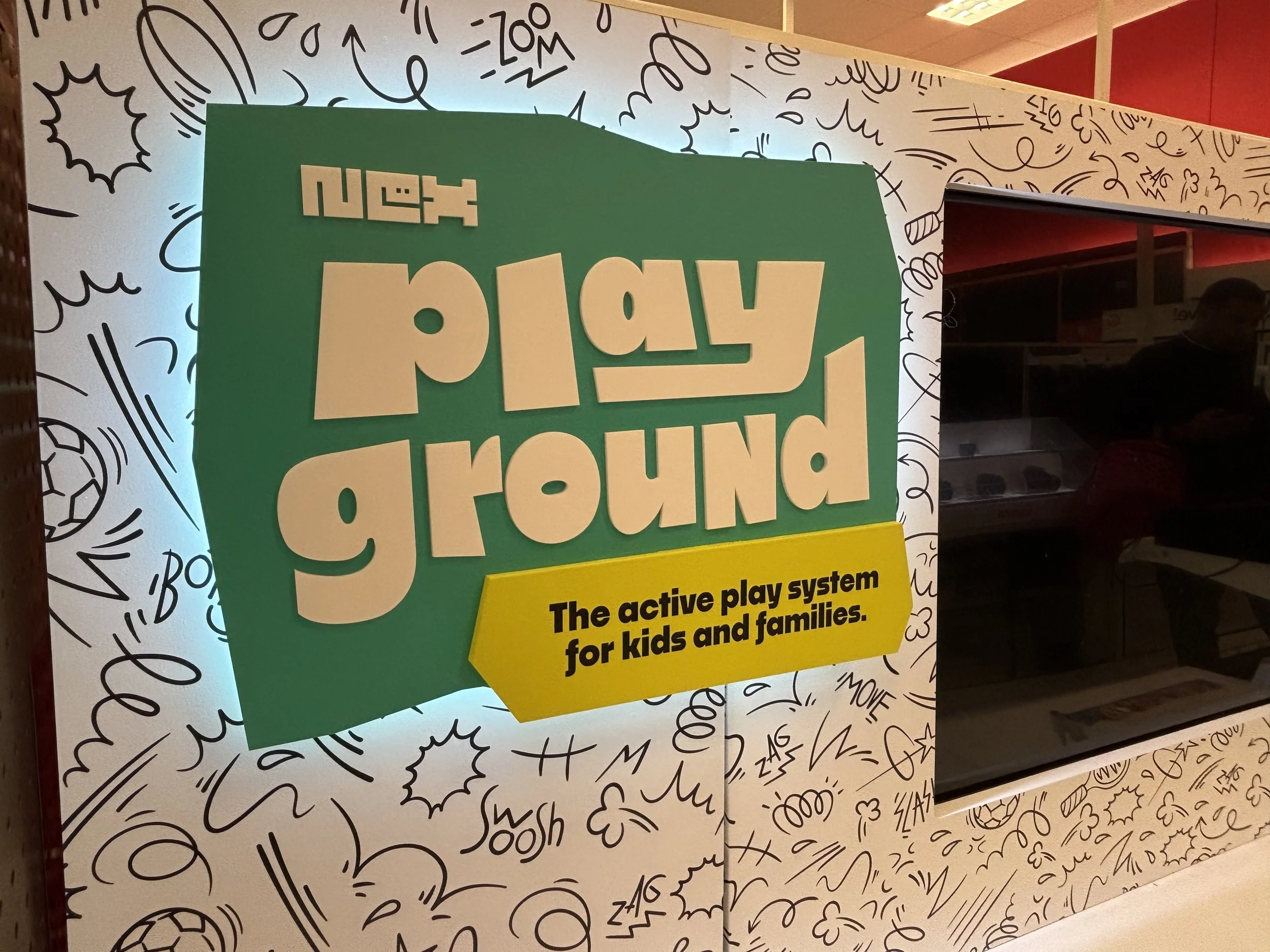
Thirteen years later, here's the Nex Playground, on shelves at Target, Walmart, and Best Buy, and by most accounts actually working. Same basic pitch on paper — cheap alternative to the console giants — completely different outcome. The difference isn't the technology. It's what each company decided the product was actually for.
The Ouya's Real Problem
The Ouya's hardware got a lot of blame over the years — cheap controller, dodgy analog sticks, the OS occasionally choking — but that was never the fatal flaw. The fatal flaw was the pitch itself. Ouya wanted to be a full replacement for Xbox and PlayStation. Founder Julie Uhrman said as much at the time, describing it as an attempt to "disrupt an established industry."
That's an enormous ask for a startup. You're not just building hardware, you're asking developers to abandon platforms with existing install bases and asking players to give up games they already own. Ouya recruited over a thousand indie titles, but the console never got the one thing it needed most: games people actually wanted to play on it instead of on something else. Most of its userbase drifted back to mobile within a year. Curious why I stopped buying gaming consoles? Find out why here!
Nex Isn't Fighting That War
The Nex Playground doesn't try to be your Xbox. It's a small cube with a built-in wide-angle camera that tracks up to four people's movement — 18 points on the body, according to Nex — and turns your living room into the game. No controllers required beyond a small remote for menu navigation. Load up Fruit Ninja, Whac-A-Mole, or a handful of party games, and you're moving around your living room instead of sitting on a couch holding a gamepad.
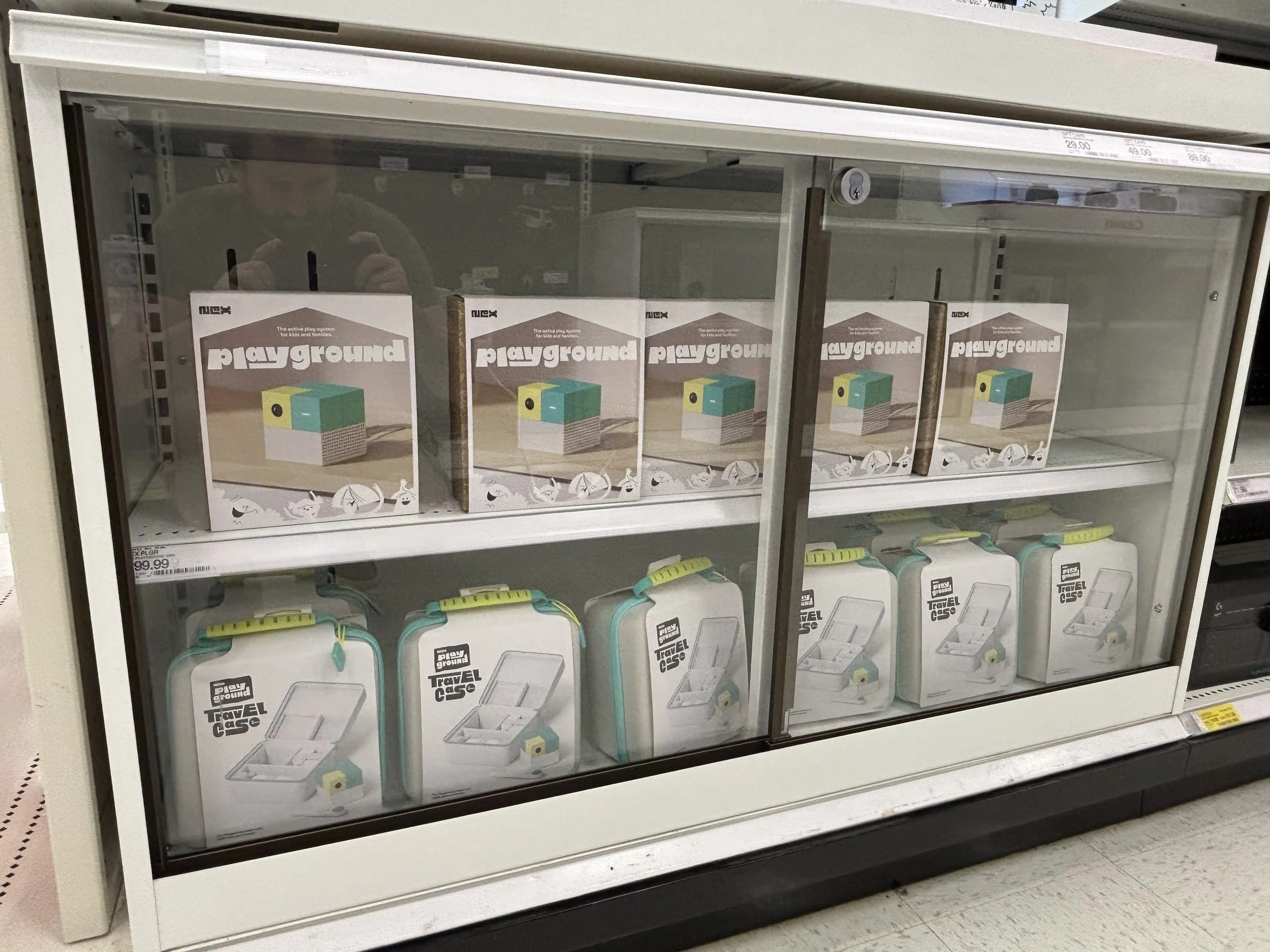
It's the same territory the Kinect tried to claim over a decade ago, and CEO David Lee has said as much, calling it a spiritual successor to that hardware. But where Kinect was bolted onto Xbox as an accessory, Nex Playground stands alone, it's priced closer to $179–$249 depending on the bundle, and it's aimed squarely at parents who want their kids off the phone for an hour, not core gamers comparing frame rates.
That's a much smaller, much more winnable fight. Nex isn't trying to convince anyone to skip buying a PS5. It's trying to convince a household that already has a PS5 to also buy this, for the nights when three cousins are over and everyone wants to play at once.
The Retail Play Says Everything
Here's the part that actually surprised me. Nex Playground didn't start in retail — it launched direct-to-consumer in 2023 with a run of just 5,000 units that sold out immediately. Retail buyers reportedly told Nex to wait, that this was a company with no track record. Nex sent demo units to Target, Walmart, and Best Buy anyway, buyers tried it with their own kids, and the calculus changed fast. By 2024, Target alone was stocking it in roughly half its stores.
The payoff: during the week of November 22, 2025, Nex Playground reportedly outsold both the PlayStation 5 and Xbox Series consoles in the US, and Nex says it's crossed a million units sold across the US and Canada.
Compare that to Ouya's approach, which was almost entirely Kickstarter hype and press coverage with no real retail muscle behind it. Getting real shelf space at three of the biggest retailers in the country, competing for space against actual PlayStations and Xboxes, is a much harder thing to earn than a viral crowdfunding page — and it means real buyers, not just early adopters, decided there was demand.
Why the Timing Works Now
Ouya launched into a market packed with cheap Android streaming boxes and dropped right as the PS4 and Xbox One were about to launch — brutal timing, no real gap in the market to fill. The Nex Playground is landing in a different moment: motion tracking has gotten dramatically better since the Kinect era, and there's a real, growing appetite among parents specifically for screen-time alternatives that still feel like "real" gaming rather than a chore. Nex leaned into that gap instead of trying to out-spec a console war it could never win.
Where This Leaves Things
The Nex Playground isn't going to outsell a Switch over its lifetime, and it doesn't need to. Reviews so far are consistent on this point: the graphics cap out somewhere around PS3-era visuals, and the Play Pass subscription model ($49 per quarter or $89 a year for the extended game library) won't be for everyone. But as a cheap, camera-based way to get four people moving in a living room, it's found a lane nobody else is really occupying right now.
Ouya failed because it tried to beat Sony and Microsoft at their own game with a fraction of the resources. Nex Playground looks like it succeeded by not playing that game at all — by building something adjacent to the console market instead of on top of it. Whether that holds up over the next few years is genuinely an open question, but it's already lasted longer, sold more, and earned more retail trust than Ouya ever did.