Best R36S Upgrade path in 2026: MANGMI AIR Y Pro vs. TrimUI Brick, Anbernic RG40XX V & AYANEO Pocket DMG
Disclosure: We may earn a commission when you purchase through links on our site. This does not influence our reviews or recommendations.
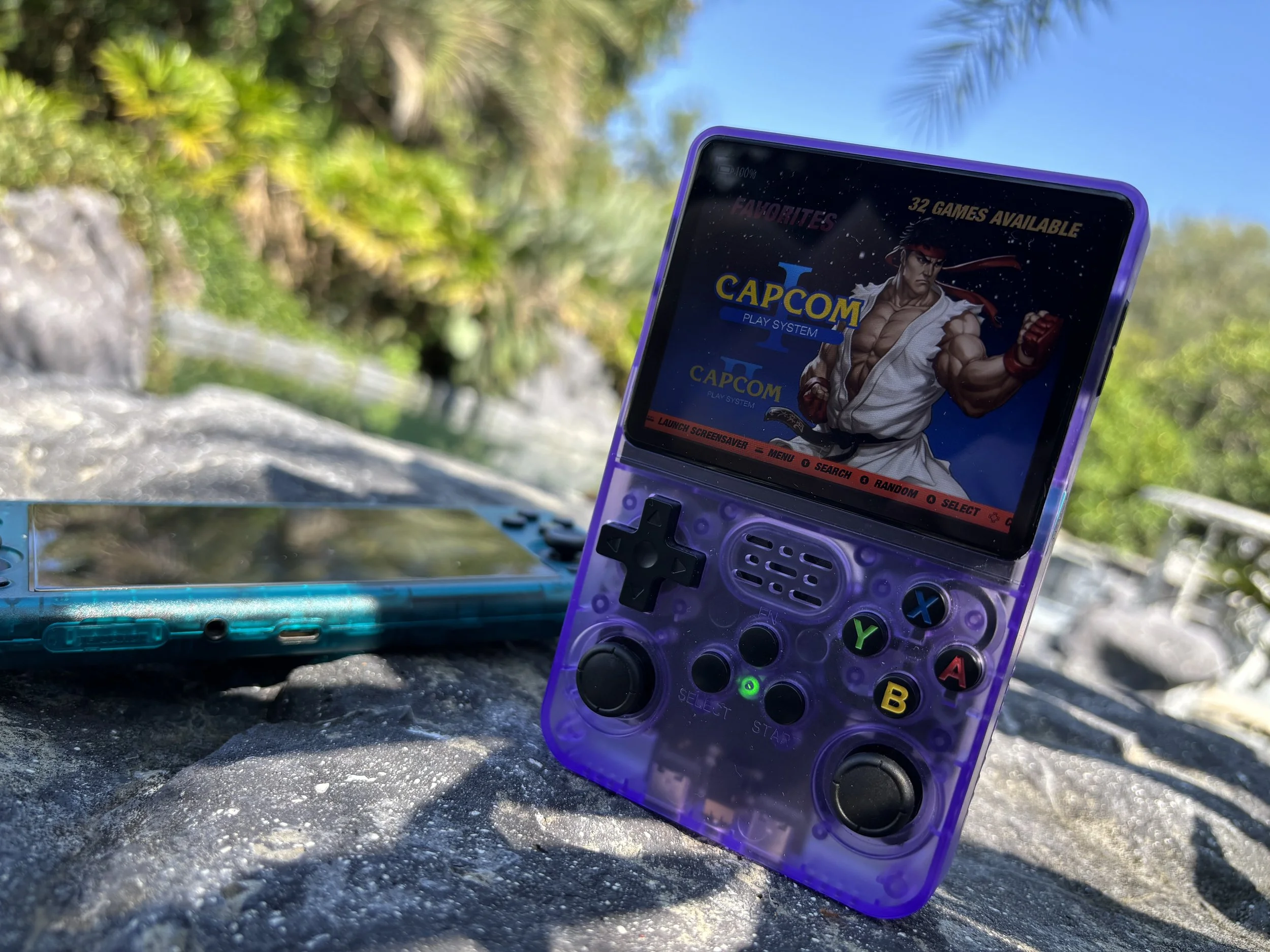
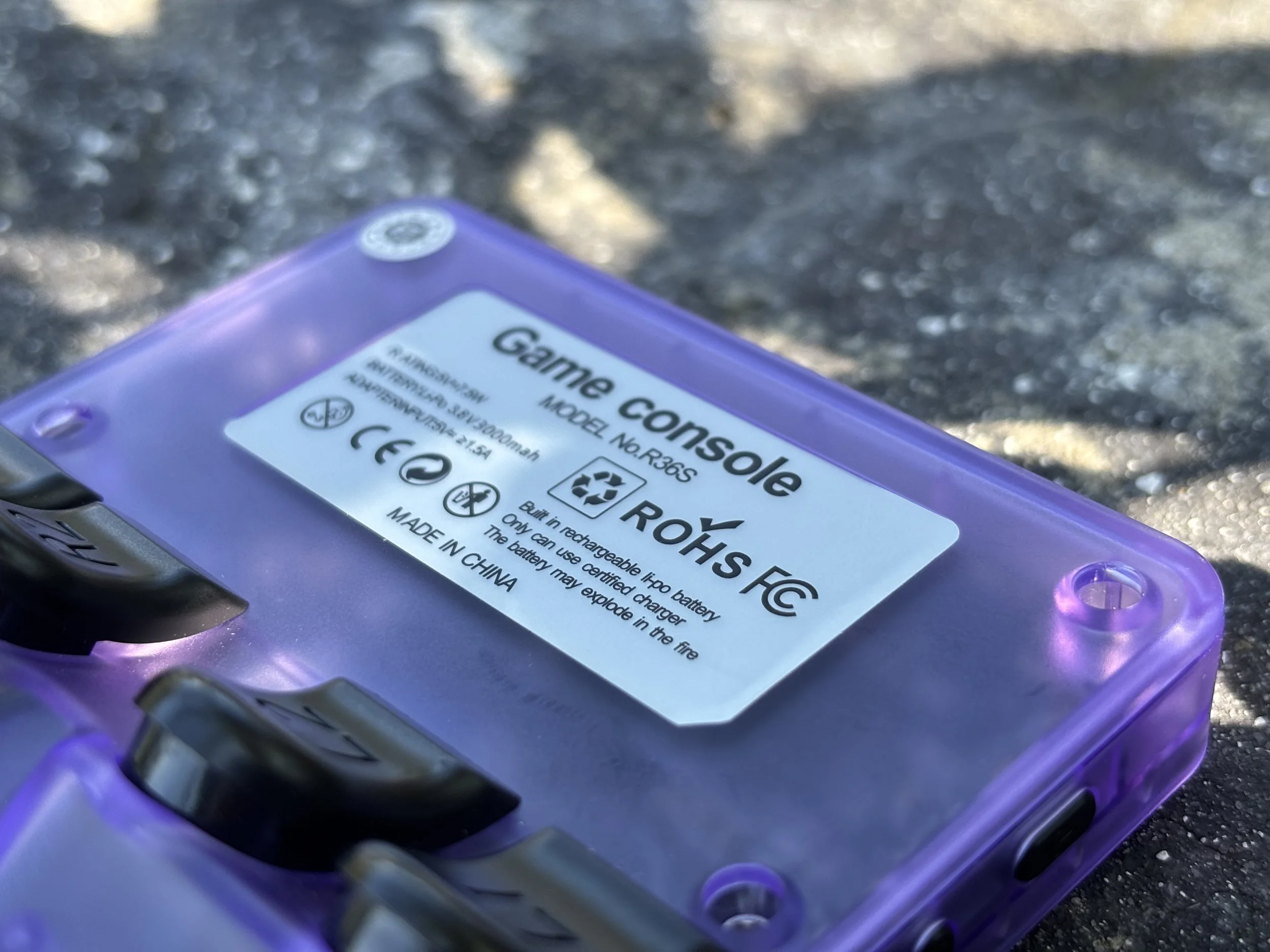
The R36S has become the default entry point into retro handheld gaming, it was my first retro handheld I bought a year ago and it earned that spot honestly. For roughly $20–$25, it delivers a Game Boy-style vertical shell, two analog sticks, and enough emulation power to cover Game Boy, Game Boy Color, Game Boy Advance, NES, SNES, Genesis, and most of the PlayStation library, plus partial support for N64, Dreamcast, and PSP.
That's an extraordinary amount of functional hardware for the price of a couple of takeout meals. But it also means most R36S owners eventually hit a ceiling — either the performance runs out, or the build quality starts to grate — and start looking for what comes next.
The honest answer is that there isn't a single "R36S successor." There's a ladder, and where you land on it depends on what actually bothers you about the R36S in the first place.
What the R36S Actually Gets Right — and Where It Breaks Down
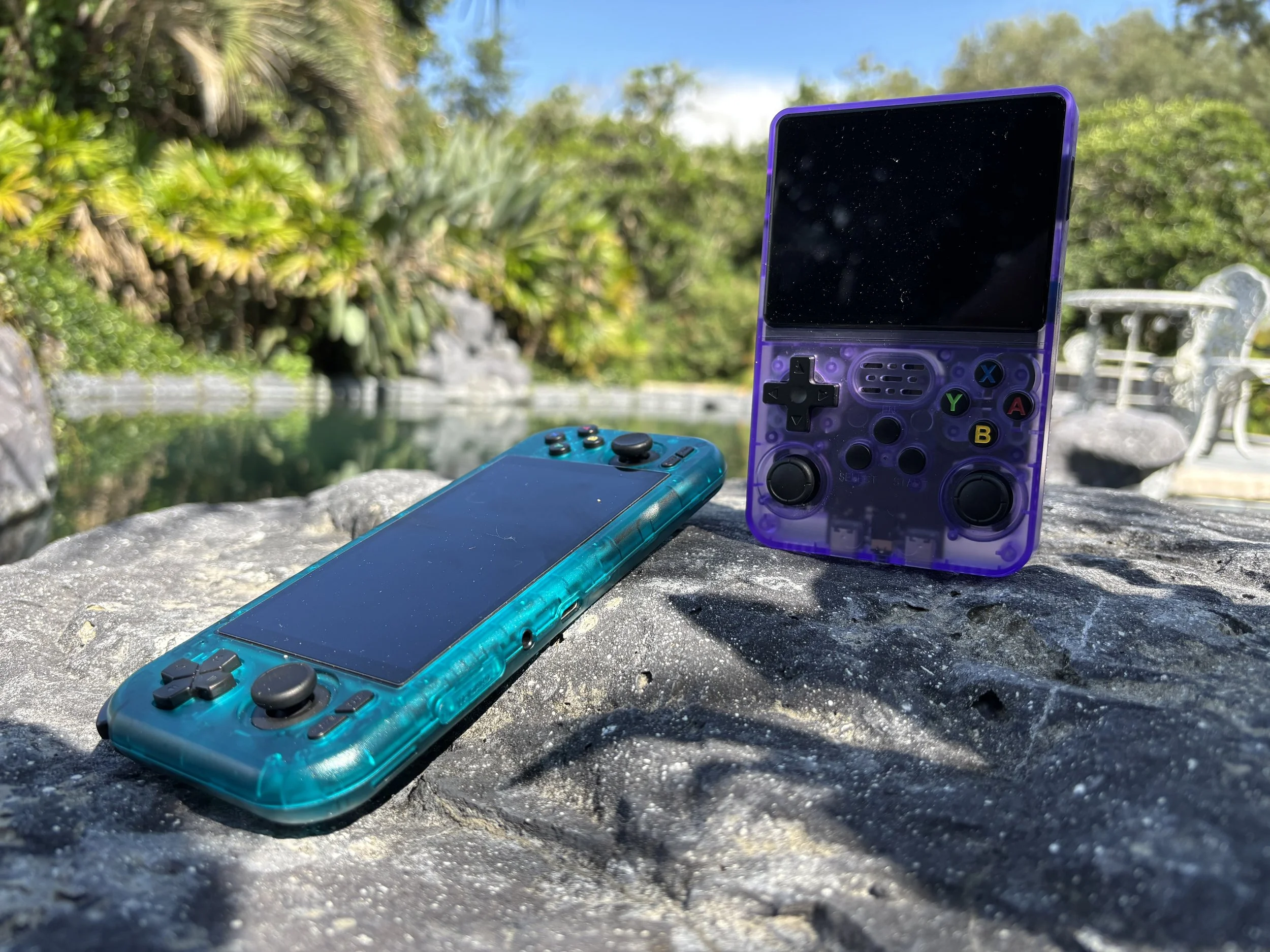
The R36S runs on a Rockchip RK3326, 1GB of RAM, and a 3.5-inch 640×480 display. None of that is impressive on paper, and none of it needs to be for 8-bit through 32-bit emulation. Older systems are computationally light, so even a five-year-old budget handheld handles them without drama. Buy an R36S on Amazon!
The cracks show up in three places:
Compute-heavy systems. N64, Dreamcast, and PSP emulation range from "playable with tweaks" to "technically boots, don't expect much."
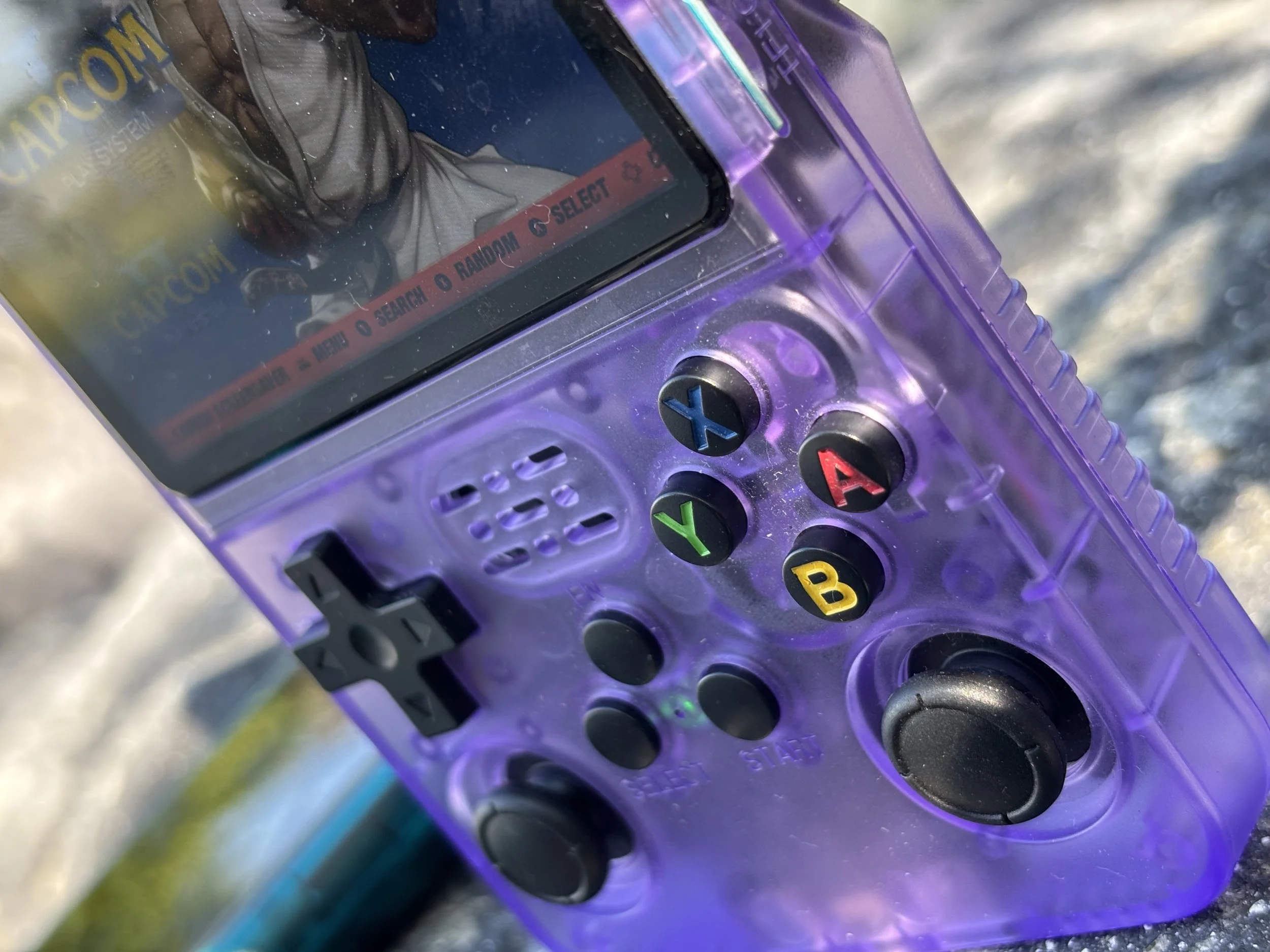
Input and build quality. The joysticks, face buttons, and shoulder triggers are budget parts, and it shows after a few months of regular use.
Display. A 640×480 panel at 3.5 inches is serviceable, not sharp, and colors tend to look washed out next to modern IPS panels.
So the right upgrade doesn't need to be ten times faster across the board — it needs to fix whichever of those three things is actually bothering you. That's the filter to run every option below through. Want something fast and not wait for shipping from China? Read our guide here!
Anbernic RG40XX V — The Conservative Upgrade
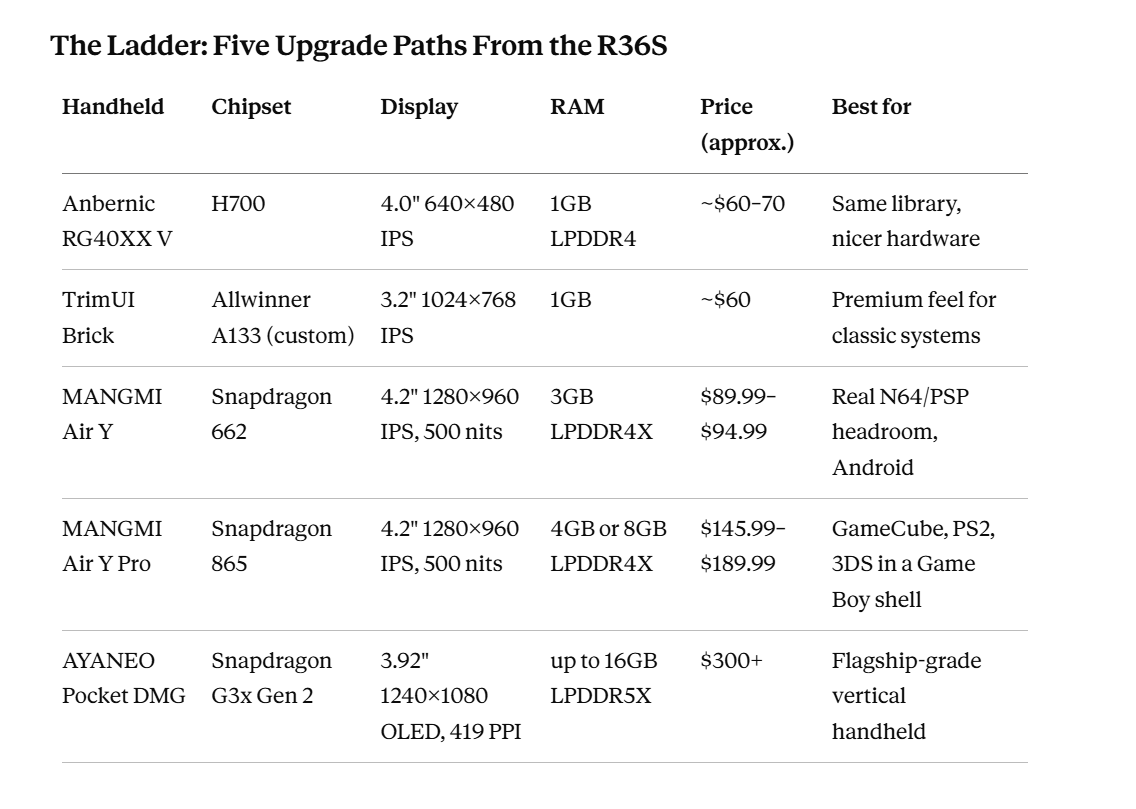
The RG40XX V keeps the vertical form factor and moves to a larger 4-inch 640×480 IPS panel, paired with Anbernic's H700 chip, 1GB of LPDDR4 memory, and the addition of Wi-Fi and Bluetooth.
This is the "same R36S, but nicer" option. You get a bigger screen and noticeably better build quality from an established manufacturer, but the performance ceiling barely moves. If SNES, Genesis, GBA, and PS1 already cover 95% of what you play, this is a legitimate, low-risk upgrade. If your complaint is "N64 doesn't run well," this won't fix it.
TrimUI Brick — Upgrading the Experience, Not the Library
The TrimUI Brick takes a different angle entirely: it doesn't chase new console generations, it makes the generations the R36S already plays feel dramatically more premium — sharper display, better controls, tighter build.
This matters because R36S owners tend to split into two camps: people who want the games they already play to look and feel better, and people who want to play games their R36S can't run at all. If you're in the first camp, the Brick's modest spec sheet undersells how much better the actual experience is. Here is why I switched to handhelds and ditched the consoles!
MANGMI Air Y — The New Sweet Spot
The Air Y is the most significant release on this list right now, and the timing matters: it opened for pre-order on August 12, 2026, with early-bird pricing of $89.99 (regular price $94.99) for a 3GB RAM / 32GB storage configuration.
It keeps the vertical, single-stick Game Boy layout but replaces almost everything under the hood. The Snapdragon 662 — an octa-core chip built on Cortex-A73/A53 cores with an Adreno 610 GPU — is a proven quantity for this class of device; it's the same processor that let MANGMI's earlier Air X squeeze out playable PS2 emulation on select titles at a similar price point, which is well beyond what the RK3326 in the R36S can manage.
The display is the other headline change: a 4.2-inch, 1280×960 IPS panel rated at 500 nits with 110% sRGB coverage, still in the 4:3 aspect ratio that suits retro content. Compared to the R36S, that's a jump from 640×480 to 1280×960 on a larger screen, with meaningfully better brightness and color accuracy. Round that out with 3GB of LPDDR4X RAM, a 5,000mAh battery with 15W charging, active cooling, Wi-Fi 5, Bluetooth 5.0, and Android 14, and you have a handheld built to give N64, Dreamcast, and PSP real headroom rather than best-effort compatibility.
For someone who spent $25 on an R36S and liked it enough to want more — without jumping to $150+ — the Air Y is arguably the cleanest next step available today. Read our AYN Odin 2 Review here!
MANGMI Air Y Pro — Where the Form Factor Stops Being the Limit
The Air Y Pro launches alongside the standard Air Y on August 12, 2026, with early-bird pricing starting at $145.99 for the 4GB RAM / 64GB storage configuration and $175.99 for 8GB RAM / 128GB storage (retail pricing of $159.99 and $189.99 respectively once the early-bird window closes).
It shares the Air Y's 4.2-inch, 1280×960, 500-nit display and 5,000mAh battery, but swaps in a Snapdragon 865 — a 2019-era flagship chip that still comfortably outperforms anything else in this vertical-handheld category. That's enough to move the conversation from "does N64 run well" to "how's GameCube, PS2, and 3DS emulation," which is a different tier of device entirely. The Pro also adds a second analog stick, dual stereo speakers, and faster UFS 2.1 storage — sensible additions once you're running games designed around dual-stick control schemes.
Early hands-on coverage has been mixed on software polish: some reviewers found the stock launcher and ROM management rough at launch, requiring a manual setup or a third-party frontend to get things running smoothly. That's worth factoring in if you want something that works well out of the box — but on raw hardware capability, the Air Y Pro is the first vertical, Game Boy-shaped handheld that can credibly claim GameCube and PS2 territory at under $200.
AYANEO Pocket DMG — The Flagship Answer
If price isn't the constraint, AYANEO's Pocket DMG takes the vertical concept to its logical extreme: a Snapdragon G3x Gen 2 gaming platform, active cooling, LPDDR5X memory, and configurations up to 16GB of RAM and 1TB of storage. The display is a 3.92-inch OLED at 1240×1080 (419 PPI), backed by a 6,000mAh battery.
The one genuinely divisive choice is input: AYANEO uses a single analog stick plus a touchpad rather than two conventional sticks — a layout that will either suit you or won't, depending on what you're playing.
This is the "best possible Game Boy" answer, not the "best R36S upgrade" answer for most people. It's a fantastic piece of hardware, but the gap between "I want something nicer" and "give me a several-hundred-dollar flagship" is wide, and most R36S owners are closer to the former. Want to save some cash? Here is our guide on how to buy handhelds used!
Matching the Upgrade to the Actual Problem
Skip the spec-chasing and start from what's actually wrong with your R36S:
"Everything I play already works, I just want it to feel better." → RG40XX V or TrimUI Brick.
"I want real N64/Dreamcast/PSP performance without spending big." → MANGMI Air Y.
"I want GameCube, PS2, or 3DS in the same form factor." → MANGMI Air Y Pro.
"Price is not the deciding factor, I want the best vertical handheld that exists." → AYANEO Pocket DMG.
Chasing raw processor numbers — RK3326 to H700 to Snapdragon 662 to Snapdragon 865 to Snapdragon G3x Gen 2 — is the wrong mental model. The R36S isn't undersized because it's slow; it's undersized only where you've personally noticed a limit. Buy the upgrade that fixes the specific thing bothering you, not the biggest number on the spec sheet.
That's also, in a roundabout way, what makes the R36S worth buying in the first place: at $25, it's cheap enough to find out exactly what you care about before you spend real money finding out the hard way. Read our Retroid Pocket 4 Pro review here!