Odin 2 Portal vs. Retroid Pocket 6: Which Premium Android Gaming Handheld Should You Buy?
Disclosure: We may earn a commission when you purchase through links on our site. This does not influence our reviews or recommendations.
The Android handheld market hasn't been this competitive in years, and two devices currently sit near the top of nearly every enthusiast's wishlist: the AYN Odin 2 Portal and the Retroid Pocket 6.
Full disclosure: I own an Odin 2 Portal. I bought it, I use it regularly, and it's the device I'll be comparing from firsthand experience. But I'll admit something a little ridiculous up front — I'm seriously considering buying a Pocket 6 anyway, on top of the Portal I already have. Not because the Portal has let me down, but because the Pocket 6 does enough things differently, and well enough, that it's carved out its own case for existing in my bag. That tension is basically the whole review.
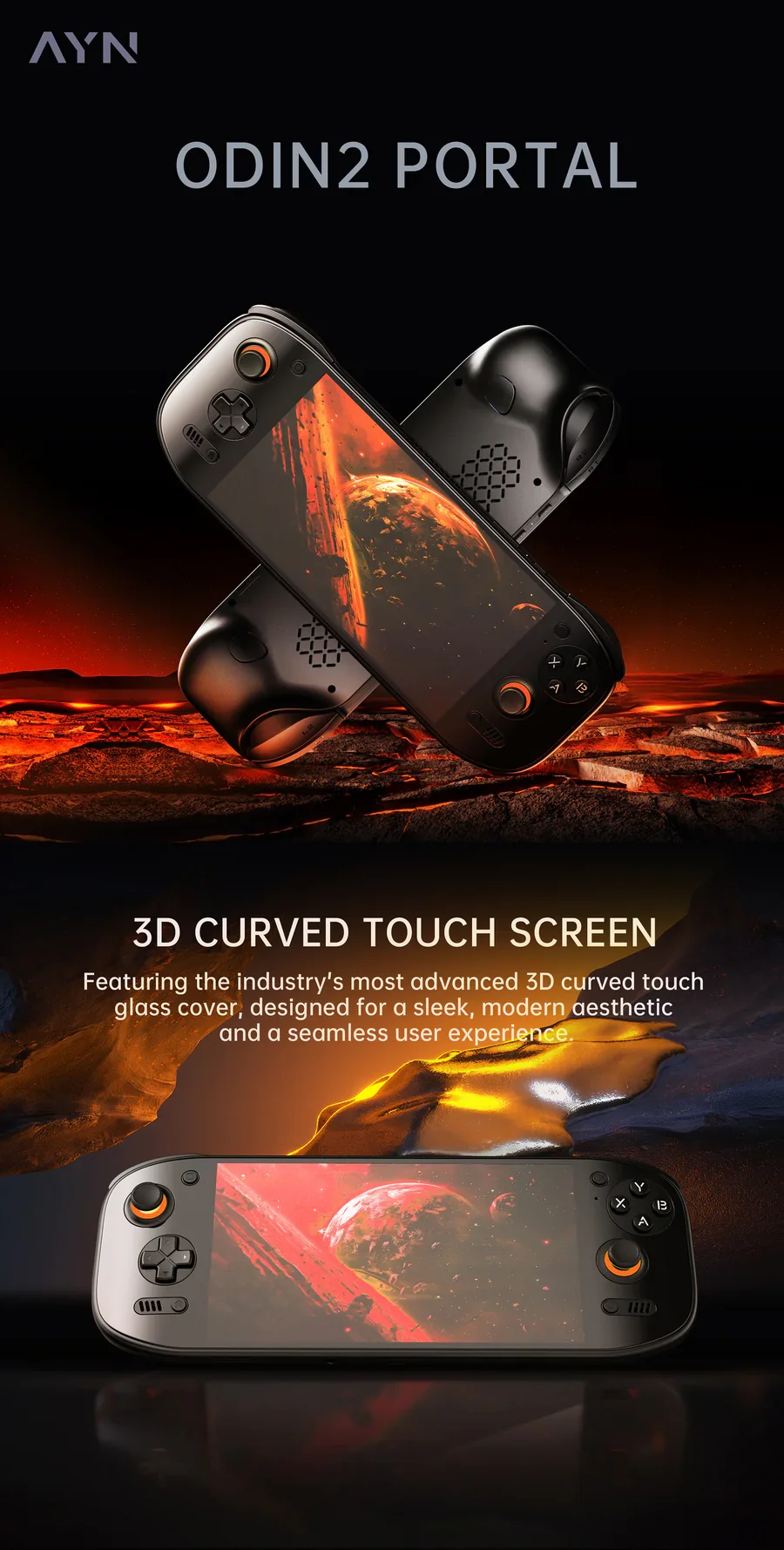
On paper, these two are close cousins. Both run a Snapdragon 8 Gen 2 with an Adreno 740 GPU, both have OLED/AMOLED displays with 120Hz refresh rates, both use Hall effect sticks and triggers, both run Android 13, and both have enough horsepower to comfortably emulate everything from GameCube and PS2 up through a good chunk of Switch's library. The similarities stop being surprising once you look at the spec sheets side by side — the real differences show up in how they're built around that shared hardware. Curious about why I stopped buying gaming consoles? Find out why here!
Quick Verdict
You primarily game at home, on the couch or in bed
You want the biggest, most immersive screen you can get in a handheld
Battery life for long sessions matters more than pocketability
You stream from a gaming PC or console and want that experience to feel like a portable monitor
You don't mind a larger, heavier device
Buy the Retroid Pocket 6 if:
You travel or commute with your handheld regularly
You want flagship-tier performance in something that can actually fit in a jacket pocket
You'd rather save $50–100 and put it toward games or accessories
You don't need the extra screen real estate for Switch emulation or PC streaming
Performance: Tie
This is the part that surprises people the first time they see it in writing. Both handhelds share the exact same chipset and GPU, so real-world gaming performance is essentially identical when configured similarly. PS2, GameCube, Wii, PSP, and most Switch-compatible titles run comparably well on both — you're looking at the same Geekbench and 3DMark territory, and the same ceiling for demanding emulators like Yuzu (development status notwithstanding).
The takeaway: you're not buying extra frames with the Odin. You're buying a different way of holding and looking at the same frames.
Display: Odin 2 Portal
This is where the gap actually opens up. The Portal's 7-inch, 1920×1080, 120Hz OLED panel pushes close to 800 nits of brightness, and it genuinely changes how immersive handheld gaming feels. Retro sprite work has more room to breathe, PC streaming feels closer to using a small portable monitor than a phone screen, and Switch emulation benefits enormously from the extra real estate — text is more legible, HUD elements aren't cramped, and you're not squinting at a shrunk-down interface that was designed for a 6.2-inch tablet screen.
The Pocket 6's 5.5-inch AMOLED panel is still excellent on its own terms — same resolution, same 120Hz refresh rate, and at 401 PPI it's actually sharper per inch than the Portal. Colors and contrast are great. But once you've spent time on the larger panel, going back to 5.5 inches feels like a real downgrade for anything beyond straightforward retro emulation. But which is better for dual screen use? Find here!
Portability: Retroid Pocket 6
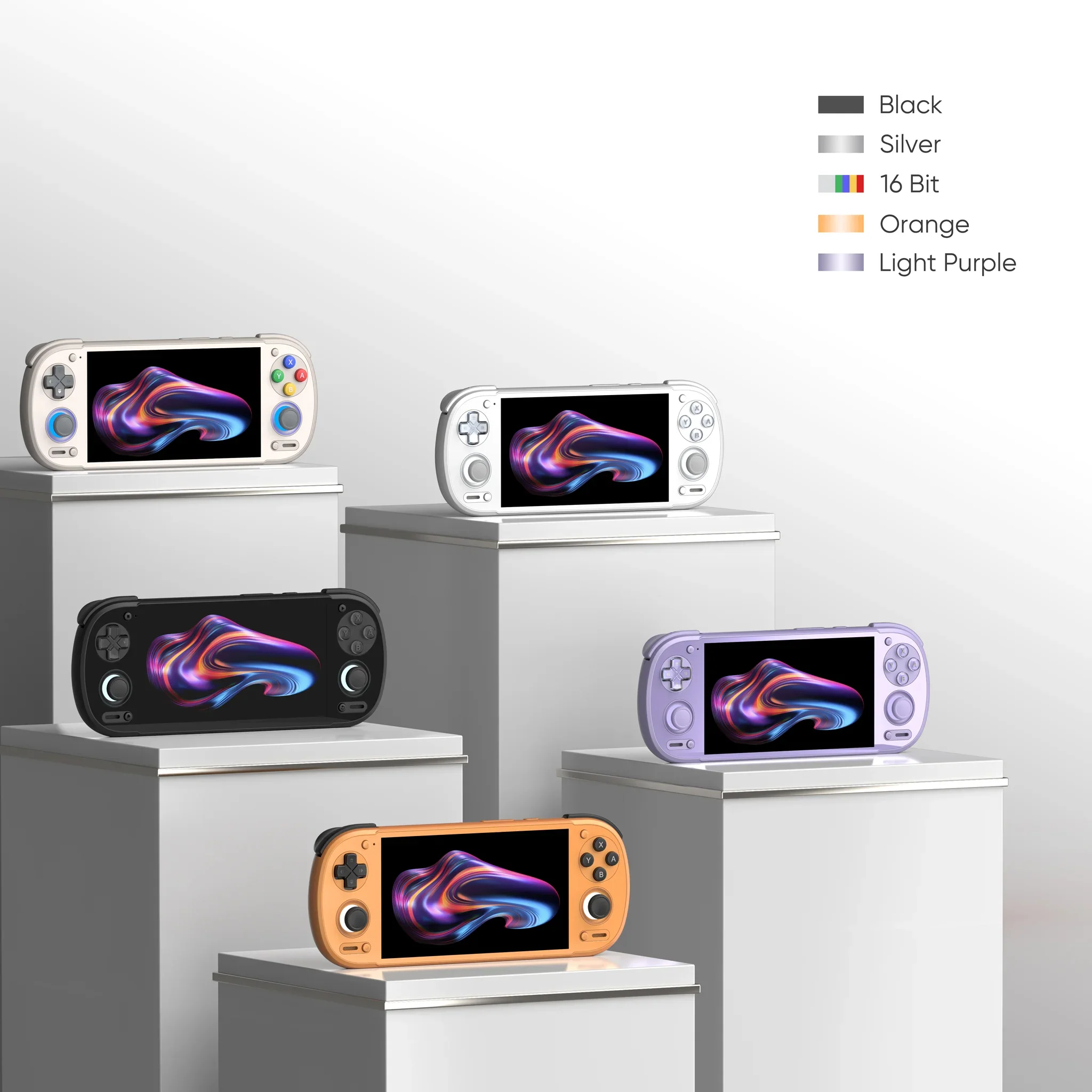
No contest here. At roughly 320g and about 210mm wide, the Pocket 6 is meaningfully smaller and lighter than the Portal's 430g and 257mm width — that's over 100 grams and nearly 5cm of difference, which adds up fast in a bag or a jacket pocket. Retroid also ships the Pocket 6 in two control layouts (D-pad-on-top for retro purists, stick-on-top for modern/Xbox-style input), which is a nice bit of flexibility the Portal doesn't offer.
If you're commuting, traveling, or just don't want a device that makes your backpack noticeably heavier, the Pocket 6 is the easy pick.
Battery Life: Odin 2 Portal
A bigger chassis means room for a bigger cell, and the Portal's 8,000mAh battery outsizes the Pocket 6's 6,000mAh by a third. Both support 27W fast charging, so top-up speed isn't the differentiator — it's total runtime. For long flights, all-day sessions, or marathon GameCube runs, the Portal simply asks for the charger less often. The Pocket 6's battery is still solid for its size — Retroid actually increased it by 1,000mAh over the previous Pocket 5 — but the math is straightforward: more capacity in a bigger body wins on endurance every time.
Ergonomics: Slight Edge, Odin 2 Portal
The Portal's larger shell gives your hands more surface area to rest on, which tends to matter more the longer a session runs. That said, this is the most subjective category on the list. Plenty of people prefer the Pocket 6's lighter feel for shorter sessions or smaller hands, and Retroid's optional ergonomic grip closes a lot of the gap if you want it.
Value: Retroid Pocket 6
The Pocket 6 delivers essentially the same core gaming performance for $50–100 less, depending on configuration ($229 vs. $299 at the base tier). If you're optimizing purely for performance-per-dollar, this isn't a close call — Retroid wins.
Who Should Buy the Odin 2 Portal?
The Portal is built for gamers who mostly play at home — on the couch, in bed, or docked and streaming from a gaming PC. The bigger OLED panel and bigger battery are both arguments for staying put and playing longer, not for grabbing it on your way out the door. If your handheld rarely leaves the house, the extra size stops being a downside.
Who Should Buy the Retroid Pocket 6?
The Pocket 6 is for people who actually take their handheld places. It's easier to carry, less expensive, and gives up remarkably little in actual gaming performance to get there. Going from a $299, 430g device to a $229, 320g device without sacrificing the chipset, GPU, or refresh rate is a genuinely impressive bit of engineering — that's the real headline of this whole comparison.
Final Thoughts
The more interesting story here isn't how different these two handhelds are — it's how similar they are under the hood, and how much that similarity puts the decision entirely in your hands rather than the spec sheet. You're choosing between the same flagship performance in two different form factors, not choosing a "better" device outright.
I bought the Portal because I wanted the big-screen, home-base experience, and it's delivered exactly that — the display and battery life are as good as advertised. But I've used enough Pocket 6 footage and impressions from the community to know it's not just a "budget" alternative; it's a legitimately great handheld that solves a problem the Portal doesn't even try to solve: fitting comfortably in a pocket. That's honestly why I'm considering picking one up too, even though I already have a flagship handheld sitting on my desk. Sometimes the right answer isn't Portal or Pocket 6 — it's both, for different situations.
Winner: Odin 2 Portal