DRAM Prices Are Rising Again. Here's What It Means for PC Buyers
Disclosure: We may earn a commission when you purchase through links on our site. This does not influence our reviews or recommendations.
If you've been planning a new PC build or memory upgrade, you may want to make your purchase sooner rather than later.
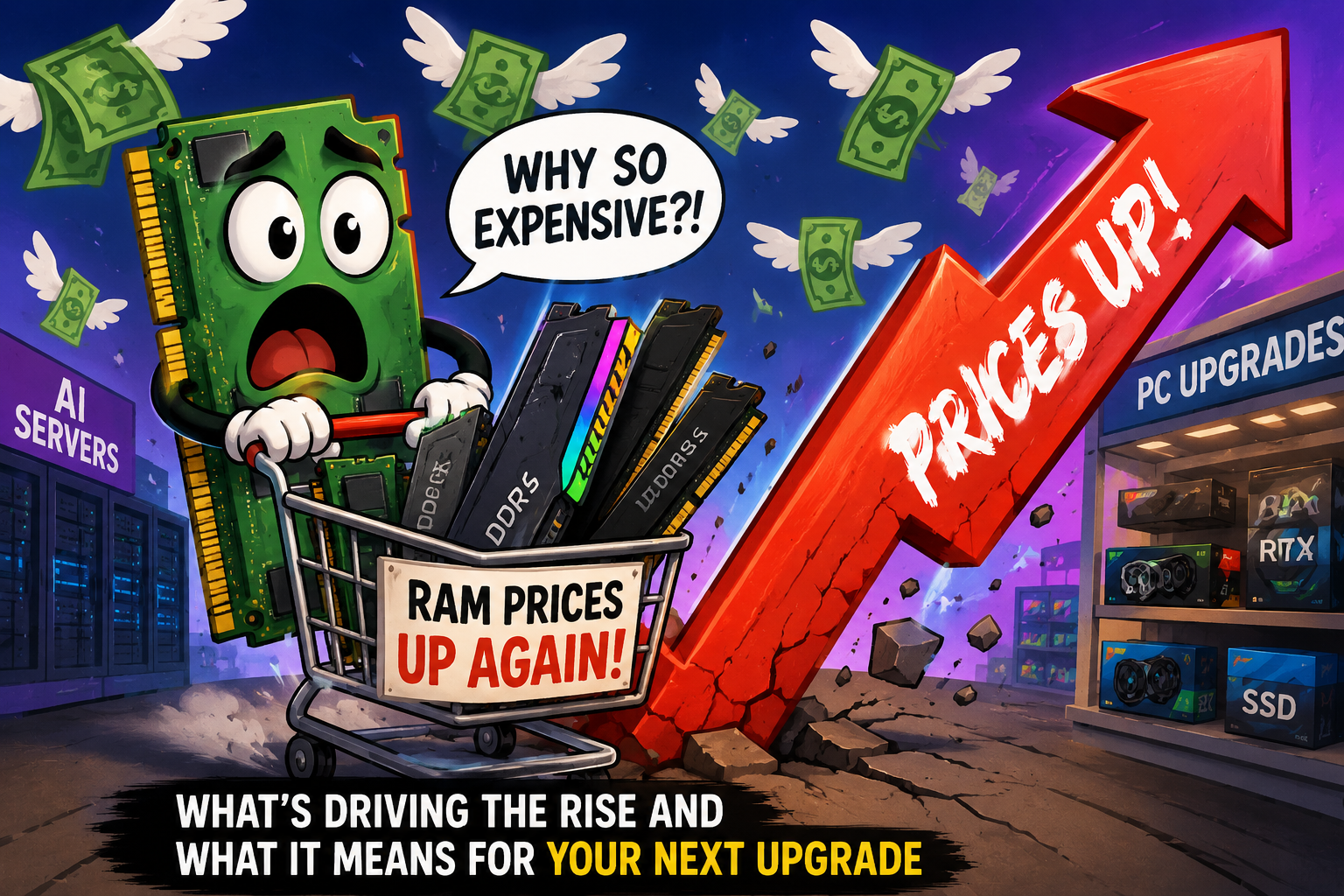
DRAM prices are climbing once again as memory manufacturers shift more production toward AI servers and enterprise hardware. With more manufacturing capacity being dedicated to high-demand AI products, fewer DDR4 and DDR5 chips are making their way into the consumer market, putting upward pressure on prices.
The impact extends well beyond standalone RAM kits. As memory becomes more expensive, manufacturers often pass those costs on to consumers, leading to higher prices for gaming laptops, prebuilt desktops, mini PCs, workstations, and even some SSDs. While individual price increases may seem small, they can quickly add up across an entire system build.
Best deals on PC Parts on Amazon!
Why It Matters
Memory pricing has always been cyclical, with prices rising and falling based on supply and demand. This time, however, the biggest driver isn't the PC market—it's artificial intelligence. Massive AI data centers require enormous amounts of memory, creating demand that far exceeds what most consumer products need and leaving everyday buyers competing for a smaller share of available DRAM.
Our Take
If upgrading your PC is already in your plans, waiting may not save you money. While no one knows exactly how high prices will climb, the current trend points toward higher memory costs throughout the coming months. If you find a good deal on DDR4 or DDR5 memory today, it may be worth grabbing it before the next round of price increases arrives.