I've Mounted Hundreds of TVs. Here's the Size Most Homeowners Should Actually Buy
Disclosure: We may earn a commission when you purchase through links on our site. This does not influence our reviews or recommendations.
Walk into any electronics store and you'll see shoppers debating OLED versus Mini-LED, refresh rates, and AI upscaling processors — features most of them will never notice in daily use. Then they'll spend about thirty seconds deciding what size TV to buy, usually based on whatever number fits the budget that day.
That's backwards, and it's the single biggest reason people end up unhappy with a brand-new television.
I've spent more than a decade installing home theaters and mounting TVs throughout Central Florida — everything from single-room apartment setups to full media rooms. In that time, I've learned that getting the size right for your specific room does more for your viewing experience than upgrading to a more expensive model ever will.
Bigger Isn't Always Better
TV prices have dropped dramatically over the past several years. An 85-inch set that would have cost several thousand dollars a decade ago is now within reach for a lot of households. That affordability tempts people to buy the largest screen their budget allows, but size and enjoyment don't scale together forever.
The goal isn't the biggest TV you can afford. It's the right TV for the room you're putting it in.
A screen that's too large for the viewing distance forces your eyes to work harder to take in the whole picture, which gets tiring during a long movie or a full slate of football on Sunday. A screen that's too small does the opposite — most people who undersize end up regretting it within a few weeks and start shopping again.
The Mistakes I See Most Often on Installs
Buying based on price instead of viewing distance
Most homeowners walk in with a budget in mind and work backward from there, without measuring how far their seating actually is from the wall. The result is a screen that either disappears in a large living room or overwhelms a smaller den.
Before you shop, measure the actual distance from where you sit to where the TV will hang. That single number should drive the size decision more than anything else on the spec sheet.
Mounting the TV too high
This is the mistake I run into more than any other, and it's almost always tied to putting the TV above a fireplace. It looks clean in photos, but the center of the screen ends up well above eye level, which means every movie night is spent with your neck tilted back.
As a general rule, the center of the screen should land close to eye level for whoever is seated in the primary viewing spot — typically somewhere in the 42- to 48-inch range from the floor, depending on your seating height. If a fireplace mount is non-negotiable for the room's layout, a motorized or pull-down mount that brings the screen closer to eye level is worth the extra cost.
Paying for features you'll never use
Manufacturers put a lot of marketing muscle behind flagship features — top-tier local dimming zones, the latest AI-driven upscaling, gaming-specific refresh rates. Some of that matters if you're a serious gamer or a home theater enthusiast. Most households aren't.
If your typical viewing is cable, streaming, sports, and the occasional movie night, a solid mid-range TV from a reputable brand will get you 90% of the picture quality of a flagship model for a fraction of the price. Save the extra money for better mounting, cable management, or a soundbar — upgrades you'll actually notice.
General Size Recommendations by Viewing Distance
Every room is different, and factors like resolution, seating arrangement, and personal preference all shift these numbers slightly. That said, these ranges reflect what's worked well across the homes I've installed in:
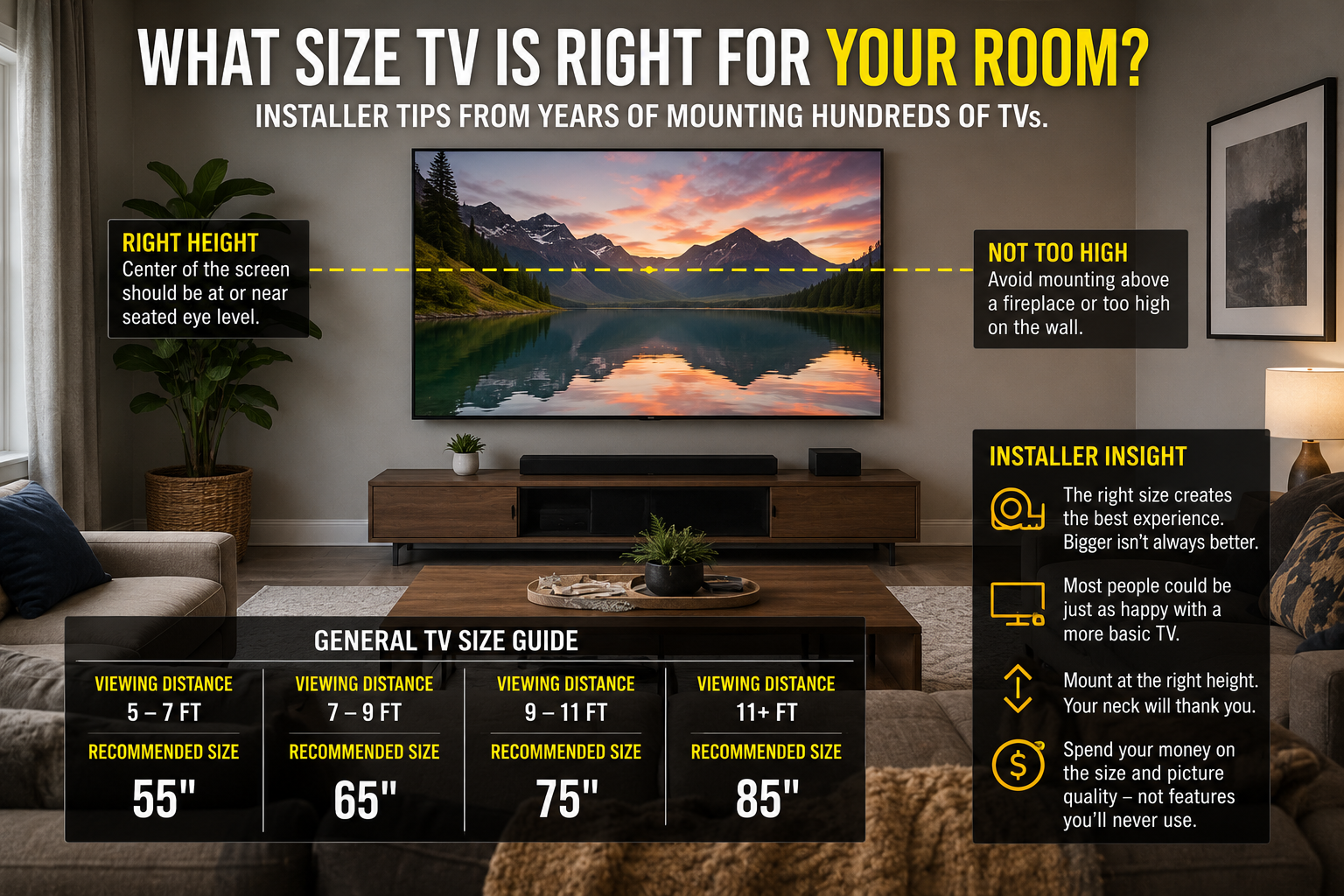
Treat this as a starting point, not a strict rule. If you're mounting a 4K set and sitting on the closer end of one of these ranges, sizing up a notch is usually fine — the extra resolution holds up well at shorter distances. If you're sensitive to a screen dominating the room, sizing down a notch won't hurt you either.
Our Take
The best TV for your home isn't the biggest one on the wall, and it isn't the most expensive one on the shelf. After years of installing TVs in real living rooms, bedrooms, and media rooms, the pattern is consistent: getting the size right for your viewing distance, mounting it at proper eye level, and spending your budget on features you'll actually use makes a bigger difference to your day-to-day experience than chasing whatever spec is being advertised this year.
Buy the TV that fits your room — not the one that looks the most impressive in the showroom.