CD Players Are Making a Comeback — And I Think I Finally Understand Why
Disclosure: We may earn a commission when you purchase through links on our site. This does not influence our reviews or recommendations.
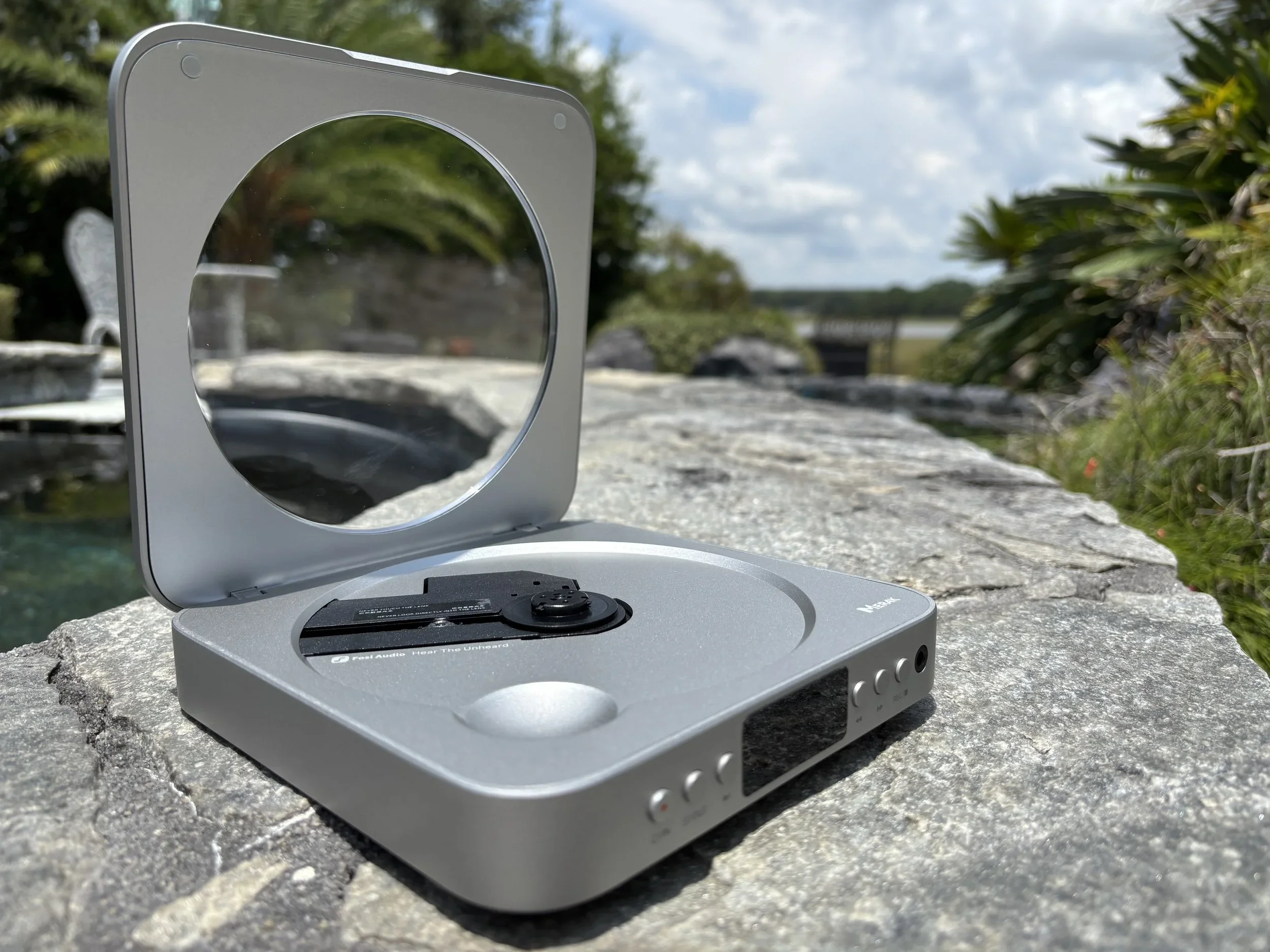
I never really had a CD collection. That's probably a strange way to start an article about the resurgence of CD players, but it also puts me in an interesting position watching it happen. CDs were obviously everywhere when I was growing up, but by the time I was really getting interested in music, MP3 players had already taken over. I was 17 or 18 around 2012, and by then I was firmly in the iPod and MP3 generation. My first car, a 1998 Audi A4, actually had a cassette player, but I've never personally owned a music CD. And right now, my Fosi Audio CD player review is leading my site in overall traffic, that’s pretty interesting!
Years later, when I was managing a hi-fi store in Winter Park, Florida, I went backward and got into vinyl. Turntables made sense to me. They were tactile, interesting and completely different from the digital music I'd grown up listening to. Now I'm watching something similar happen with CDs, and the weirdest part is that I'm seeing evidence of it in my own website analytics. CD players have become some of the most searched-for and clicked-on products across my technology coverage.
So what happened?
Vinyl's Comeback Was Easy to Understand
I've always understood the renewed interest in vinyl. A turntable offers something fundamentally different from Spotify, Apple Music or another streaming service. You're playing a physical analog format. You put the record on the platter, lower the stylus and listen. There's a ritual to it. There's also an entire hardware rabbit hole. Different cartridges, phono preamps, turntables, tonearms and pressings can all become part of the experience. When I worked in hi-fi, turntables were a major part of the business, and I understood why. Someone who had spent years listening to digital music suddenly had another way to experience it. CDs are harder for me to understand at first. A CD is digital. If I'm ultimately playing digital audio, why wouldn't I just stream lossless music from a service that gives me millions of songs without getting off the couch? I think the answer is that sound quality isn't actually the entire reason CDs are coming back.
CDs Might Be the Cheapest Way Into Physical Hi-Fi
This is where CDs suddenly start making a lot more sense. Vinyl isn't particularly cheap anymore. A decent turntable costs money. A phono stage may cost money. New records aren't necessarily cheap, and desirable older pressings can become collectibles themselves. CDs are completely different. There are mountains of used CDs in circulation. Thrift stores, record stores, eBay, garage sales and used-media shops can have them for very little money.
The hardware can be inexpensive too. You don't necessarily need some exotic audiophile CD transport. There are plenty of old dedicated CD players available, and there's an enormous amount of other hardware capable of playing CDs. DVD players can do it. Blu-ray players can do it. And some of those machines were surprisingly good.
Don't Forget About Old Blu-ray Players
This is one part of the CD conversation I think gets overlooked. When I was selling audio equipment, we sold Sony Blu-ray players that were perfectly good CD players. Some Blu-ray players had very respectable internal DACs and analog output stages. Then there were machines from companies like Oppo that took the universal-player concept much further. You could have one box capable of handling movies and physical music while still taking audio quality seriously.
That's why someone getting into CDs today doesn't necessarily need to search specifically for a vintage audiophile CD player. There are decades' worth of DVD and Blu-ray players sitting on the used market that can play CDs just fine, along with dedicated CD players that can often be picked up cheaply. And now we're seeing manufacturers take an interest in new CD hardware again.
The Thrift-Store Factor Is Part of the Fun
I think there's another reason younger people are discovering this stuff: old audio hardware is fun. I've talked with younger enthusiasts who are getting into vintage audio, and finding some forgotten CD player or receiver at a thrift store is part of the appeal. I understand that completely. You find a piece of equipment that's 20 or 30 years old, pay almost nothing for it, bring it home, hook it into a decent system and discover that it still sounds great.
There's something satisfying about that which clicking a button in a streaming app can't reproduce. It's not necessarily rational. Neither is collecting vinyl. That's part of the point.
Physical Media Ownership Is the Part I Really Understand
This is probably the part of the CD resurgence I agree with most strongly. I am hugely in favor of owning physical media. My personal collection isn't CDs. It's movies. I own a lot of DVDs and Blu-rays, and there are movies in that collection that illustrate exactly why I still care about physical ownership. Harold is one example. It's a weird little comedy I enjoy, but it's not something I can count on finding through the streaming services I already pay for.
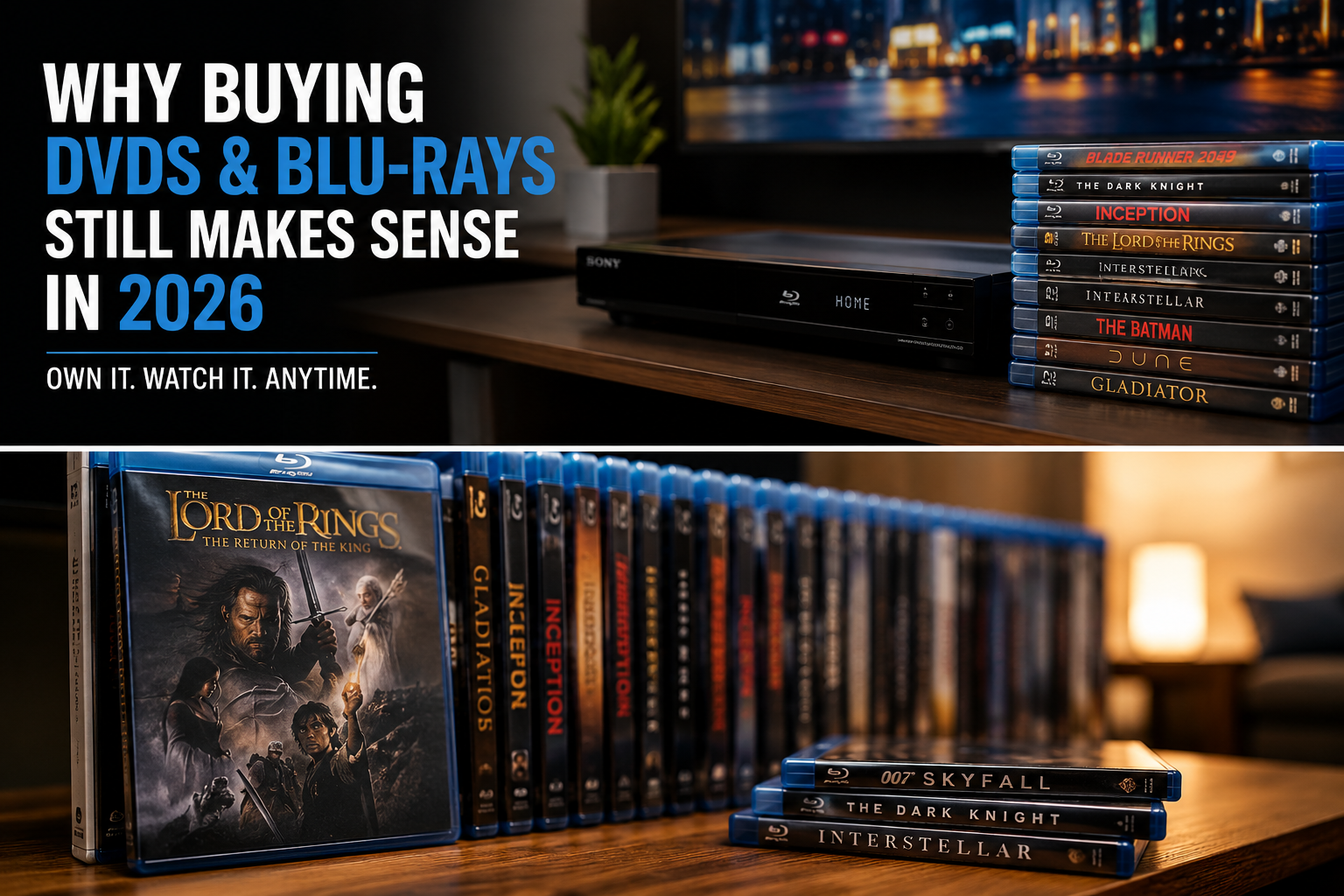
Clue is another example. The DVD has the different endings, which is exactly the kind of weird extra that makes owning a physical copy more interesting than simply having temporary access to a title through a streaming catalog.
That's the distinction. Streaming gives you access. Physical media gives you ownership. Those aren't the same thing. A licensing agreement can change. A movie can disappear from a service. A particular version can become unavailable. The service itself can change what you're allowed to watch. Nobody can remotely remove a CD from your shelf.
CDs Give You Physical Ownership Without the Vinyl Price
This might ultimately be the strongest argument for CDs. They give you many of the things people like about physical media without requiring the financial commitment that vinyl increasingly does. You get an album. You get the artwork. You get something you can hold, collect, lend, sell or keep for decades. You decide when you're finished with it. At the same time, you're getting digital audio without the surface noise, stylus wear, cartridge alignment and other quirks inherent to vinyl playback. That's actually a pretty compelling combination.
CDs Can Sound Really Good
The resurgence also doesn't require pretending CDs are some magical forgotten audiophile technology. They're not. They're a mature digital format, and that's perfectly fine. A properly produced CD played through decent equipment can sound excellent. There are also higher-resolution physical formats such as SACD for people who want to go further down that road, although that's a separate format and requires compatible hardware.
The bigger point is that someone assembling an inexpensive CD system isn't automatically giving up good sound because the format is old. Put a good recording into a competent player and connect it to a decent audio system, and you've got a legitimate hi-fi source. Potentially for very little money.
CD vs. Vinyl Isn't Really the Right Fight
The more I think about this, the less interested I am in declaring a winner between CDs and records. Vinyl has something CDs fundamentally can't reproduce: it's an analog physical format. That's part of why I became interested in turntables even though I grew up with digital music. But CDs have advantages vinyl can't reproduce either. They're smaller. They're generally cheaper. They're easy to store. Playback hardware can be inexpensive. There's no stylus to replace, no cartridge to align and no record to flip every 20 minutes. And unlike streaming, you own the copy.
That gives CDs a strange but genuinely useful place between vinyl and modern streaming.
Maybe CDs Are the Perfect Beginner Hi-Fi Format
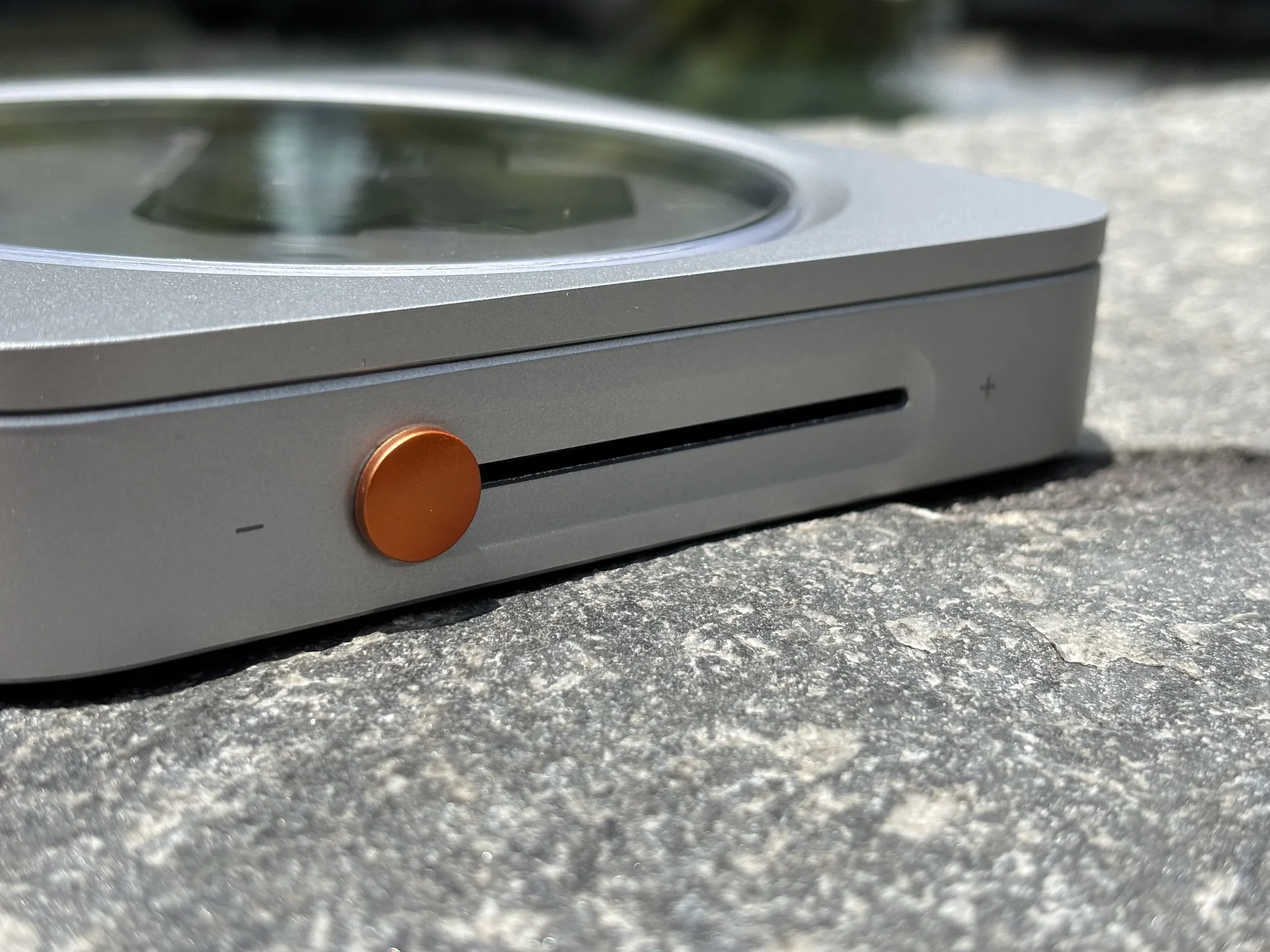
This is the part I didn't really appreciate until recently. If someone came to me today and said they were young, interested in getting into physical music and didn't have much money, I'm not sure I'd automatically tell them to buy a turntable anymore. I'd seriously consider telling them to start buying CDs. Find a cheap player. Or find an old DVD or Blu-ray player that works well as a CD source. Grab some used albums for a few dollars each. Connect it to a decent amplifier and speakers. Now you've got physical media ownership, excellent sound quality and an actual music collection without spending a fortune. And if you eventually want a turntable too, great.
I Think I Finally Get the CD Comeback
I'm still probably never going to become a giant CD collector. I missed that era. By the time music became important to me, I'd already moved into MP3s and iPods. My eventual fascination with physical music went in the opposite direction toward turntables and vinyl. But watching CD players become some of the most searched-for and clicked-on products in my own analytics has forced me to reconsider them.
The appeal isn't that CDs have somehow become technologically superior in 2026. It's that the world around them changed. Streaming made music unbelievably convenient, but it also made our collections temporary and intangible. Vinyl brought physical music back, but increasingly at a price. CDs were sitting there the entire time.
They're digital. They're physical. They're cheap. They're everywhere. They can sound excellent. And when you buy one, it's yours. Maybe the surprising thing isn't that CD players are coming back. Maybe it's that it took us this long to realize how much sense they still make.